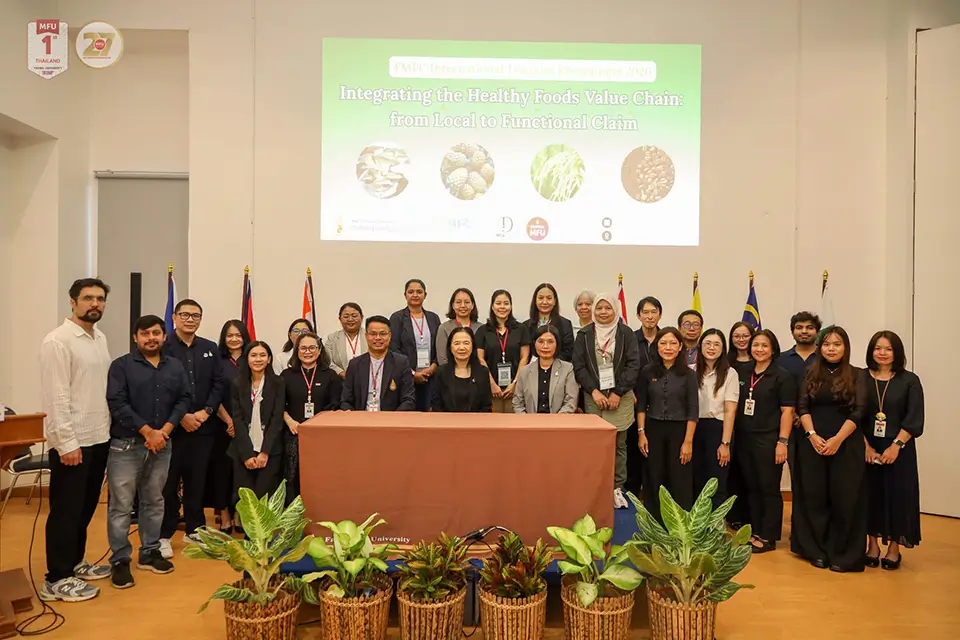
 Participants, facilitators, organizers, and university officials gather for a commemorative group photo with Mae Fah Luang University Vice President Prof. Sujitra Wongkasemjit, Dean of the School of Agro-Industry Asst. Prof. Dr. Sutthiwal Setha, and Healthy Foods Training Programme Leader Prof. Dr. Saroat Rawdkuen during the Healthy Foods Training Programme in Chiang Rai, Thailand. Photo courtesy of Mae Fah Luang University.
CHIANG RAI, Thailand—Dr. Jihan Santanina Santiago-Alumbro, a faculty member of the University of the Philippines Visayas (UPV) School of Technology (SOTECH) completed the FMFC International Training Programme: Integrating the Healthy Foods Value Chain: From Local to Functional Claim at Mae Fah Luang University (MFU) in Chiang Rai, Thailand on 1–15 July 2026 through a Faculty Mobility Grant from the Southeast Asian Regional Center for Graduate Study and Research in Agriculture (SEARCA). Her participation supports UPV's internationalization efforts and strengthens its engagement in functional food innovation.
Dr. Alumbro joined participants from across Southeast Asia in a two-week program designed to strengthen their capacity to develop science-based functional foods from sustainable agricultural value chains. Conducted under MFU's Innovative Farmers, Traditional Medicines, Healthy Foods, Cosmetics (FMFC) initiative, the training combined lectures, laboratory demonstrations, field immersion, innovation hub visits, and project development. Key topics include bioactive compounds, sustainable postharvest technologies, advanced extraction methods, quality assurance, functional food formulation, regulatory frameworks for health claims, branding, and commercialization.
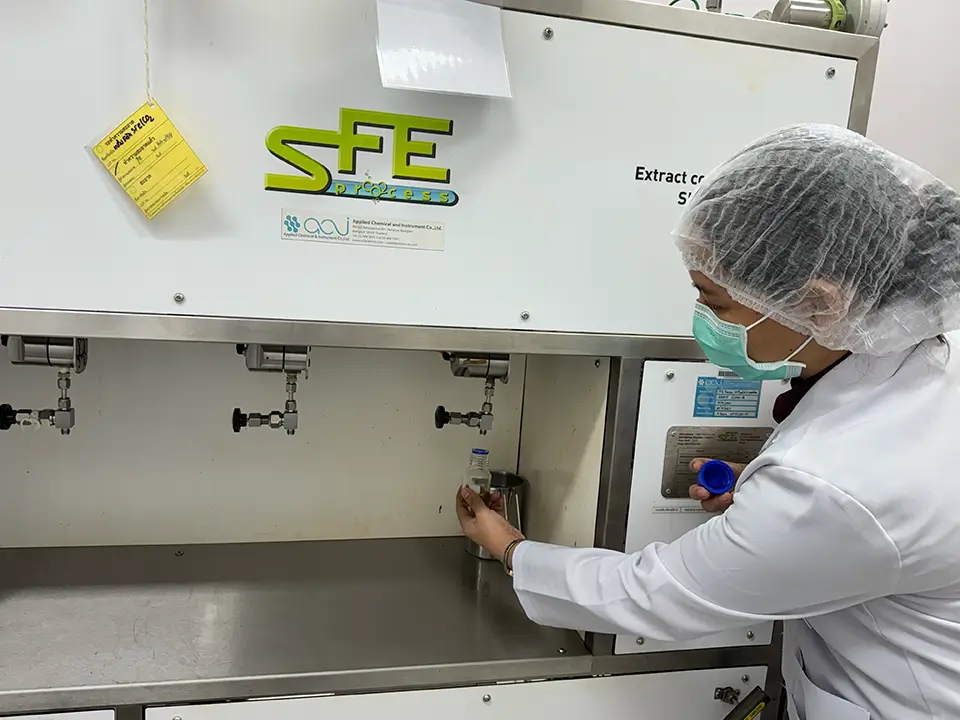 Participants collect essential oil extracted from Ma-khwaen (Zanthoxylum limonella) using advanced extraction technologies. Native to Northern Thailand and closely related to Sichuan pepper, Ma-khwaen is prized for its distinctive citrusy and peppery aroma and its promising applications in functional foods, seasonings, and natural flavor ingredients.
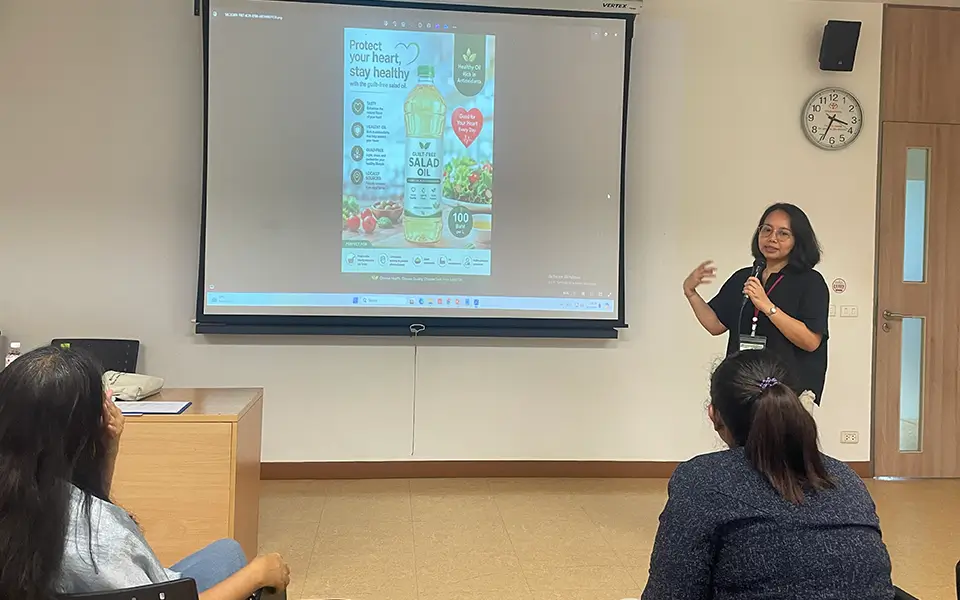 Dr. Alumbro volunteers to present a functional food concept developed prior to the training as part of a session on premium branding and market positioning, receiving valuable feedback from facilitators and fellow participants.
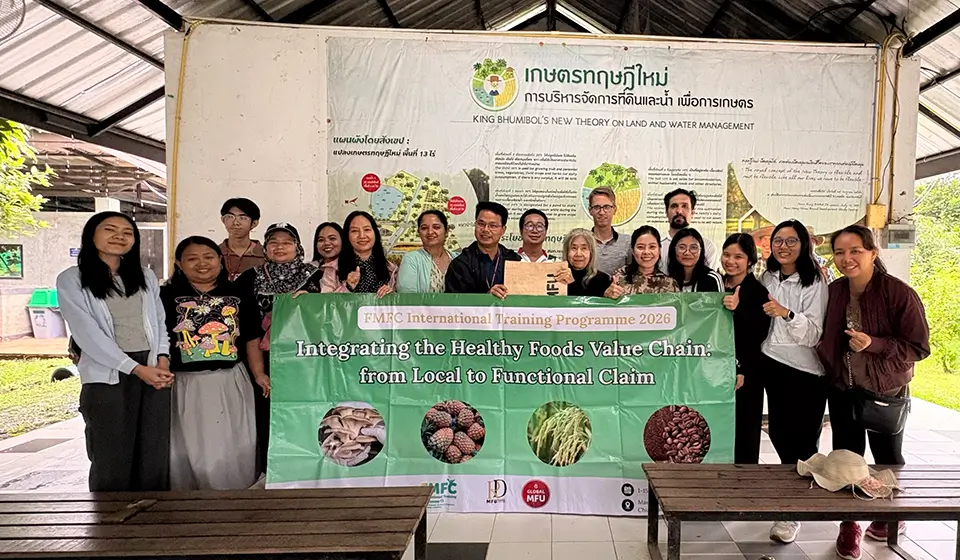 Participants visit the Huai Hong Khrai Royal Development Study Centre, where they witness the long-term impact of the integrated watershed and forest restoration initiatives launched by His Majesty King Bhumibol Adulyadej the Great (King Rama IX) over four decades ago. The project demonstrates how sustainable water and natural resource management can enhance agricultural productivity and improve rural livelihoods.
Reflecting on the experience, Dr. Alumbro emphasized the importance of adopting a holistic food systems approach that integrates the entire value chain—from agricultural production and postharvest handling to scientific validation, product development, regulatory compliance, and commercialization. She noted that successful functional food innovation requires transdisciplinary collaboration, strong scientific evidence to support health claims, and an enabling regulatory framework. The training also reinforced the value of strategic partnerships in addressing emerging food, nutrition, and public health challenges.
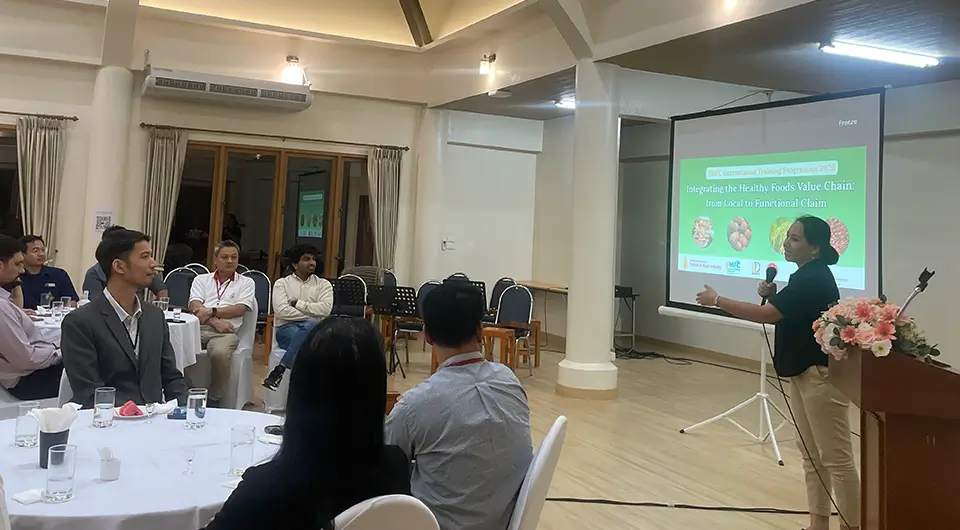 During the closing reflections, Dr. Alumbro shares her appreciation for the Healthy Foods Training Programme, highlighting how the experience opened opportunities for regional collaboration, expanded scientific knowledge, and inspired new ideas for developing sustainable, science-based functional foods in Southeast Asia.
The knowledge and skills gained from the training will strengthen instruction, research, and extension initiatives at SOTECH, particularly in functional foods, bioactive compounds, sustainable food processing, and agricultural by-product valorization. The experience also opened opportunities for international collaboration and knowledge exchange, further supporting UPV's internationalization agenda and Dr. Alumbro's leadership as Coordinator of the BS Food Technology and MS Food Science programs and External Linkages Coordinator of SOTECH.
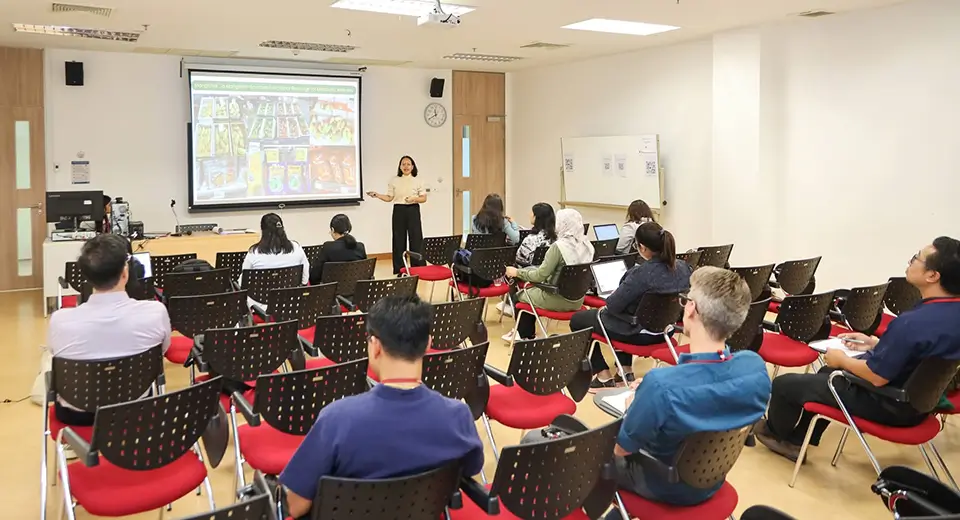 During the final functional food pitch, Dr. Jihan Santanina Santiago-Alumbro presents a project concept inspired by the training, emphasizing not only the development of science-based functional foods but also the valorization of agricultural surplus and by-products through sustainable innovation. Photo courtesy of Mae Fah Luang University.
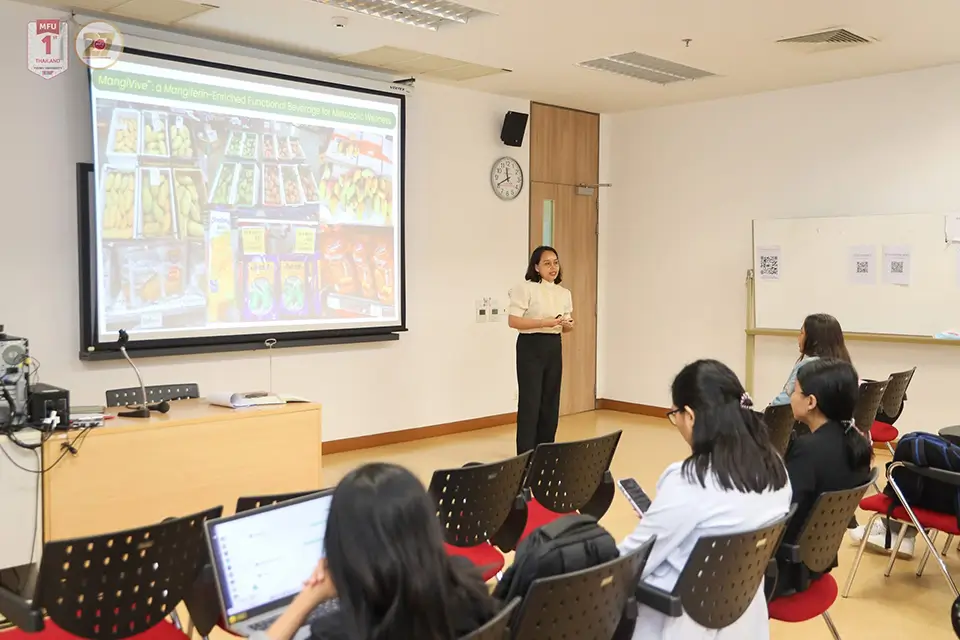 Inspired by the programme's lectures, laboratory sessions, and field visits, Dr. Jihan Santanina Santiago-Alumbro developed a concept focused on valorizing bioactive compounds from mango processing by-products into high-value functional food ingredients, reflecting the potential of circular bioeconomy approaches for the ASEAN region. Photo courtesy of Mae Fah Luang University.
The SEARCA Faculty Mobility Grant enables eligible Southeast Asian faculty members teaching at colleges and universities across the region to pursue international learning opportunities that enhance teaching, research, and extension and support the development of innovative, science-based solutions for sustainable food systems and agricultural development in Southeast Asia.
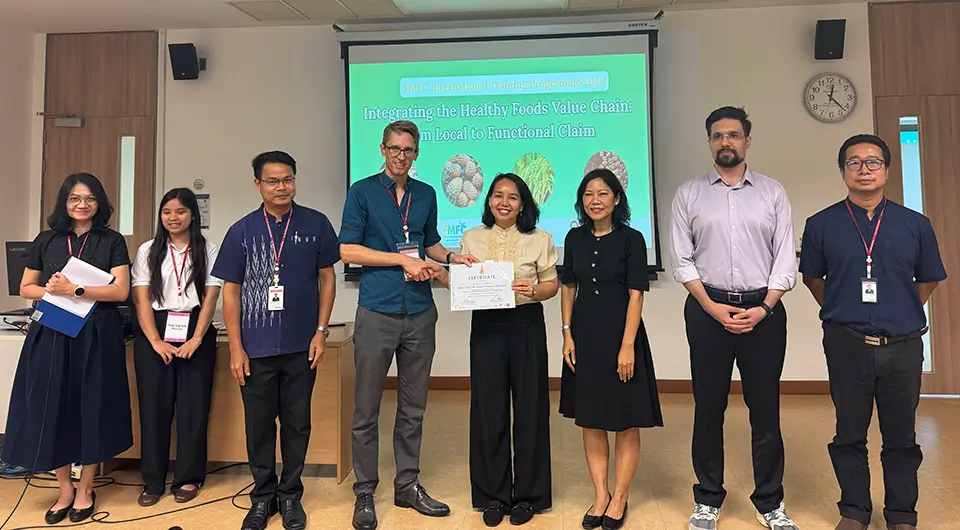 Dr. Jihan Santanina Santiago-Alumbro receives her Certificate of Completion after successfully finishing the two-week Healthy Foods Training Programme at Mae Fah Luang University. Photo courtesy of Mae Fah Luang University.
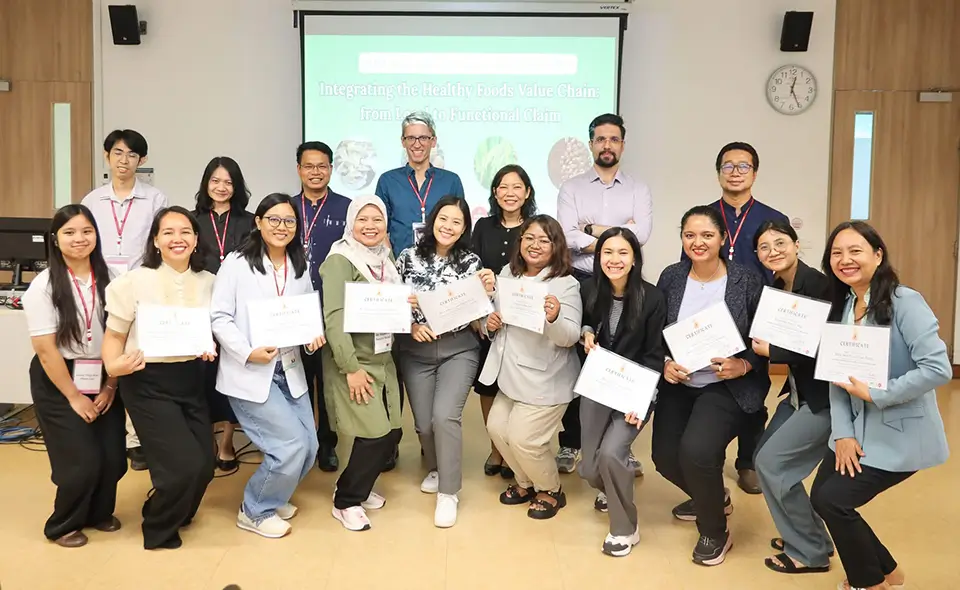 Participants from across Southeast Asia celebrate the successful completion of the Healthy Foods Training Programme, strengthening regional networks and fostering future collaborations in functional food research, innovation, and sustainable agricultural development.