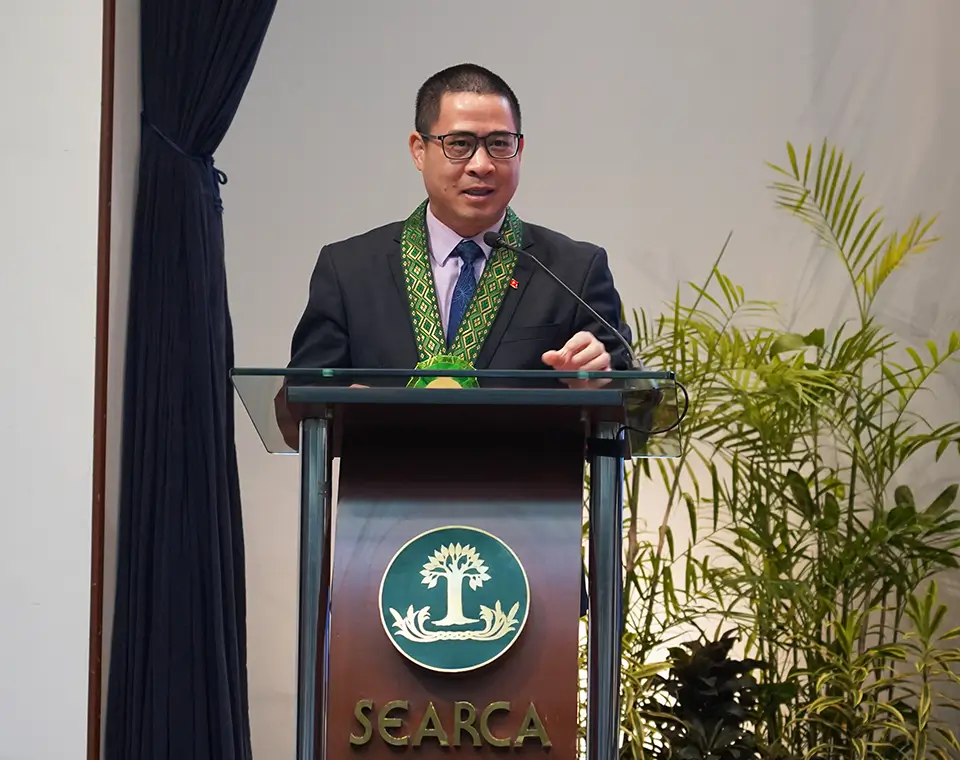
LOS BAÑOS, LAGUNA—The Southeast Asian Regional Center for Graduate Study and Research in Agriculture (SEARCA) hosted the fourth installment of its Meet the Diplomat Series (MDS) on 16 April 2026, featuring His Excellency Dr. Lai Thai Binh, Ambassador Extraordinary and Plenipotentiary of the Socialist Republic of Vietnam to the Philippines, as the guest of honor. The event underscored the critical intersection of science and diplomacy in driving sustainable development across Southeast Asia.
Opening the session, SEARCA Center Director Dr. Mercedita Sombilla highlighted Vietnam's remarkable transformation from a nation facing food security challenges decades ago into a global agricultural powerhouse. She noted that Vietnam is currently the world's second-largest coffee exporter, supplying 19 percent of global demand and anchoring rural prosperity for over 2.6 million people. Sombilla also emphasized that Vietnam's success stems from inclusive policies, such as granting land rights to smallholder farmers, which transformed the agriculture sector into an engine of national economic growth, generating USD 8.4 billion in coffee exports in 2025 alone.
During his presentation, Lai detailed Vietnam's strategic framework for development, built on three pillars: advancing ecological agriculture to ensure climate resilience, promoting modern rural development to bridge the urban-rural divide, and investing in "smart farmers" through digital literacy and training. He noted that Vietnam's journey is rooted in the teachings of Vietnam's founding president Ho Chi Minh, who believed that a country thrives only if its farmers and agriculture thrive. The ambassador also explained the impact of the Contract Farming Scheme, which helped Vietnam transition from a centralized economy to a socialist-oriented market economy, empowering farmers to manage their own production and distribution.
Lai identified the Philippines as a primary partner, noting that Vietnam remains the largest supplier of rice to the Philippines.
"This cooperation reflects not only market dynamics, but also a high level of mutual trust and understanding between our two countries, especially in times of global disruption and crisis," the ambassador remarked.
While acknowledging challenges such as climate change, he expressed optimism that the countries' strategic partnership would continue to evolve through joint research, academic exchanges, and technical cooperation.
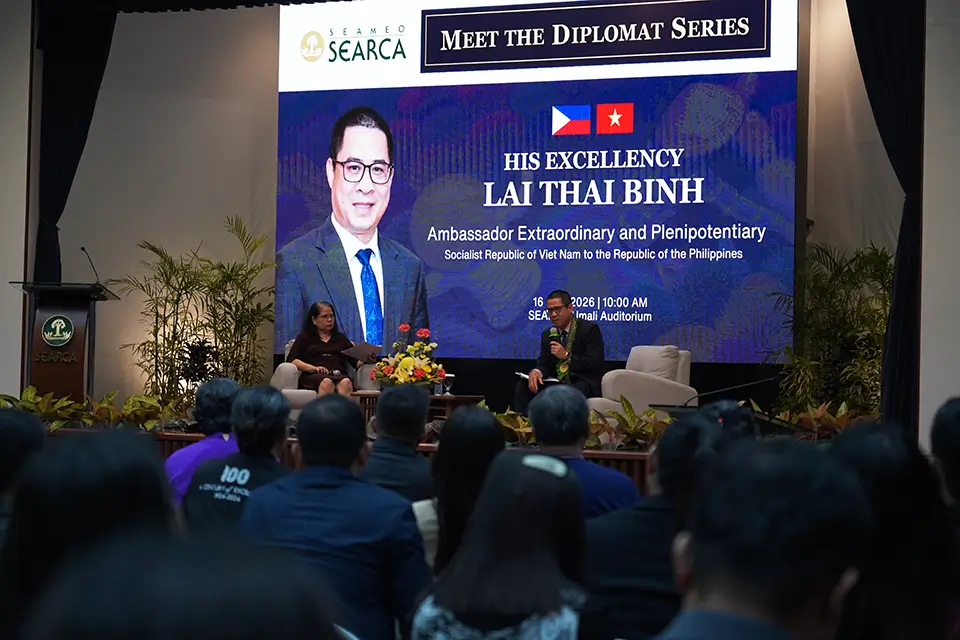
During the moderated open forum, the ambassador addressed queries about the operationalization of agricultural resilience, explaining that Vietnam maintains a sustainable and consistent system of policies. He highlighted the implementation of the 1 Million Hectares of High-Quality, Low-Emission Rice Program in the Mekong Delta as a concrete example of efforts to ensure food security and develop high-quality rice while reducing environmental impact. Responding to questions about regional lessons, the ambassador underscored a paradigm shift from "production thinking" to "economic thinking," urging that countries focus on developing agricultural products with high export potential to sustain long-term production.
The session also served as an avenue to discuss the deepening ties between the Philippines and Vietnam as they celebrate the 50th anniversary of their diplomatic relationship this year.
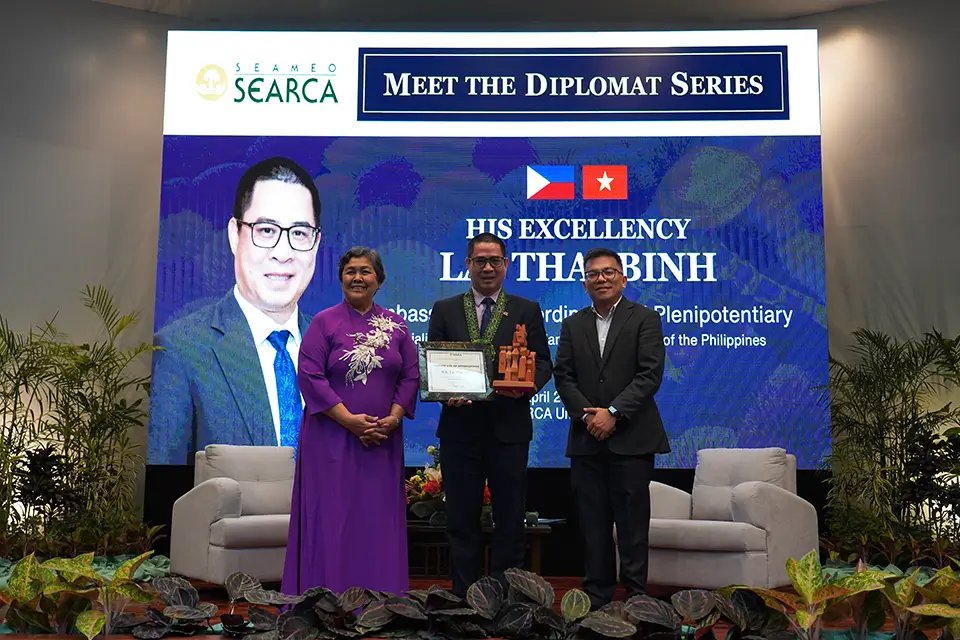
The event concluded with the presentation of a certificate of appreciation and a replica of SEARCA's Growth Monument to the Ambassador. The monument, consisting of 11 linked figures representing SEARCA's member countries, symbolizes the synergy and collective effort required to achieve regional prosperity.
Guided by the Center's 12th Five-Year Development Plan: Sustainable Transformation of Agricultural Systems through Innovation in Southeast Asia (SUSTAIN Southeast Asia), the fourth MDS session underscores SEARCA's commitment to building strategic international partnerships that connect diplomacy, science, and policy for the region's agricultural future.
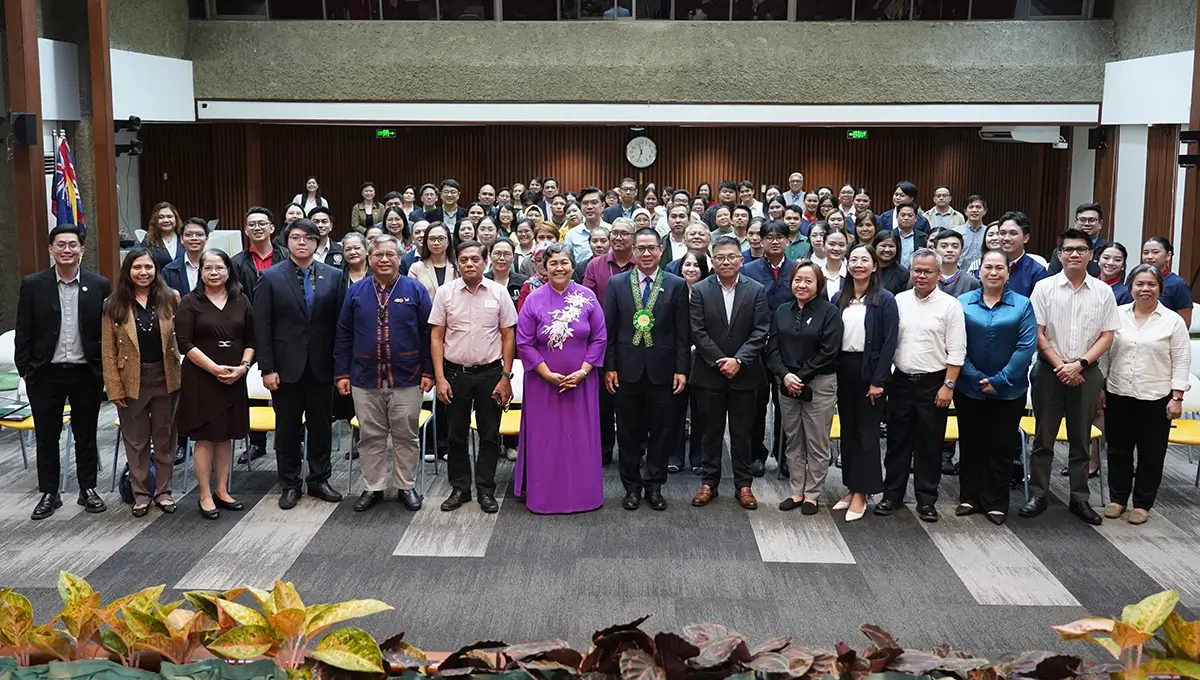
The MDS will continue to feature ambassadors who will share their countries' perspectives, foreign policy priorities, development directions, and opportunities for cooperation.
Watch the presentation here: