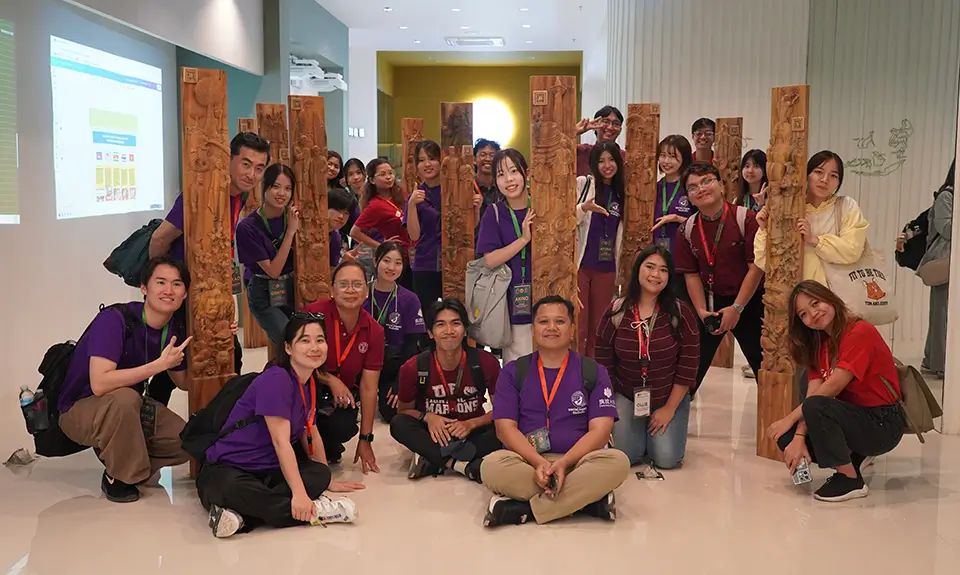
LOS BAÑOS, Philippines—Twelve University of Tsukuba undergraduate students visited the Southeast Asian Regional Center for Graduate Study and Research in Agriculture (SEARCA) on 24 February 2026 as part of their Social Impact Project aimed at understanding agriculture's role in sustainable development.
They were accompanied by Dr. Nomura Nakao, Regional Director for Southeast Asia and Taiwan at the Bureau of Global Initiatives; the Manager of International Admissions; the Associate Director of the Division of International Exchange Support under the Student Support Center; and an Associate Professor in the Faculty of Life and Environmental Sciences at the University of Tsukuba. The delegation was assisted by Ms. Rosario Bantayan, Program Coordinator of the Department of Education-Laguna and the UPLB: Nurturing Opportunities for the Next Generation Towards Ending Learning Poverty in the Philippines (DUNONG), alongside 12 UPLB Ugnayan ng Pahinungod student volunteers.
The University of Tsukuba is a leading national public research university that champions interdisciplinary education, global engagement, and innovation in research and teaching. It is an affiliate member of the Southeast Asian Ministers of Education Organization (SEAMEO), SEARCA's parent organization.
During the visit, Ms. Sharon Malaiba, Head of SEARCA's Partnerships Unit, presented the Center's mandates and its 12th Five-Year Development Plan: Sustainable Transformation of Agricultural Systems through Innovation in Southeast Asia (SUSTAIN Southeast Asia). She highlighted SEARCA's work under its 4Ps framework: boosting farmer incomes (Pocket), enhancing food security (Plate), building climate resilience (Place), and empowering the next generation of stakeholders (People).
She discussed SEARCA's policy research on school meals, land use, and school garden biodiversity, as well as a partnership for sustainable aquaculture in ASEAN. She also presented the Consortium for Agricultural Policy Research Initiatives (CAPRI), a platform for evidence-based agricultural policy innovation and transformation in Southeast Asia.
Malaiba also emphasized SEARCA's commitment to sustainable agricultural transformation through innovation, technology transfer, and enterprise development. She introduced the Grants for Research towards Agricultural Innovative Solutions (GRAINS), which funds innovators creating prototypes that address agricultural challenges. Malaiba discussed various GRAINS-supported projects, including smart weather, dust, and carbon stations that equip Thai growers with vital information for adapting to changing conditions, as well as an agri-financing platform that links Myanmar farmers with investors.
Furthermore, Malaiba outlined some of SEARCA's training for development initiatives, such as the SEARCA Online Learning and Virtual Engagements (SOLVE) Webinar Series, a dynamic platform sharing practical agricultural and rural development innovations; the Agriculture and Development Seminar Series (ADSS), a key forum for presenting and debating agriculture and development issues and supporting sustainable transformation across Southeast Asia; and the Meet the Diplomat Series, a newly introduced platform for aligning foreign policy priorities with regional agricultural and rural development goals.
Malaiba also briefed the students on SEARCA's Graduate Scholarship Program, which offers full MS and PhD scholarships, PhD research scholarships, and non-degree scholarships to Southeast Asians, including joint programs with partner institutions. She also introduced the Southeast Asian University Consortium for Graduate Education in Agriculture and Natural Resources (UC), a network linking premier universities in Southeast Asia, Canada, Germany, Japan, and Taiwan, for which SEARCA serves as Secretariat.
The question-and-answer session underscored the visitors' strong interest in SEARCA's initiatives. They inquired about the Center's monitoring and evaluation mechanisms, the direct impact of SEARCA's initiatives on Southeast Asian agriculture, and youth engagement in the sector.
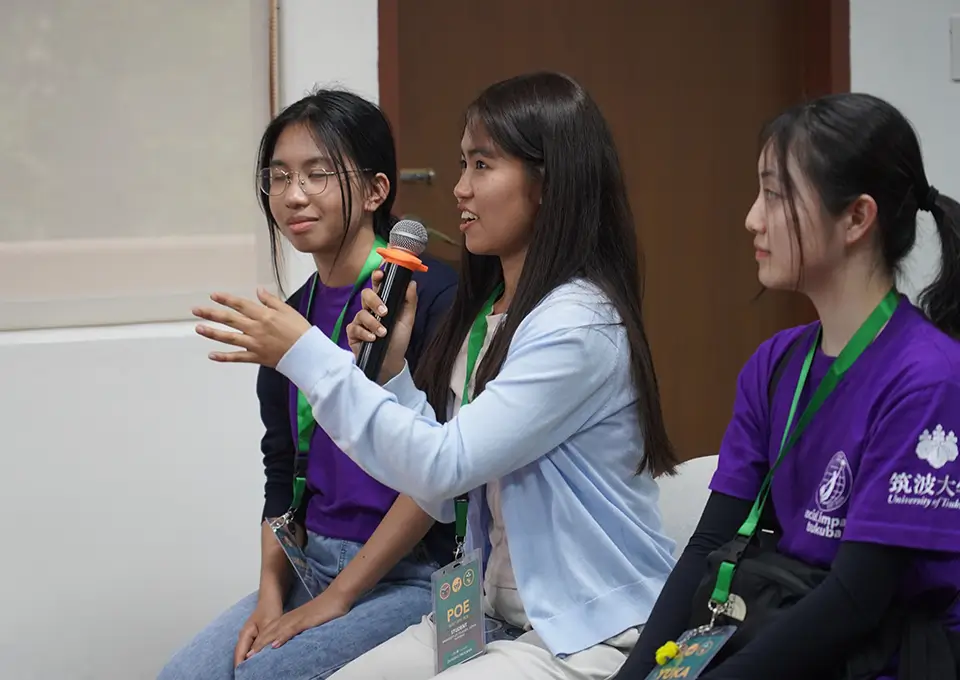
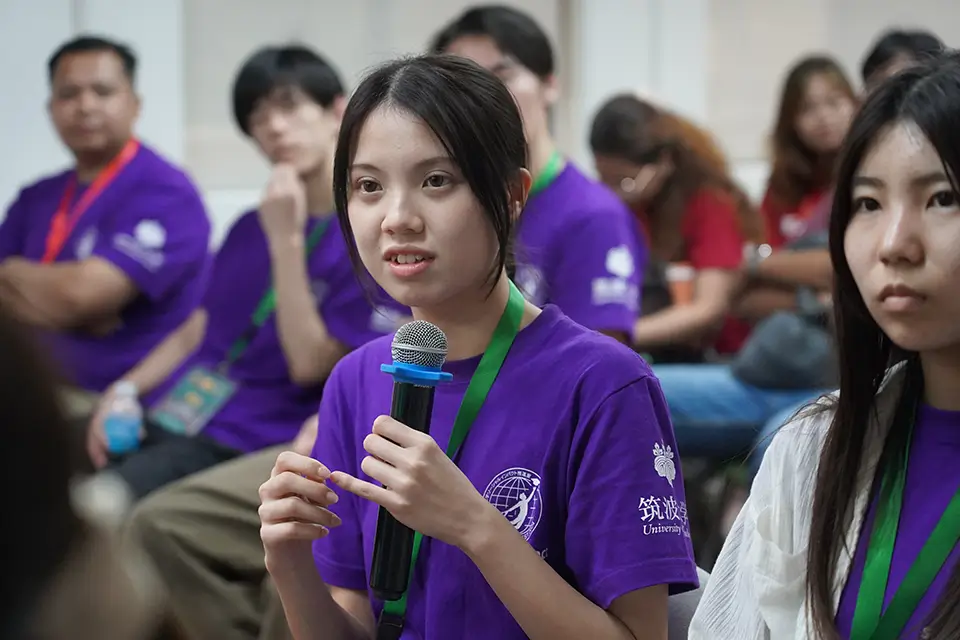
In his response, Nomura emphasized agriculture's role in safeguarding environmental stability, noting that declining agricultural engagement can lead to irreversible ecological impacts. He also underscored the need for global cooperation to address labor shortages, especially in countries like Japan, where the average age of farmers has reached 70.
SEARCA Deputy Director for Administration Dr. Rico Ancog, in his closing message, urged students to adopt a global perspective and recognize the link between agriculture and any chosen field. He stressed that young consumers' demand for high-quality, sustainable food can directly support farmers and shape environmentally responsible production systems.
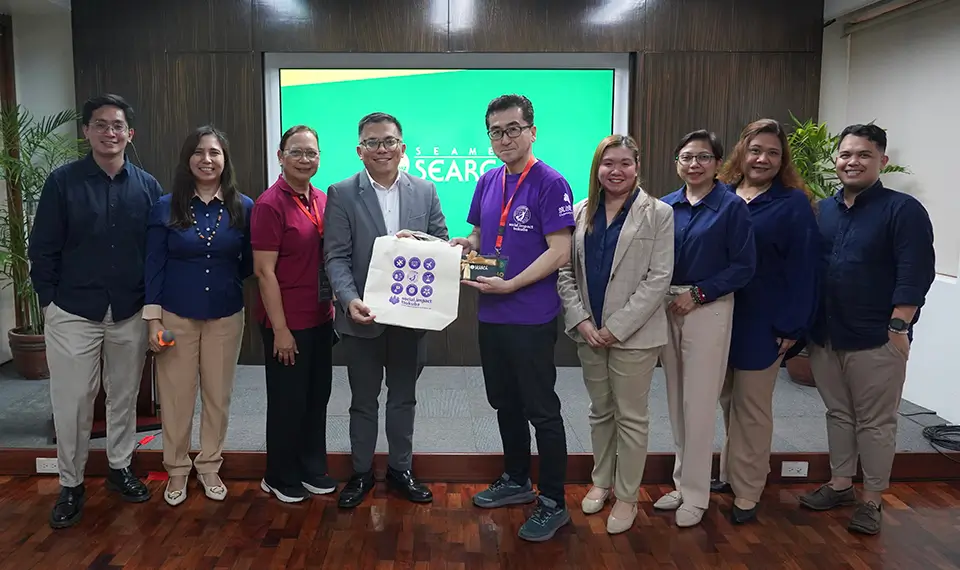
To cap the visit, the group toured the SEARCA Hub for Agricultural and Rural Innovation for the Next Generation (SHARING) AgriMuseum, where they gained insights into Southeast Asia's agricultural history and landscape, stories of farm innovation, and agripreneurship products, and enjoyed interactive games.
SEARCA welcomes such visits as part of its commitment to inspiring the next generation of agriculture leaders. By opening its doors, SEARCA helps bridge theory and practice, fosters cross-cultural learning, and encourages a deeper appreciation of agriculture's role in addressing pressing global challenges. Through these exchanges, SEARCA hopes to spark new ideas, nurture future changemakers, and strengthen partnerships that advance inclusive and sustainable agricultural transformation in Southeast Asia and beyond.