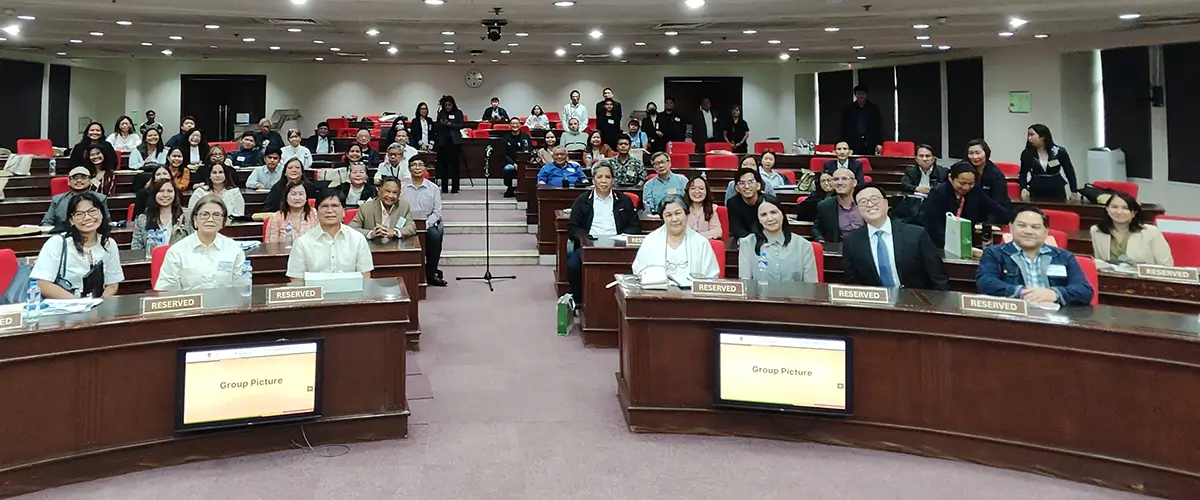
 Participants from government, academe, agribusiness, and farmers' groups attend the Food and Agribusiness Forum at UA&P PLDT Hall, Pasig City.
PASIG CITY, Philippines—Consolidation is emerging as a key strategy to strengthen Philippine agriculture and empower smallholders. This was the central message of the Food and Agribusiness Forum: Harnessing Economies of Scale: Consolidation Pathways for Philippine Food and Agribusiness, convened by the University of Asia and the Pacific (UA&P) and the Southeast Asian Regional Center for Graduate Study and Research in Agriculture (SEARCA) on 30 January 2026 at UA&P.
The forum brought together 82 stakeholders from government, academe, agribusiness, cooperatives, farmers' groups, and development organizations to explore strategies for integrating value chains, reducing farm fragmentation, and fostering sustainable and inclusive business models. This event was the second in a series focused on four strategic pillars of agricultural transformation in the Philippines: digitalization, consolidation, diversification, and industrialization.
Consolidation as a pathway to efficiency, equity, and resilience
In her welcome remarks, Dr. Mercedita Sombilla, SEARCA Center Director, framed farm consolidation as a tool to strengthen both farmers and the broader value chain.
"Fragmented farms are like scattered threads. Alone, they fray and weaken. But when woven together through consolidation, they form a fabric strong enough to compete in domestic and global markets," she said.
Sombilla emphasized the potential of consolidation to increase farmer incomes, enhance food security, and create resilient value chains.
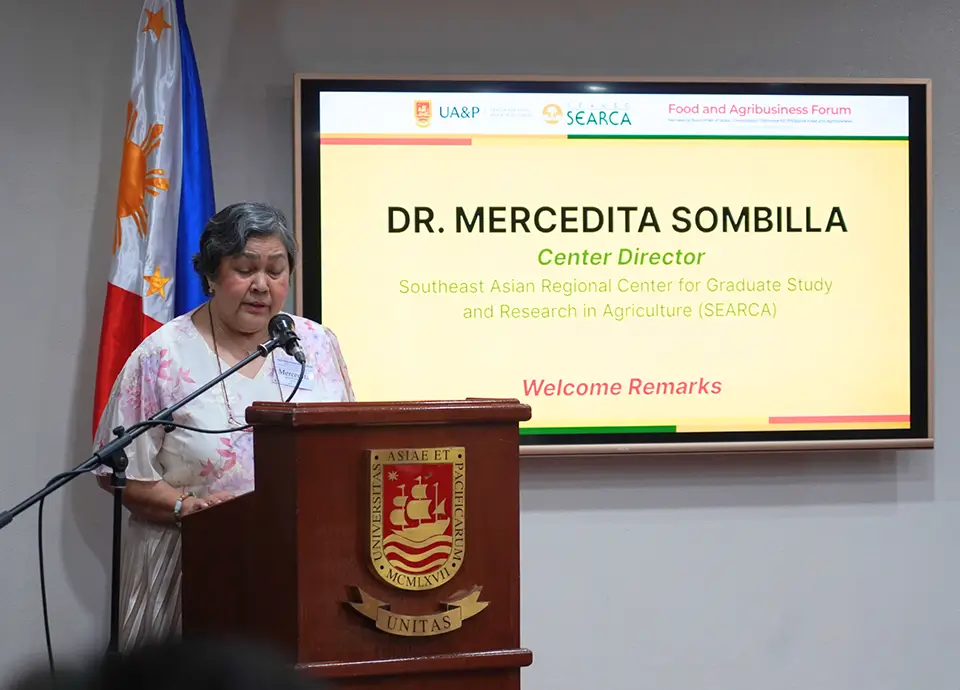 Dr. Mercedita Sombilla, SEARCA Center Director, highlights consolidation as a pathway to efficiency, equity, and resilience.
Keynote speaker Dr. Bernardo Villegas, UA&P Co-Founder and Professor, underscored agriculture's vital role in stabilizing the economy and promoting inclusive rural growth. He noted that the sector's 3.1 percent growth in 2025 was "the bright spot" of the economy but stressed that rural equity is critical, pointing out that "70 percent of the 60 percent below the poverty line are in rural areas in agriculture."
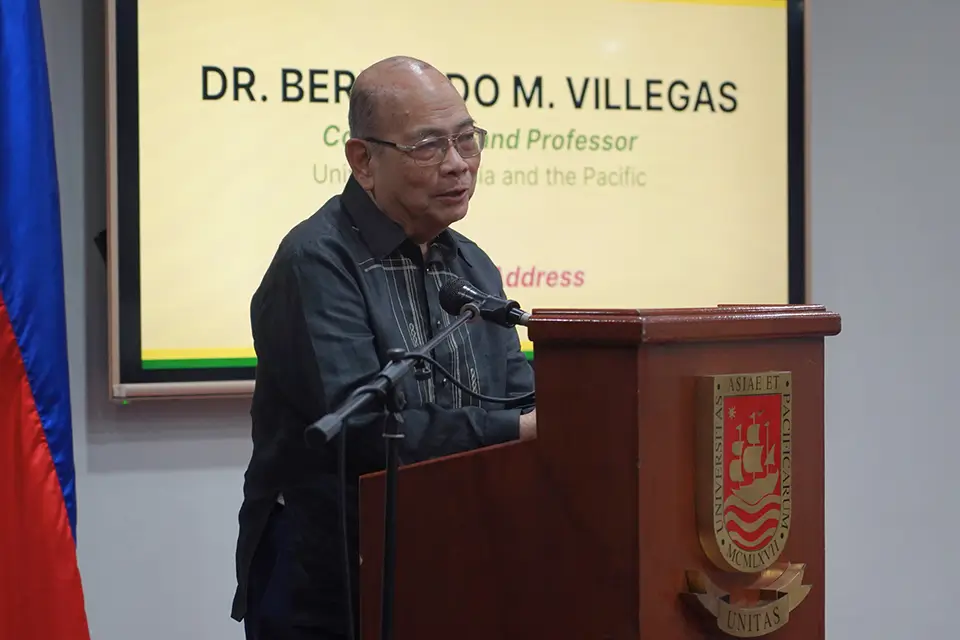 Dr. Bernardo Villegas, UA&P Co-Founder and Professor, underscores inclusive rural growth in his keynote address.
Competing at scale through collective action
The forum featured panel discussions highlighting the role of collective organization, governance, and partnerships in driving competitiveness.
Panel Session 1, titled "Competing at Scale: Building Productivity and Market Power," examined strategies for achieving scale in agricultural production and strengthening market influence.
Dr. William Dar of the Inang Lupa Movement presented the Farm and Fisheries Clustering and Consolidation (F2C2) program, which he championed as Secretary of the Department of Agriculture (DA). This initiative demonstrates how farmers can achieve scale through collective organization, allowing them to work together while maintaining land ownership. Dar highlighted the importance of collaboration among government, the private sector, and organized producers to improve food security, farmer incomes, and competitiveness.
Dr. Arlene Inocencio of De La Salle University emphasized that scale is driven by effective organization and collaboration rather than physical farm size.
Dr. Lionel Dabbadie, Country Representative to the Philippines of the Food and Agriculture Organization of the United Nations (FAO), grounded the discussion in global evidence, asserting that small farms are central to food security and that "organization before concentration," supported by strong governance and safeguards, is key to inclusive scale.
Meanwhile, Dr. Nerlita Manalili, Nexus Agribusiness Solutions Manager, noted that building capabilities, adopting technology, fostering partnerships, and strengthening collective action are critical for success.
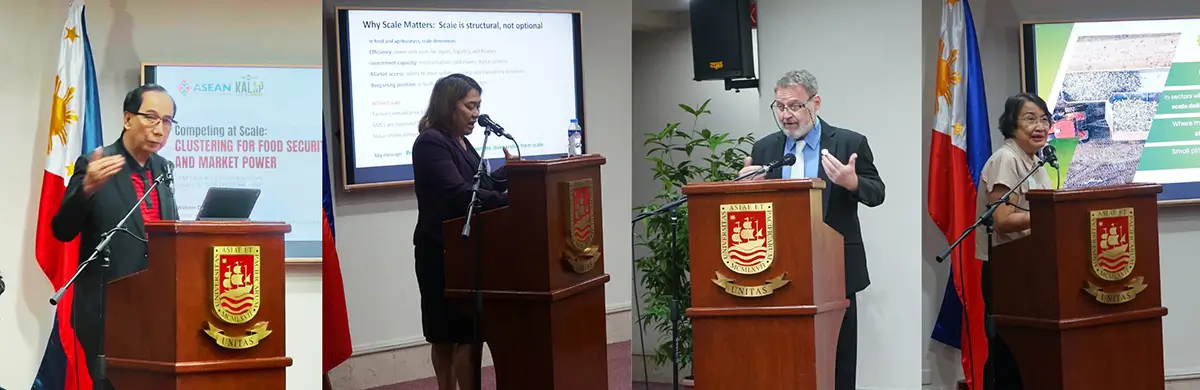 Panelists (from left) Dr. William Dar, Dr. Arlene Inocencio, Dr. Lionel Dabbadie, and Dr. Nerlita Manalili discuss strategies for building productivity and market power through collective organization.
The panel converged on one message: In agriculture, competitiveness at scale is driven not by farm size, but by collective organization, coordination, and partnerships, anchored in strong governance and effective market integration.
Local models of consolidation
In Panel Session 2, titled "Models of Agribusiness Consolidation: Pathways of the Philippines," speakers shared examples of successful consolidation adopted to local realities.
Mr. Shiryle Estoque and Mr. Ronald Tejada of the DA discussed how government-enabled clustering can organize farmers and fisherfolk into business-oriented groups to gain better access to markets, technology, and financing.
Philippine Coconut Authority IV-A Regional Director Bibiano Concibido Jr. highlighted the Bondoc Peninsula Convergence Areas as a model that enables coconut farmers to consolidate and manage their operations collectively.
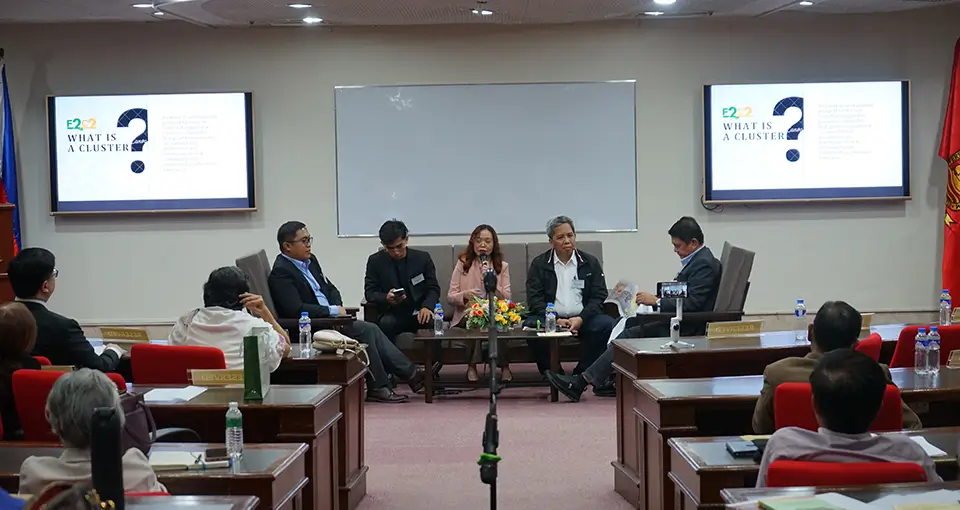 Government, cooperative, and private sector representatives share successful models of agribusiness consolidation.
The session also highlighted private sector and cooperative pathways. Mr. Rico Geron of Sorosoro Ibaba Development Cooperative shared the cooperative's multi-billion-peso integrated agribusiness model that supports more than 80,000 members through vertical and horizontal integration, linking production, credit, retail, and agribusiness into a self-reinforcing system.
On the other hand, Mr. Donnel Jun Tiedra of Nestlé Philippines shared a corporate-led contract-growing model with a coffee development program that addresses low productivity, an aging farmer population, and sustainability challenges through regenerative agriculture practices, farmer training, and contract-growing arrangements.
Panelists agreed that aligning scale, inclusivity, and sustainability with local contexts is key to success.
Inclusive, technology-enabled, and trust-based approaches
Panel Session 3 on "Impact of Consolidation: Successful Cases and Key Players" emphasized that trust, inclusion, and technology are essential for sustainable consolidation.
Mr. Roberto Alingog of Ada Manufacturing Corporation described the value of shared machinery models that allow farmers to scale independently, improve efficiency, reduce costs, and boost rural economic resilience.
Jollibee Group Foundation's Ms. Ma Laize Ar Cruzat shared the impact of its Farmer Entrepreneurship Program, which connects smallholders to institutional buyers, fosters youth engagement, and builds capacity to enhance incomes and strengthen the agricultural value chain.
Administrator Eduardo Eddie Guillen of the National Irrigation Administration (NIA) emphasized the importance of mainstreaming trust-based and community-centered governance in its operations. He noted that lasting reform depends on respecting historical contexts, engaging communities as partners, and blending tradition with innovation.
Ms. Lourdes Bambalan of Lionheart Farms illustrated its successful nucleus estate and vertically integrated model that inclusively engages smallholders to improve productivity and strengthen market competitiveness.
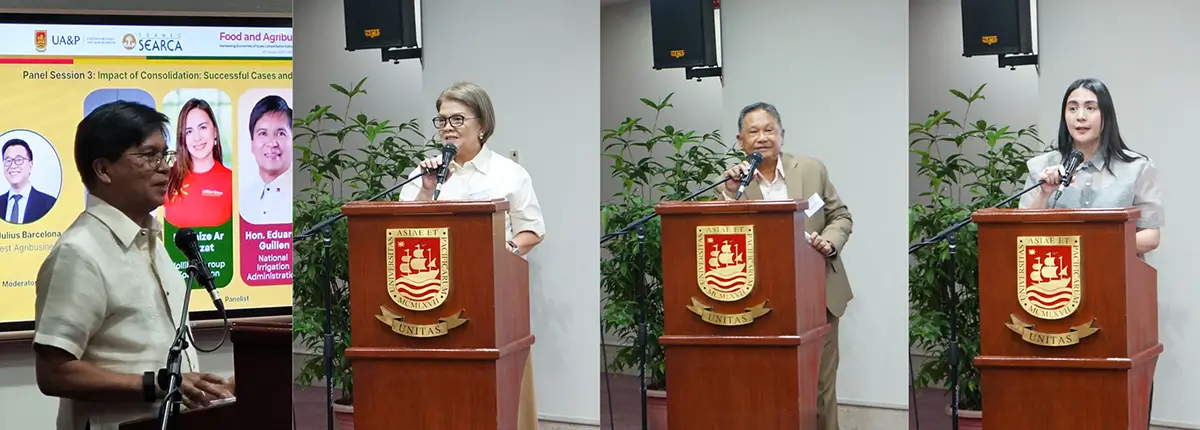 Panelists (from left) Administrator Eduardo Eddie Guillen, Ms. Lourdes Bambalan, Mr. Roberto Alingog, and Ms. Ma Laize Ar Cruzat highlight technology-enabled, trust-based approaches to empower smallholders and strengthen value chains.
Overall, the panel highlighted that long-term agricultural development depends on strategies that are inclusive, technology-driven, and grounded in community trust.
Dr. Gerlie Tatlonghari, SEARCA Program Head for Research and Thought Leadership, concluded that consolidation is essential to agricultural transformation and reiterated that collective organization, governance, partnerships, and technology—rather than farm size alone—drive success.
In her closing remarks, Ms. Marie Annette Dacul, CFA-UA&P Executive Director, stressed the importance of multi-stakeholder collaboration, saying "Transforming Philippine food and agribusiness is a shared responsibility." She also honored the late Dr. Roland Dy, founder and past CFA-UA&P Executive Director, noting that "when diverse voices come together with a shared purpose, meaningful progress is possible."
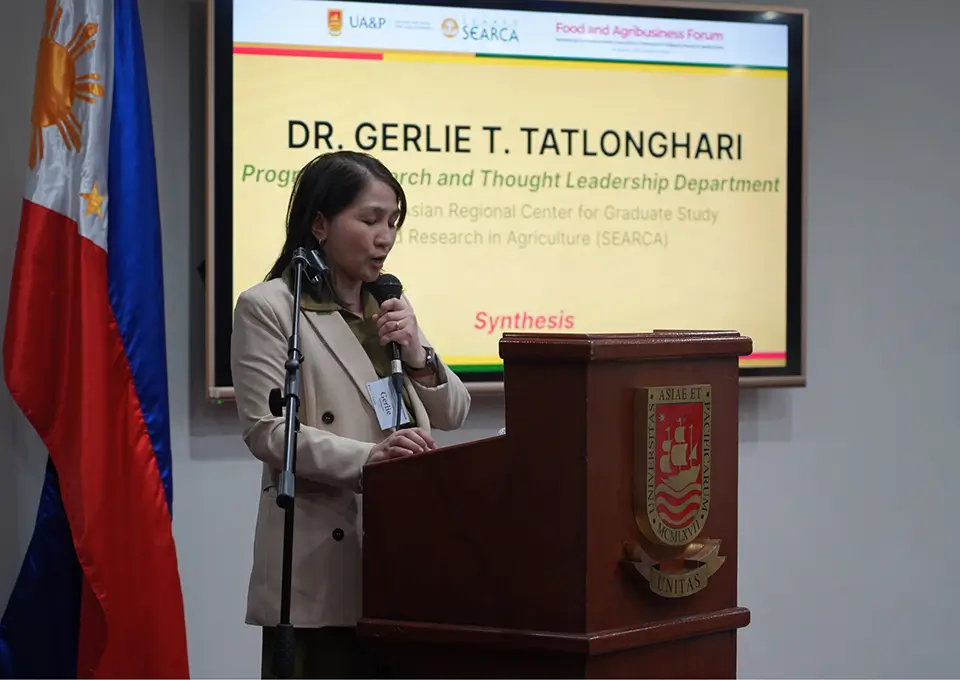
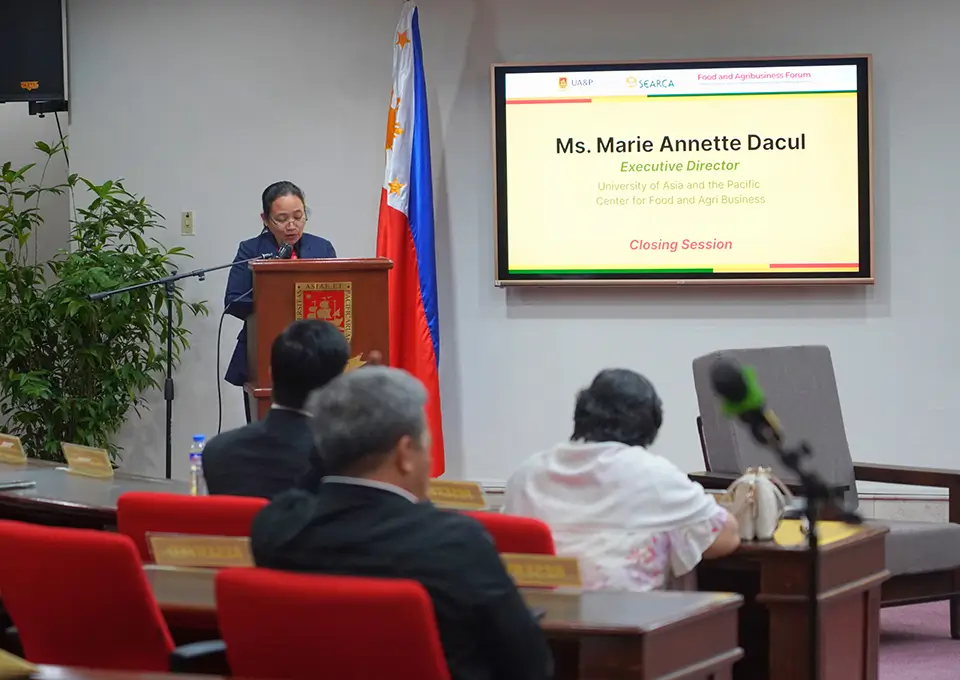
SEARCA and UA&P representatives wrap up the forum, emphasizing collective action and shared responsibility for transforming Philippine agribusiness.
The forum highlighted a growing consensus that successful agribusiness consolidation in the Philippines requires inclusive models, technology adoption, strong governance, and partnerships that empower smallholders while strengthening overall value chains.