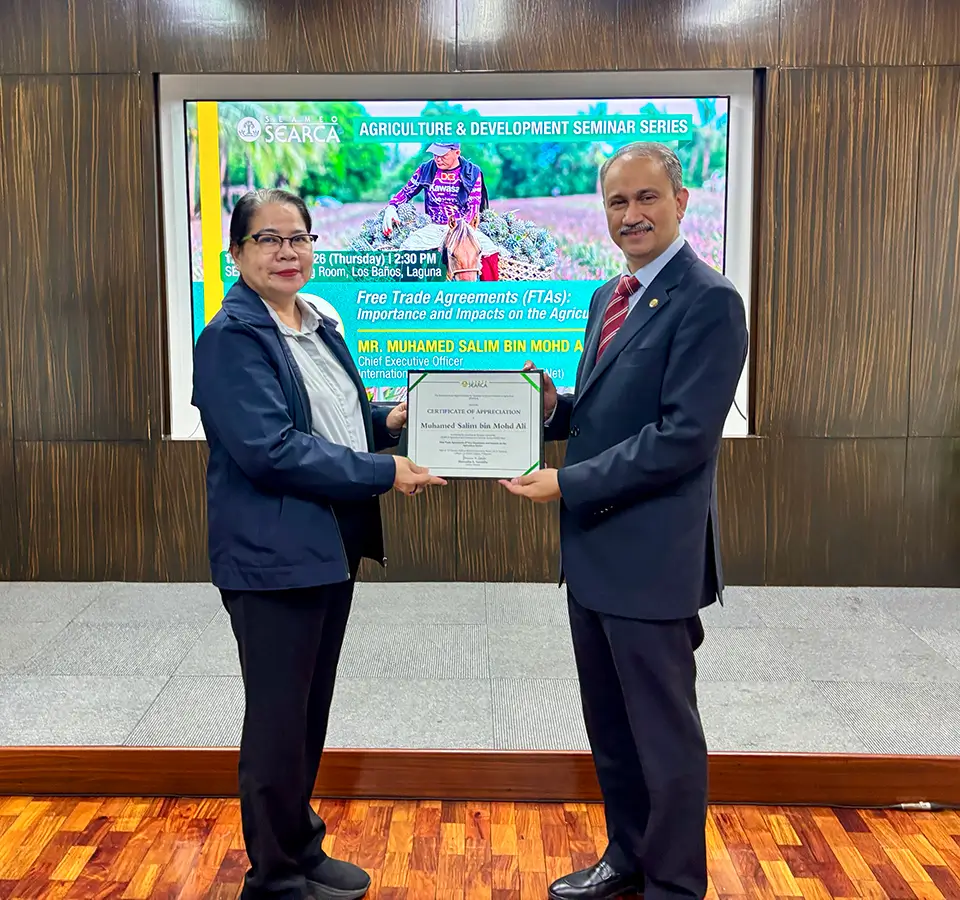
LOS BAÑOS, Philippines—Speaking at the Southeast Asian Regional Center for Graduate Study and Research in Agriculture (SEARCA) Agriculture and Development Seminar Series (ADSS) on 12 February 2026, Mr. Muhamed Salim bin Mohd Ali, Chief Executive Officer of the International Tropical Fruits Network (TFNet), emphasized that free trade agreements (FTAs) are powerful tools for agricultural transformation. However, he stressed that these agreements must be complemented by strong domestic support and strategic policies to ensure that small farmers and sensitive sectors benefit equitably.
In his presentation titled "Free Trade Agreements (FTAs): Importance and Impacts on the Agriculture Sector," Salim defined FTAs as arrangements between two or more trading alliances that primarily agree to reduce or eliminate customs tariffs and non-tariff barriers on substantial trade between them.
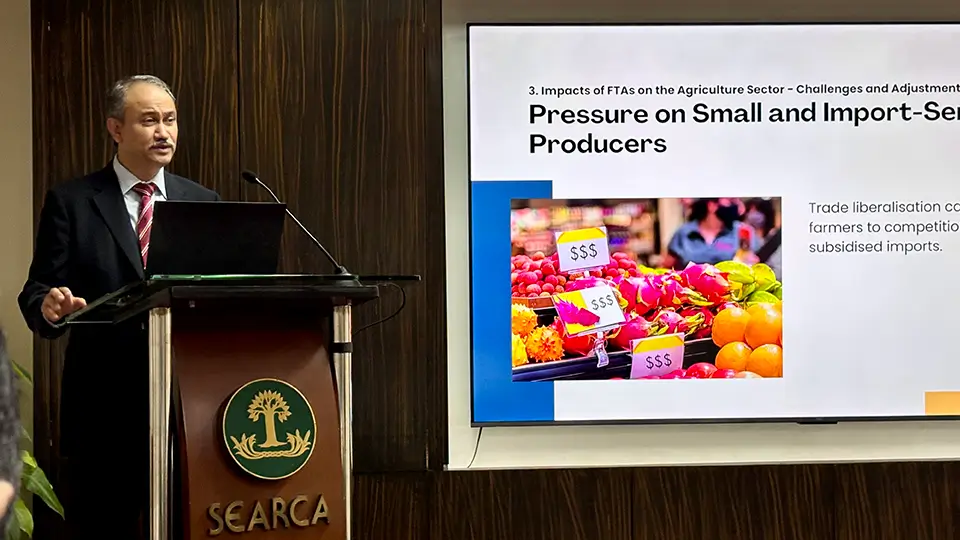
Highlighting their significance, he explained that FTAs encourage competition on a global level, which enhances the efficiency of domestic industries, promotes specialization among countries, and increases the availability of more affordable and higher-quality products for consumers. He added that with FTAs, global monopolies are eliminated due to increased competition. Moreover, FTAs help build shared frameworks for trade and investment and support people-to-people and business-to-business linkages, ultimately contributing to broader global economic growth.
Salim also presented several FTAs covering the agriculture sector, including the ASEAN Free Trade Area (AFTA), the EU–Chile Interim Trade Agreement, the Comprehensive and Progressive Agreement for Trans-Pacific Partnership (CPTPP), and the Regional Comprehensive Economic Partnership (RCEP). These agreements, he noted, have expanded market access, enhanced competitiveness, increased farm incomes, promoted investment and value addition, enabled export growth and diversification, improved standards and productivity, and facilitated the development of regional and global agricultural value chains.
Turning to the Philippine context, Salim cited several FTAs to which the country is a party, including AFTA, RCEP, the Japan–Philippines Economic Partnership Agreement (JPEPA), the Philippines–South Korea FTA, and the ASEAN–China Free Trade Agreement (ACFTA). Drawing from the Philippine experience, he underscored key lessons: FTAs deliver the greatest benefits when supported by strong domestic productivity and competitiveness measures; export gains often concentrate in high-value and well-organized subsectors; and smallholders and import-sensitive sectors require targeted adjustment strategies and support policies to fully participate in and benefit from trade liberalization.


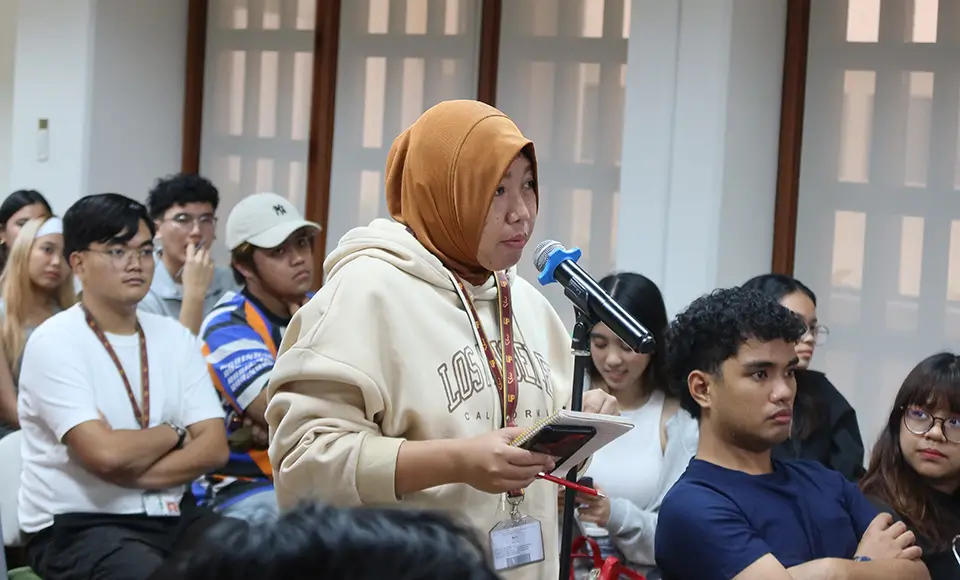
He further outlined strategic considerations for advancing a balanced trade agenda. Governments, he said, must carefully balance trade liberalization with food security, rural development, and inclusive growth to ensure that economic gains do not come at the expense of vulnerable sectors. He also recommended that bilateral FTAs undergo regular reviews to assess their socioeconomic impacts and ensure that they continue to serve national development goals. In addition, regional FTAs should be examined to address uneven gains among member countries and promote more equitable wealth distribution through coordinated regional mechanisms.
Salim concluded by underscoring the importance of adopting a strategic and inclusive approach to FTA negotiation and implementation, ensuring that the agriculture sector remains competitive, resilient, and socially sustainable.
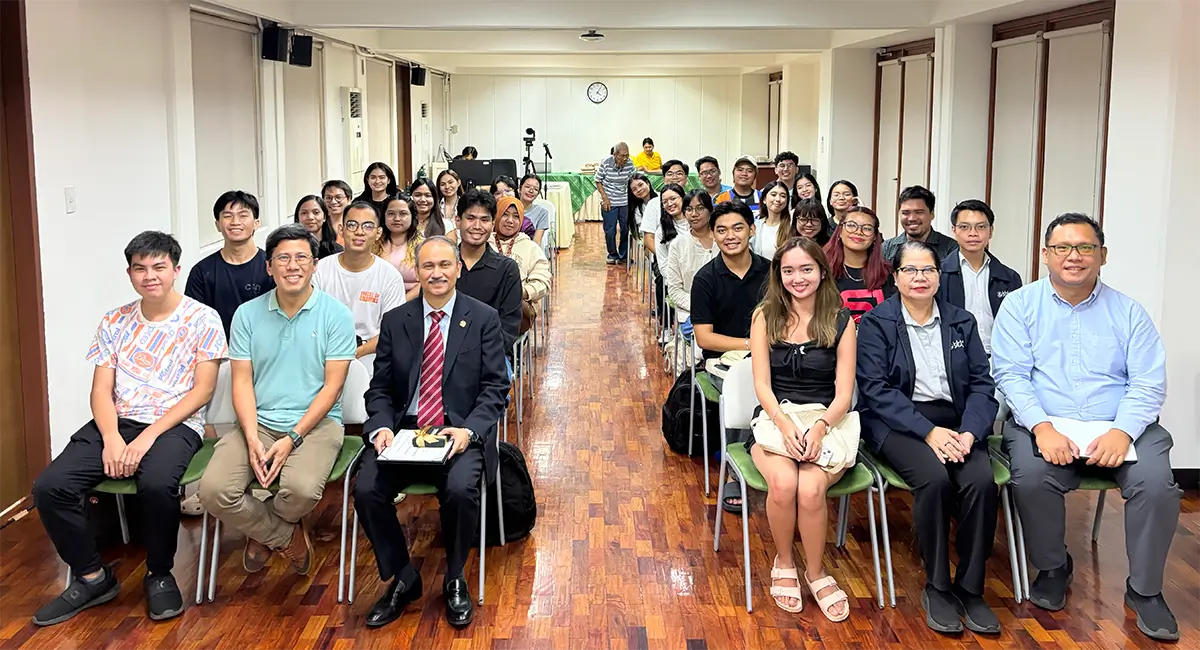
The ADSS is SEARCA's flagship seminar series that promotes the presentation and discussion of development and research issues, as well as their implications for the sustainable transformation of Southeast Asian agricultural systems through innovation (SUSTAIN Southeast Asia). It aims to foster a vibrant scientific exchange within and beyond the Los Baños Science Community.