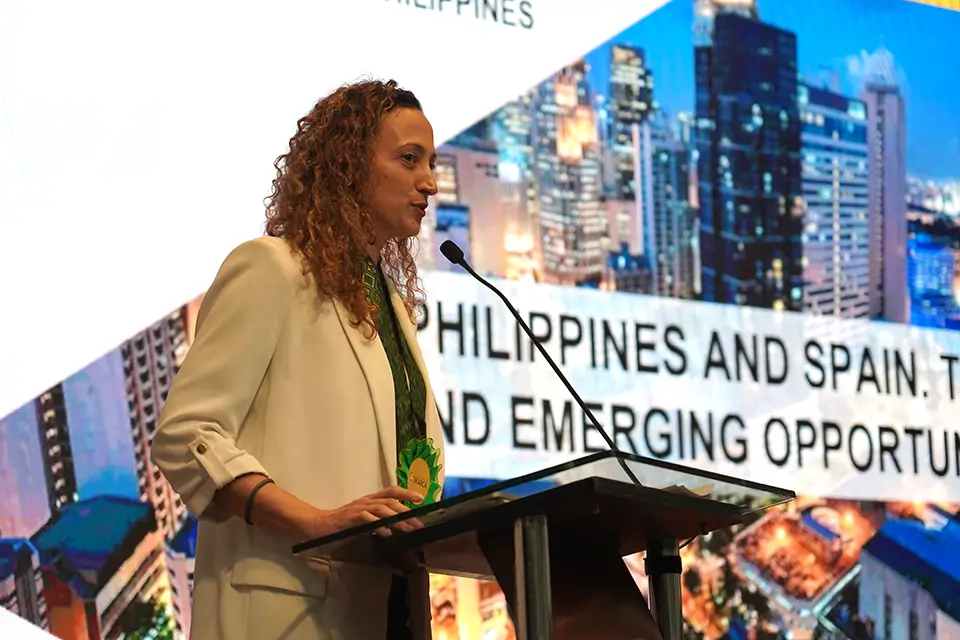
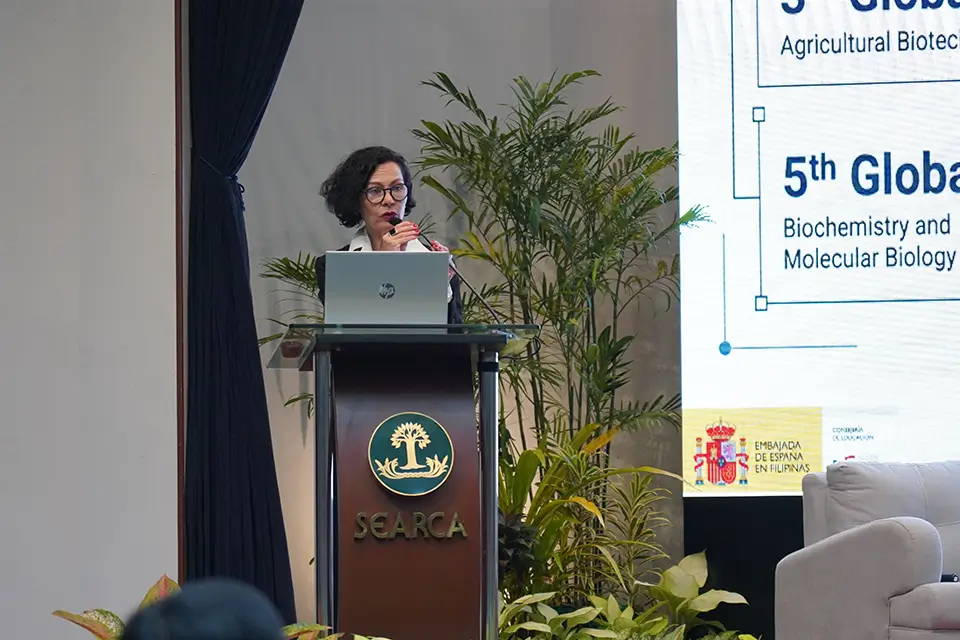
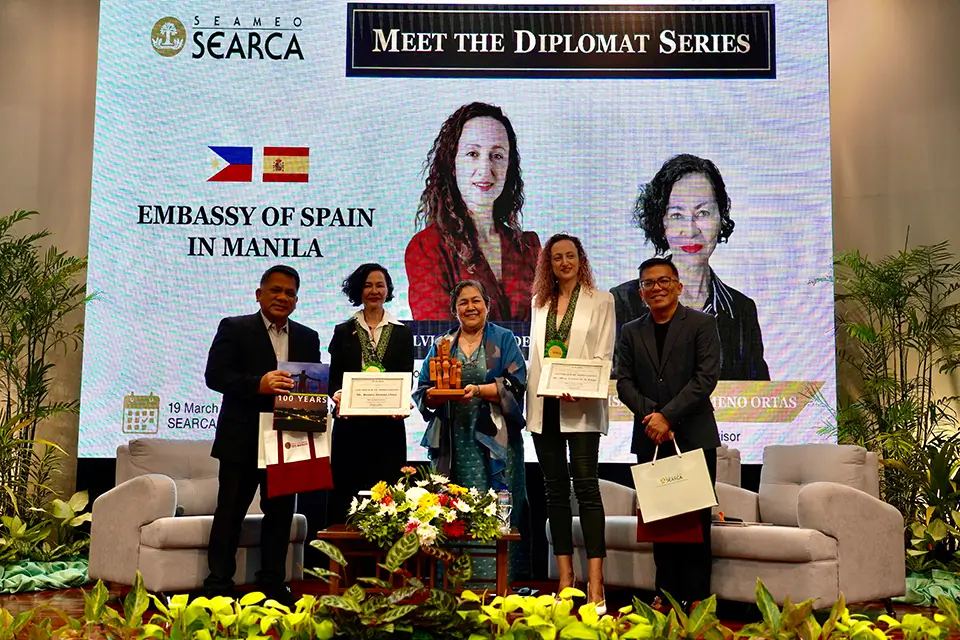
LOS BAÑOS, Philippines—The Southeast Asian Regional Center for Graduate Study and Research in Agriculture (SEARCA) hosted the second installment of its Meet the Diplomat Series (MDS) on 19 March 2026, featuring Economic and Commercial Counselor Silvia Torices de la Varga and Education Advisor Beatriz Jimeno Ortas of the Embassy of Spain in the Philippines.
The session gathered officials and representatives from the Los Baños Science Community, academe, and partner institutions to deepen diplomatic and development cooperation between Spain and the Philippines, specifically in agriculture, education, and innovation.
In her welcome remarks, SEARCA Center Director Dr. Mercedita Sombilla underscored Spain's development priorities, namely ecological transition, sustainable growth, and community empowerment. She explained how Spain and the Southeast Asian region share roles as "bridge regions," pointing out that Spain links Europe with Latin America and the Mediterranean, while Southeast Asia anchors the Asia-Pacific, a region she noted is now "recognized as the center of gravity for international relations."
She further stressed the alignment between Spain's Asia-Pacific Strategy 2026–2029 and SEARCA's 12th Five-Year Development Plan: Sustainable Transformation of Agricultural Systems through Innovation in Southeast Asia (SUSTAIN Southeast Asia). The plan embodies SEARCA's commitment to transformative regional progress, anchored by the 4Ps framework: boosting farmer incomes (Pocket), enhancing food security (Plate), building climate resilience (Place), and empowering the next generation of stakeholders (People).
In her presentation, Torices de la Varga highlighted the long-standing historical and economic ties shared by Spain and the Philippines, highlighting that the Philippines is now Spain's second-largest export market in ASEAN.
"A big chunk of our bilateral trade between Spain and the Philippines happens in agriculture—this is a manifestation of how relevant the sector is to both our economies," Torices de la Varga emphasized. She discussed the countries' strong bilateral trade in agricultural products, such as pork, beef, pineapples, coconut oil, canned goods, and semiconductors.
While acknowledging challenges such as accreditation bottlenecks, customs hurdles, and investment restrictions, she pointed to the strong potential for expanded collaboration amid ongoing economic reforms and negotiations on the Philippines-European Union (EU) Free Trade Agreement.
She also underscored opportunities in Spain's agricultural expertise, including smart irrigation and water management systems, greenhouse technologies, agrifood processing and value-added products, and renewable energy applications. Ongoing initiatives such as food logistics master planning, port development collaborations, and agricultural technology missions were presented as promising "works in progress."
Meanwhile, Jimeno Ortas provided an overview of Spain's higher education landscape, scholarship opportunities, and expanding avenues for Philippine-Spanish academic partnerships. She noted Spain's strengths in agricultural biotechnology, water management, and biochemistry and molecular biology, fields that offer valuable training pathways for Filipino researchers and students. She also cited the growing participation of Philippine institutions in the Erasmus+ program, with collaborations involving universities such as Universitat Pompeu Fabra, Universidad de Jaén, Universidad Autónoma de Madrid, and Universidad Pontificia de Salamanca.
In addition, she highlighted the increasing relevance of Erasmus Mundus Joint Masters (EMJM) as a key opportunity for Filipino students, noting that 53 Filipinos were awarded scholarships in 2025 alone. She encouraged institutions to actively prepare for upcoming Erasmus+ calls, emphasizing the importance of strategic planning and institutional coordination. Jimeno Ortas also underlined ongoing efforts to strengthen institutional links, including embassy-initiated connections between SEARCA and Spanish institutions, such as Universidad Politécnica de Madrid and FPEmpresa, as well as collaboration with Spanish companies and EU stakeholders. She concluded by stressing that this is a timely moment to expand cooperation, supported by key actors such as the Spanish Service for the Internationalization of Education (SEPIE) and the Philippine Commission on Higher Education (CHED). She also reaffirmed the commitment of the embassy's Education Office in facilitating meaningful and sustainable partnerships.
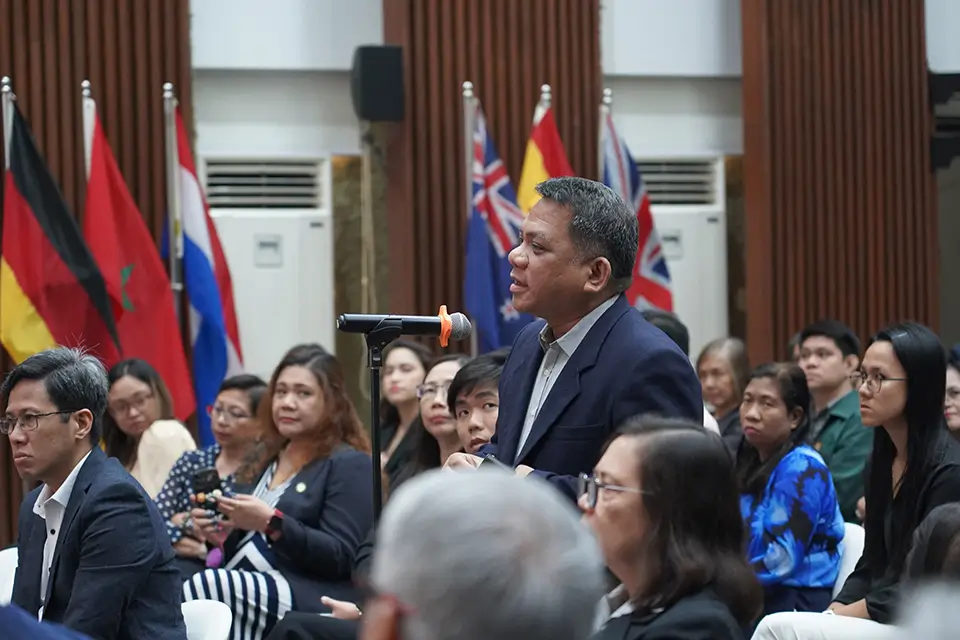
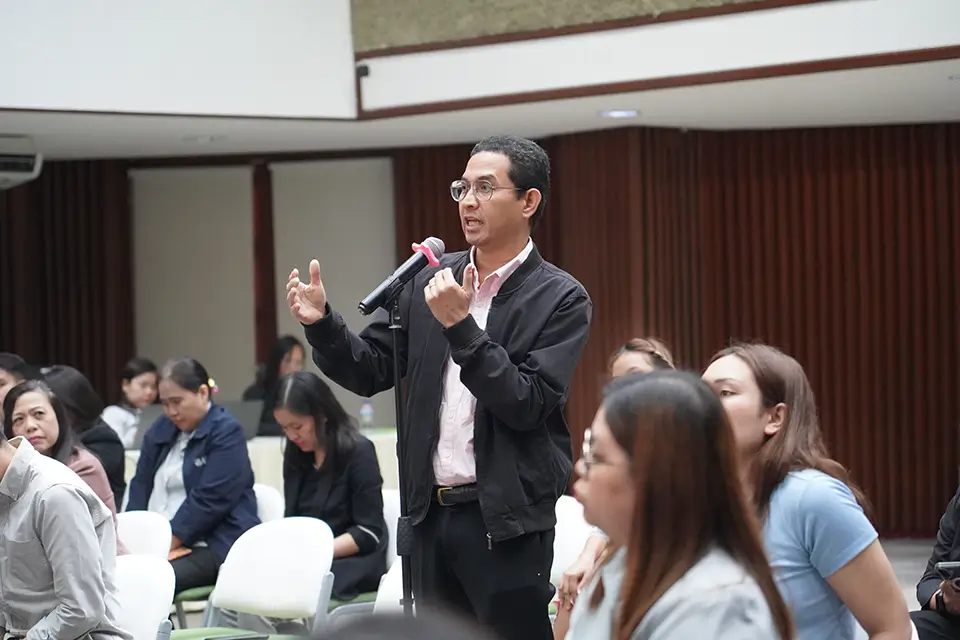
During the open forum, attendees engaged the speakers on bilateral trade, education pathways, and potential research collaborations. Torices de la Varga responded to inquiries regarding the Philippines' role as a hub for Spanish agribusiness in ASEAN, emphasizing the country's strategic potential in trade and logistics despite existing bottlenecks. Meanwhile, Jimeno Ortas addressed questions about scholarships, early-career research grants, and Spanish language requirements for graduate study, noting that many opportunities exist but require proactive coordination with Spanish universities and institutions. The exchange also sparked discussions on cost-of-living concerns in Spain, the feasibility of part-time student work, and the role of preparatory language programs.
The session concluded with the awarding of certificates and tokens to the Spanish diplomats and a group photo with participants.
Looking ahead, the MDS will continue to host ambassadors to provide fresh perspectives on their countries' priorities, foreign policies, development thrusts, and emerging areas for collaboration. These insights will help shape SEARCA's research, capacity-building, and innovation agenda. Through the MDS, the Center aims to deepen its engagement with the diplomatic community and accelerate inclusive, innovation-led agricultural transformation across Southeast Asia and beyond.
Watch the presentation here: