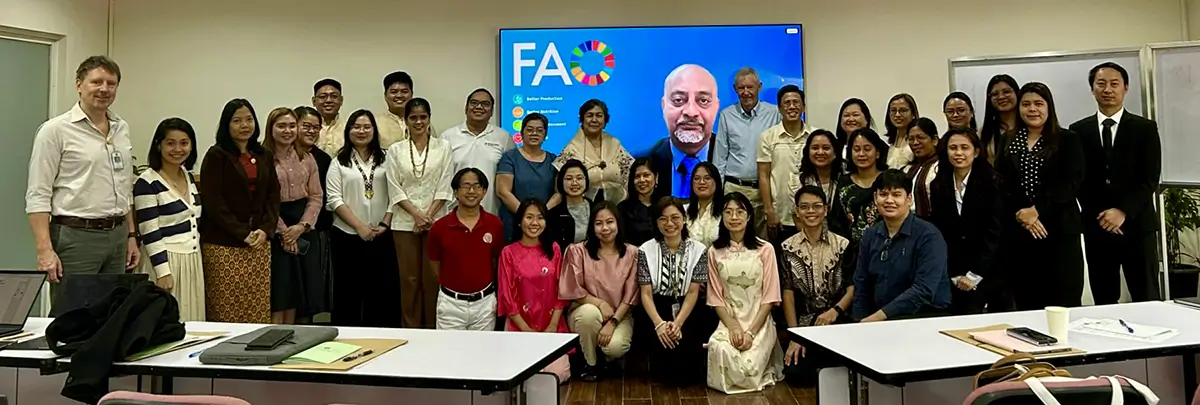
LOS BAÑOS, Philippines—On 2–6 February 2026, the Southeast Asian Regional Center for Graduate Study and Research in Agriculture (SEARCA) joined Kasetsart University (KU) and the University of the Philippines Los Baños (UPLB) in organizing a regional Workshop on Food and Nutrition Policy Analysis. The workshop aimed to strengthen the capacity of graduate students and young scholars across Southeast Asia for food and nutrition policy analysis.
SEARCA was represented in the workshop by Mr. Stoix Nebin Pascua, Ms. Anna Gale Vallez, Ms. Ma. Christina Corales, and Ms. Darlyn Angeles, all Program Specialists from SEARCA's Education and Collective Learning Department (ECLD)-Training for Development Unit (T4DU), Research and Thought Leadership Department (RTLD), Project Development and Technical Services Unit (PDTSU), and Emerging Innovation for Growth Department (EIGD), respectively. They were also joined by Ms. Thi Thi Soe, a SEARCA scholar from Myanmar.
In her opening remarks, Dr. Mercedita Sombilla, SEARCA Center Director, emphasized that a key bottleneck in transforming food systems is not the lack of data but the gap between research and policymaking. She stressed the need for skilled analysts who can translate agri-food research findings into actionable policies.
Sombilla expressed how this workshop is closely aligned with SEARCA's 12th Five-Year Development Plan: Sustainable Transformation of Agricultural Systems through Innovation in Southeast Asia (SUSTAIN Southeast Asia), which integrates science, policy, and society. By enhancing participants' capacity to identify policy options, examine trade-offs, foster collaboration, and develop future leaders in food and nutrition policy, the workshop directly supports SEARCA's role in bridging research and policy while contributing to food and nutrition security and resilience across the region.
Throughout the workshop, participants learned from 12 expert speakers, received hands-on mentoring, and visited the International Rice Research Institute (IRRI) and the Philippine Department of Science and Technology - Food and Nutrition Research Institute (DOST-FNRI). They developed practical and evidence-based policy analysis skills; deepened regional collaboration on the triple burden of malnutrition; produced three multi-country policy research proposals; and forged a growing regional network committed to translating evidence into impact.
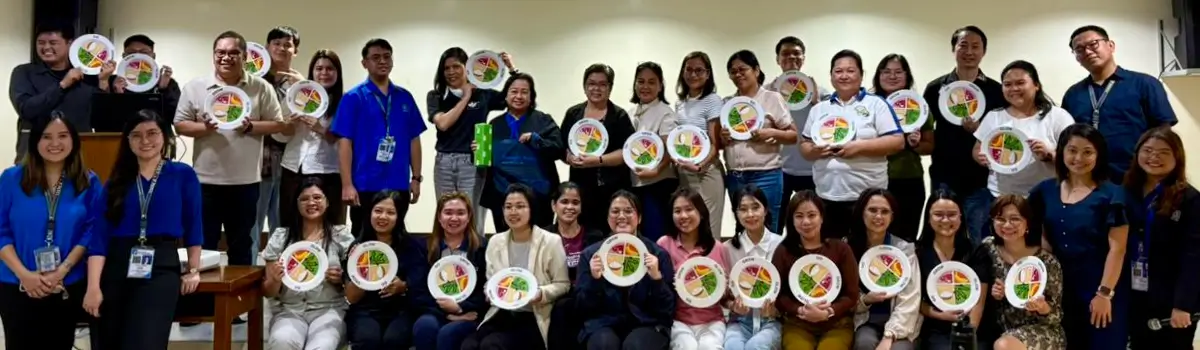
Three concept notes were developed by three groups composed of participants from SEARCA, KU, and UPLB, focusing on nutrition policy and governance, as well as agricultural value chain biosecurity in Southeast Asia.
As part of the follow-up actions, SEARCA will conduct an internal review of the concept notes to assess which can be further refined into full proposals, contingent upon donors' calls.
Driven by its SUSTAIN Southeast Asia strategic agenda, SEARCA joined the workshop to strengthen initiatives that sharpen policy analysis and promote evidence-based decision-making. Guided by its 4Ps framework—boosting farmer incomes (Pocket), enhancing food and nutrition security (Plate), strengthening climate resilience (Place), and empowering the next generation of agri-food system leaders (People)—the Center advances its mission of bridging research and policy across Southeast Asia and beyond.
The workshop was organized by the KU Faculty of Economics - Department of Agricultural and Resource Economics; the UPLB College of Economics and Management - Department of Agricultural and Applied Economics; the UPLB College of Public Affairs and Development (CPAf); and the UPLB Graduate School. It was made possible through the support of the Empowering Kasetsart Students for Global Engagement project.