MUNTINLUPA CITY, Philippines—The Southeast Asian Regional Center for Graduate Study and Research in Agriculture (SEARCA) co-organized the 2nd Science and Technology IMPACT Assessment Conference (IACon 2026) held on 25–26 May 2026 at the Acacia Hotel in Alabang.
The event was led by the University of the Philippines Los Baños College of Public Affairs and Development (UPLB CPAF), together with the Department of Science and Technology, particularly the Philippine Council for Industry, Energy, and Emerging Technology Research and Development (DOST-PCIEERD) and the Philippine Council for Agriculture, Aquatic and Natural Resources Research and Development (DOST-PCAARRD).
Anchored on the theme "Evaluating What Works in STI-led Pathways to Development," the conference convened local and international experts to share advanced methodologies, case studies, and strategic insights on embedding impact assessment (IA) into monitoring and evaluation systems. It also featured collaborative, hands-on sessions aimed at refining tools for assessing the long-term societal, economic, and technological impacts of science and technology initiatives.
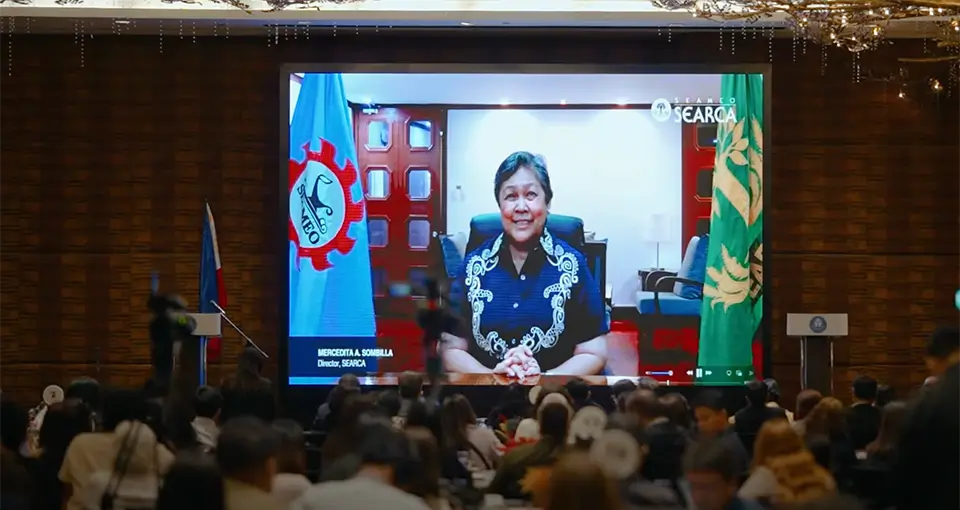
In her welcome remarks, SEARCA Center Director Dr. Mercedita Sombilla emphasized the role of IA in determining which interventions are working, which need to be redesigned, and which deserve to be scaled up.
"Ultimately, the goal [of IA] is clear. Ensure that science and technology deliver real and measurable benefits: improving livelihoods, strengthening food systems, protecting the environment, and investing in people," Sombilla said.
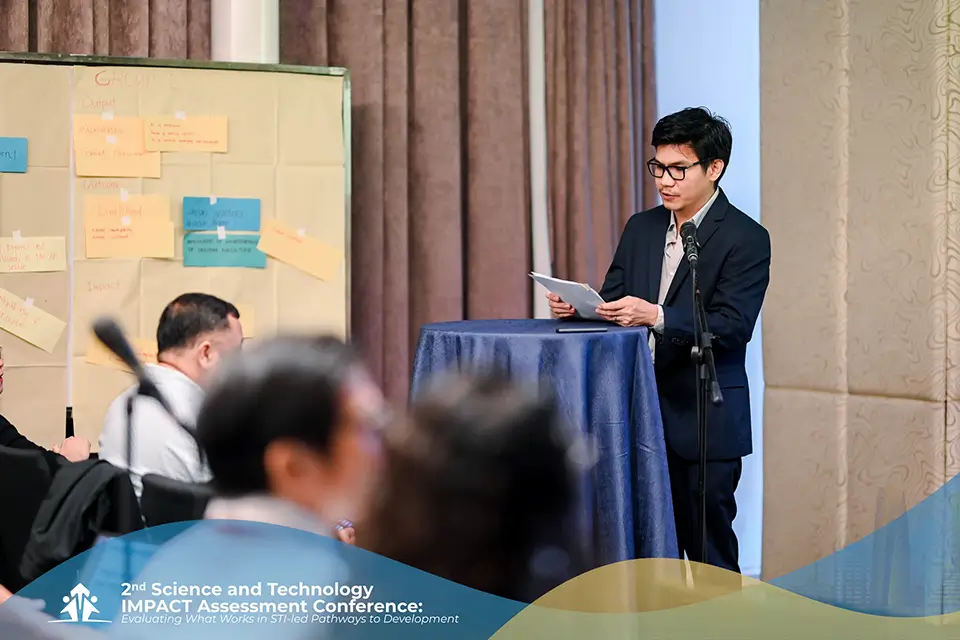
Mr. Rowell Dikitanan, Head of SEARCA's Project Development and Technical Services Unit (PDTSU), moderated the parallel session for Theme 1: IA for Strategic Assets and Data-Driven Governance. The session highlighted how IA practices generate evidence to support investments in strategic assets such as space technology, geospatial infrastructure, and industrial roadmaps that contribute to long-term national development goals.
In his closing message, Mr. Dikitanan emphasized how investments in strategic assets can generate significant impacts on governance, planning, resilience, and livelihoods when supported by strong institutions, sustained partnerships, and effective adoption mechanisms. He noted, "The session also reinforced the value of IA in generating evidence for policy decisions, strengthening accountability, and guiding future S&T investments."
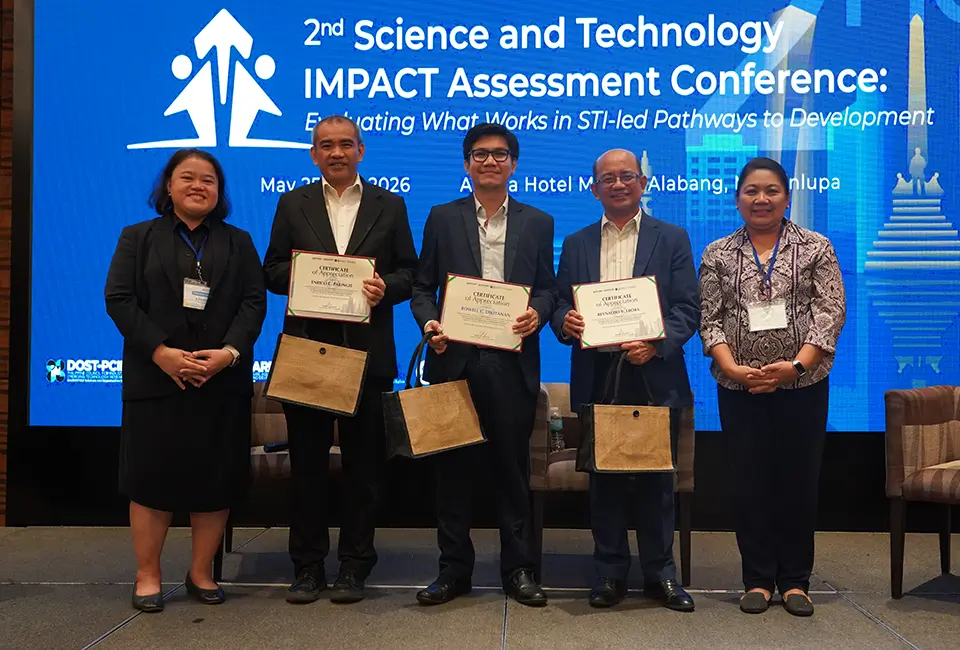
During the roundtable discussion on "Embedding Impact Assessment in Institutional Decision-Making," Dikitanan represented Sombilla as a panelist. He underscored that IA must not be treated as a donor obligation or an afterthought but as a core driver of institutional decision-making.
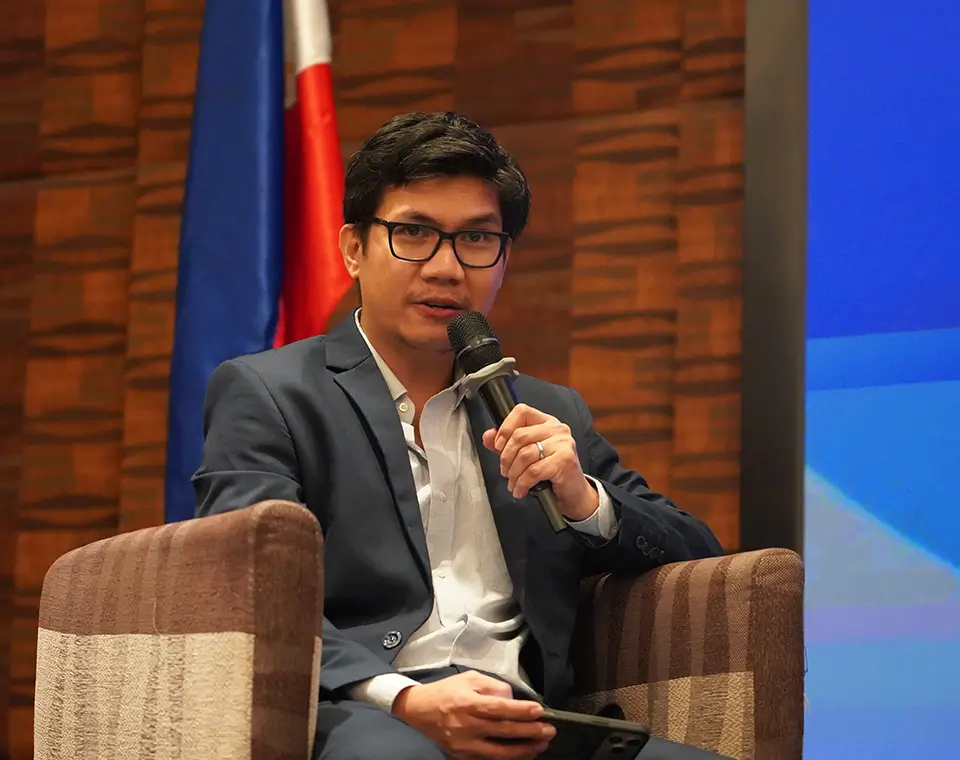
Drawing from SEARCA's experience, he explained how IA is structurally embedded into its 12th Five-Year Development Plan: Sustainable Transformation of Agricultural Systems through Innovation in Southeast Asia (SUSTAIN Southeast Asia), which is anchored on the 4Ps outcomes: increased farmer incomes (Pocket), improved food security (Plate), enhanced resilience of agricultural systems (Place), and empowered stakeholders and agricultural leaders (People). He stressed that every SEARCA program, initiative, and activity must align with these 4Ps.
He also shared specific impact assessment projects that SEARCA implemented. In the evaluation of the Technical Education and Skills Development Authority's (TESDA) Program on Accelerating Farm School Establishment (PAFSE), SEARCA brought together key stakeholders to build a shared theory of change and align activities as input for designing the surveys. The process revealed gaps, overlaps, unclear responsibilities, and areas needing stronger strategies, while emphasizing that credible assessment starts with shared understanding and collective ownership of goals and results.
For large-scale national programs, he said SEARCA uses methods that match the scope and complexity of the intervention. In the nationwide endline evaluation of the Rice Competitiveness Enhancement Fund - Rice Extension Services Program (RCEF-RESP), which covers over 300,000 farmers, trainers, and extension workers across 57 provinces, SEARCA combined surveys, focus group discussions, key informant interviews, and institutional data to deliver a comprehensive and reliable assessment, highlighting that IA cannot be one-size-fits-all.
He closed by urging leaders to prioritize learning over optics, accept negative findings, and ensure IA findings become standing agenda items in budget hearings and directly shape the next planning cycle.
Other panelists included Dr. Reynaldo Ebora, PCAARRD Executive Director; Dr. Enrico Paringit, Professor at the University of the Philippines Department of Geodetic Engineering and former DOST-PCIEERD Executive Director; Dr. David Phipps, Assistant Vice President of Research Strategy and Impact, Office of Research Services at York University; and Prof. Jose Manuel Fernandez de Labastida, Director of the State Research Agency of the Kingdom of Spain.
SEARCA has supported this biennial conference since its maiden run in 2023, which was led by the UPLB School of Environmental Science and Management (SESAM). The next conference is scheduled to be held in 2028.
As the Center envisions itself as the premier policy hub in Southeast Asia, it champions rigorous impact assessment in science and technology as a critical tool for evidence-based policymaking and practice. Guided by the science-policy-practice interface, SEARCA backs IA to ensure that investments in research and innovation—whether in biotechnology, renewable energy, or digital agriculture—translate into practical, measurable, and scalable benefits that inform better policies, strengthen institutions, and improve the lives and livelihoods of farming communities across the region.