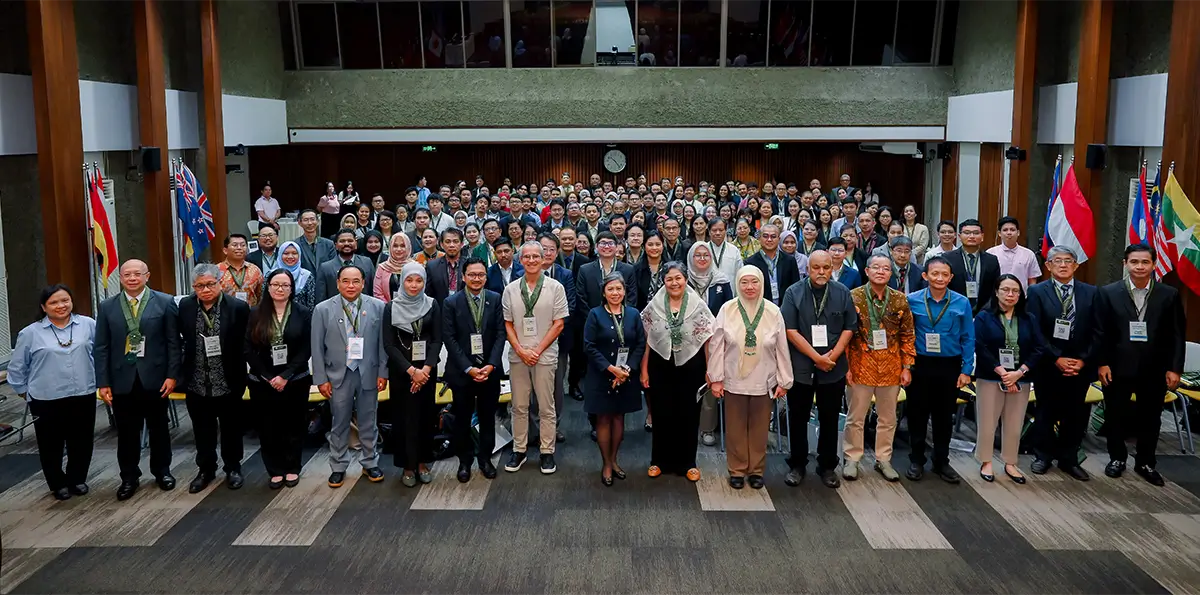
LOS BAÑOS, Philippines—The Southeast Asian Regional Center for Graduate Study and Research in Agriculture (SEARCA) convened scholars, alumni, researchers, educators, and development partners on 19–20 October 2026 at its headquarters in Los Baños, Philippines to explore how research, education, and public service can drive agricultural transformation, improve rural livelihoods, and strengthen food security across Southeast Asia.
The 2026 Conference on SUSTAINing Southeast Asia's Agricultural Futures launched SEARCA's 60th anniversary celebration, bringing together regional expertise on sustainable and inclusive agricultural development. The gathering featured keynote addresses, plenary messages, six parallel sessions, and two special sessions on educational innovation and micro-credentials.
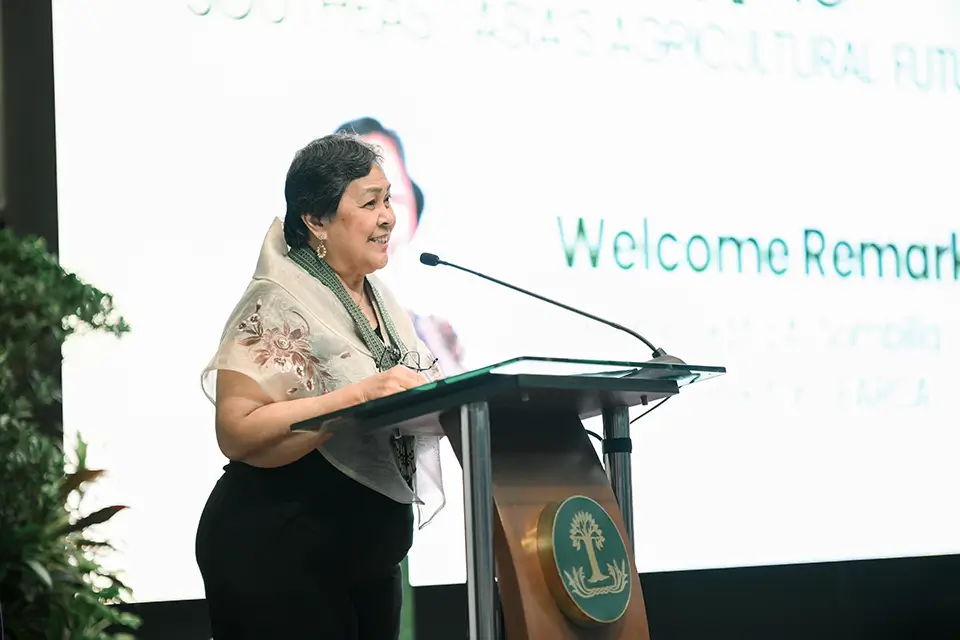
In her welcome message, SEARCA Center Director Dr. Mercedita Sombilla recognized the scholars and alumni whose work has carried the Center's mission into public policy, higher education, research, and rural communities.
"My dear alumni, your journeys affirm that investing in education is ultimately an investment in our region's future. It is my hope that your achievements will inspire the next generation to carry forward SEARCA's mission," she said.
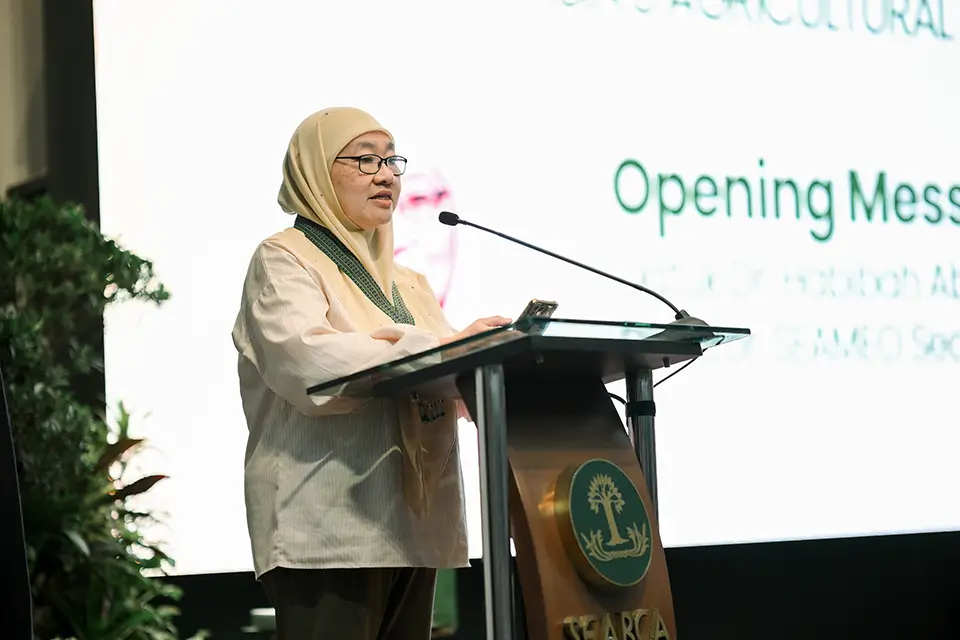
Datuk Dr. Habibah Abdul Rahim, Director of the Southeast Asian Ministers of Education Organization (SEAMEO) Secretariat, emphasized that the true value of a scholarship is measured by its societal impact.
"The true measure of a scholarship is not the degree on the wall, but the difference its recipients make in the lives of others," she said, calling for solutions that bridge scientific innovation, inclusive policy, and local wisdom.
Meanwhile, Prof. Dr. Ir. Asdi Agustar, President of the Regional SEARCA Alumni Association (RSAA), stressed the critical role of people, social institutions, and equity in sustaining agriculture.
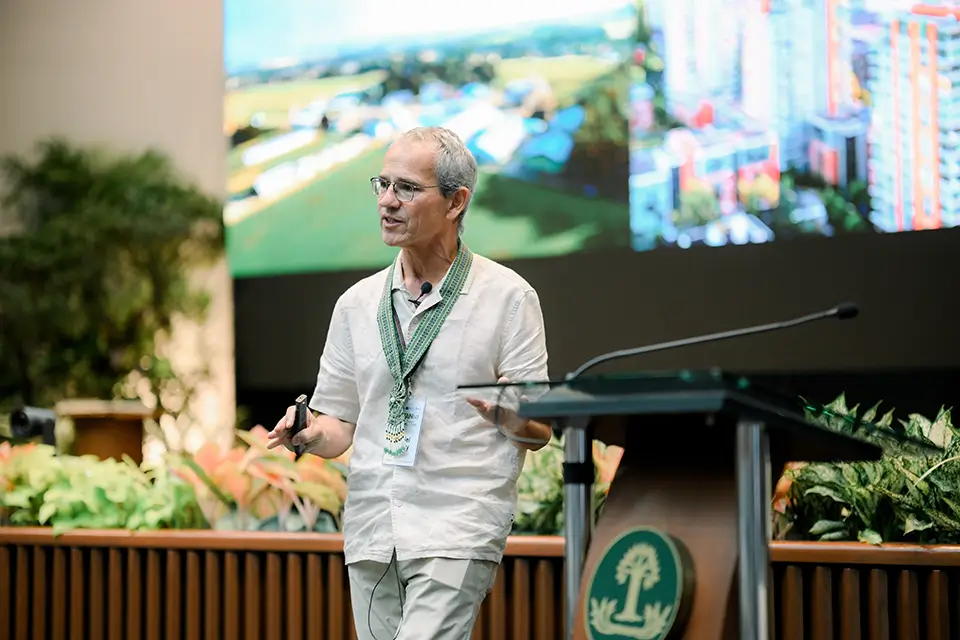
The keynote presentations highlighted how universities can accelerate agricultural transformation through research, collaboration, and flexible learning. Dr. Daniel Weary of the University of British Columbia, Canada, drew on decades of animal welfare research to demonstrate why scientific evidence alone does not automatically change farming practices. He emphasize working directly with farmers to understand their constraints and develop practical, context-specific solutions. Furthermore, he challenged universities to equip future leaders with the collaborative and leadership skills needed to address complex agricultural problems.
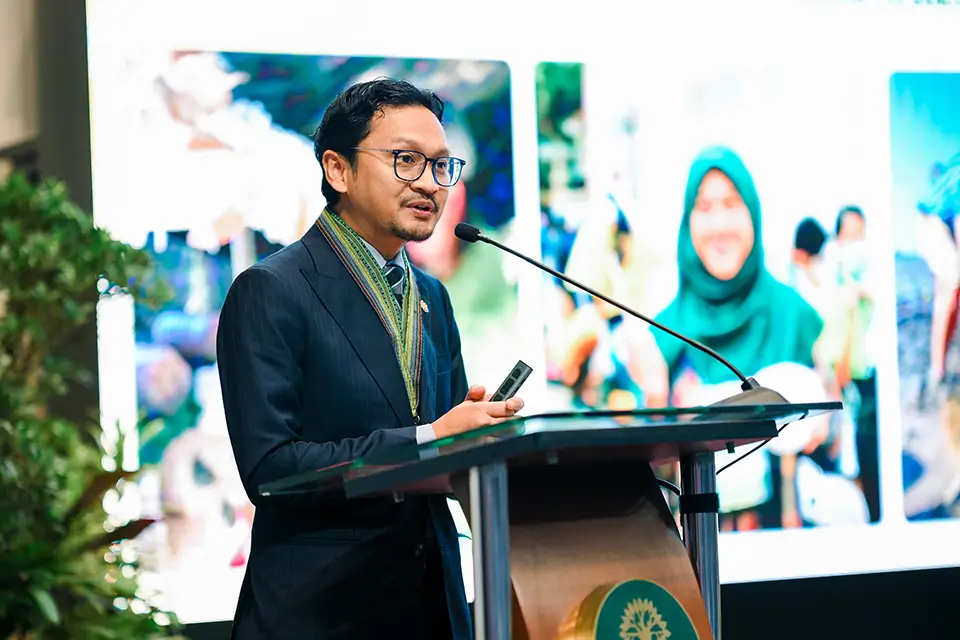
Focusing on flexible education, Prof. Dr. M. Iqbal Saripan, Deputy Chief Executive Officer for Quality Assurance at the Malaysian Qualifications Agency, shared Malaysia's experience with micro-credentials. He explained how robust quality assurance enables shorter learning units to stack be combined toward formal qualifications, thereby expanding opportunities for professional development and access to higher education.
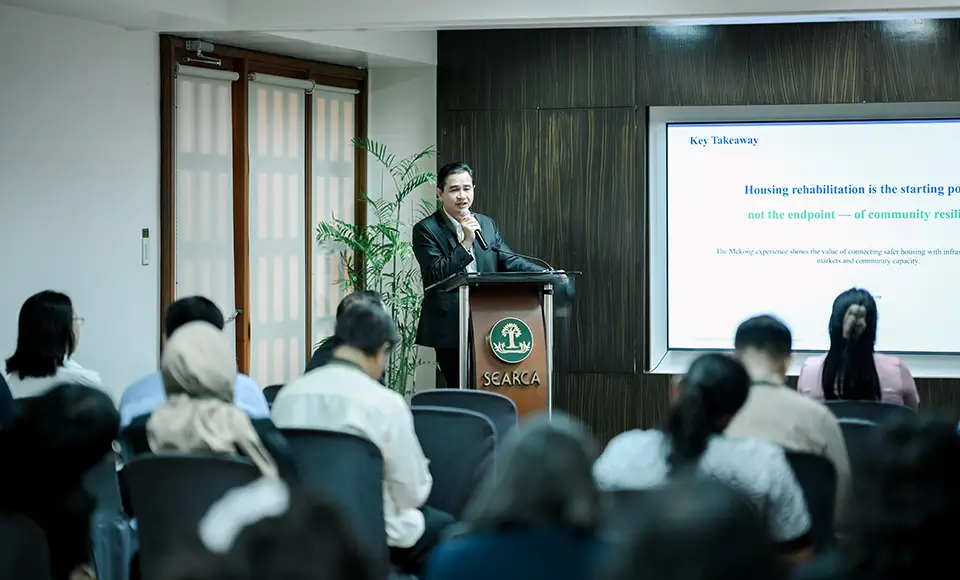
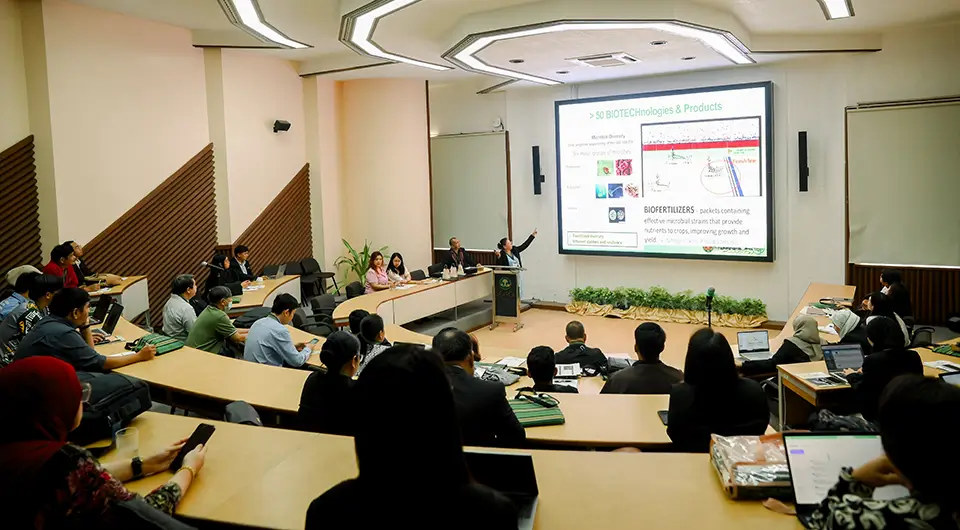
Across six parallel sessions, attendees examined resilient smallholder enterprises, crop innovation, climate adaptation, social inclusion, biodiversity, and healthy food systems. These topics aligned with the four intended outcomes of SEARCA's Sustainable Transformation of Agricultural Systems through Innovation in Southeast Asia (SUSTAIN Southeast Asia) agenda: Pocket (higher farmers' incomes), Plate (improved food security and nutrition), Place (resilient agricultural systems), and People (empowered farmers, stakeholders, and institutions).
Research presentations covered smallholder participation in Vietnam's beef cattle supply chains, coffee farm mechanization in Cavite, and fishway implementation to restore fish migration routes in Lao PDR. Studies of rice systems in Malaysia and Indonesia examined the intricate links between climate risks, agricultural management, financial incentives, and watershed conditions.
Other presentations highlighted women's empowerment in Indonesian agriculture and youth engagement in organic agripreneurship in Benguet. Other studies explored environmental DNA for fisheries monitoring, the use of wild foods as food security resources in Ilocos Sur, rapid food-safety testing technologies, and livestock genetic conservation, demonstrating the range of innovations supporting sustainable agrifood systems.
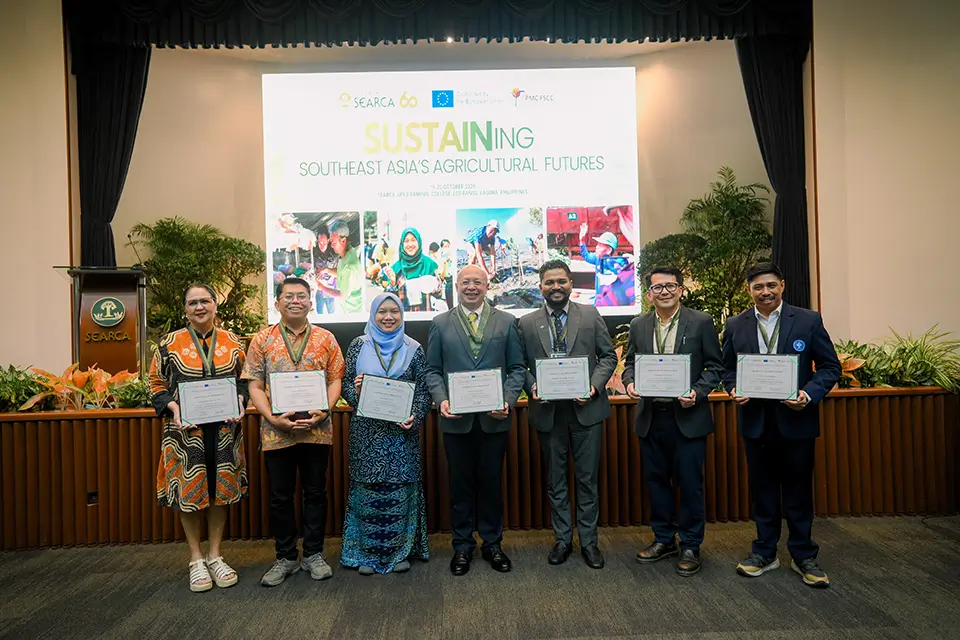
Two special sessions, organized in partnership with the European Union co-funded Postgraduate Micro-credentials for Food Security and Climate Change (PMC FSCC) project under the Erasmus+ program, focused on innovations in agricultural education. The session titled "The Future of Learning: Innovations in Education and Micro-credentials in Southeast Asia" gathered perspectives from universities and SEAMEO centers on flexible, accessible learning models. The second session, titled "The Postgraduate Micro-credentials for Food Security and Climate Change," showcased regional collaboration in developing and recognizing learning pathways that address climate and food security challenges.
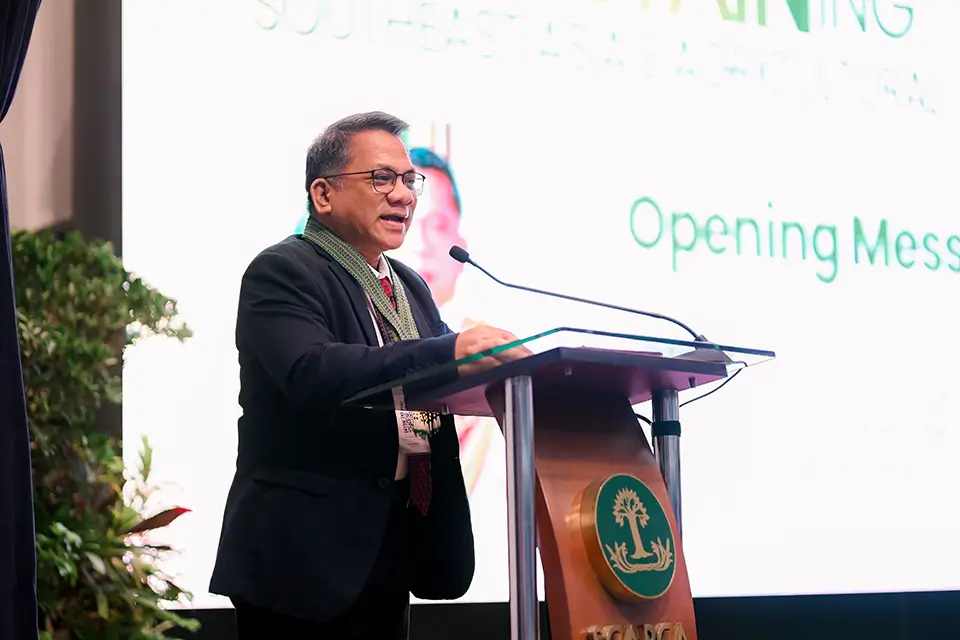
Opening the conference' second day, Prof. Dr. Jose Camacho, Jr., Chancellor of the University of the Philippines Los Baños (UPLB) and Country Representative of the Philippines to the SEARCA Governing Board, highlighted the enduring partnership between SEARCA and UPLB, the Center's host institution, in nurturing generations of agricultural scientists, leaders, and practitioners through capacity building and graduate education. He emphasized that cross-border challenges involving climate variability, food security, and rural livelihoods demands a strong, well-connected regional network of highly trained scholars such as those that SEARCA produces.
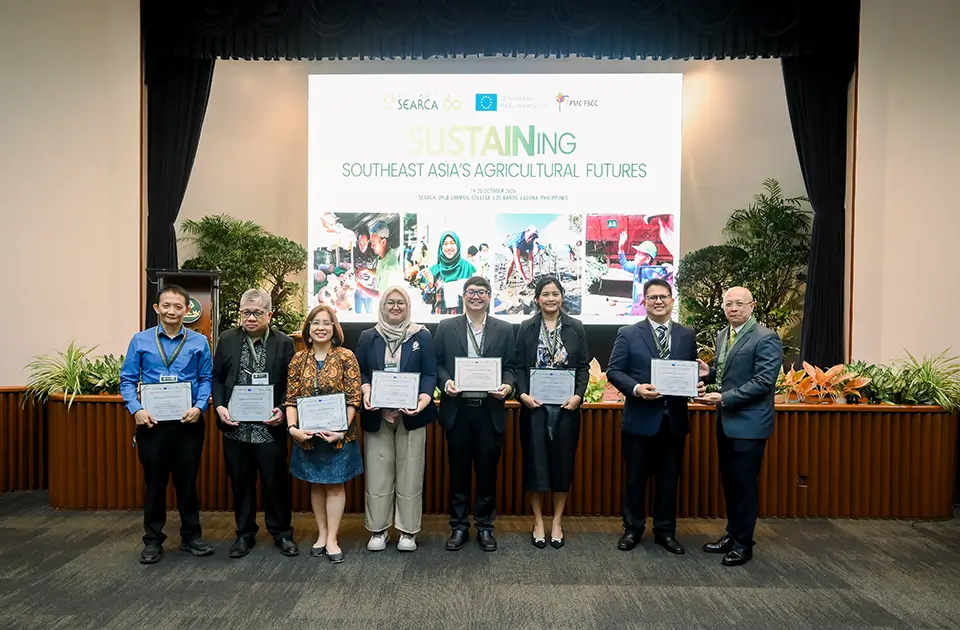
Building on the first day's discussion of educational and scientific concerns, Day 2 of the conference focused on policy action and community development, featuring three recipients of the 2026 Outstanding SEARCA Scholarship Alumni (OSSA) Awards: Dr. Asikin Yoeu of Cambodia, Dr. Weerapon Thongma of Thailand, and Dr. Arsenio M. Balisacan of the Philippines. The awardees were formally recognized during a ceremony in the afternoon of 20 October.
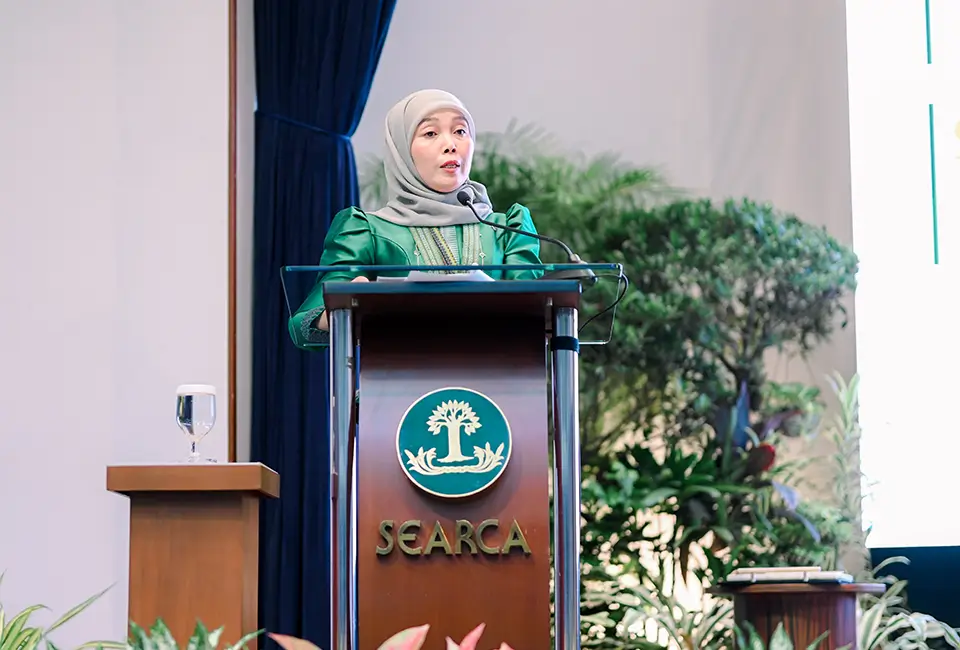
Dr. Asikin Yoeu, Cambodia's Undersecretary of State for International Cooperation at the Ministry of Agriculture, Forestry and Fisheries, shared insights on conservation agriculture and sustainable intensification, emphasizing collaboration among governments, universities, extension networks, and private enterprises. Advocating for women's leadership and stronger support for smallholder farmers, she reminded the audience, "Policy means very little if it remains trapped in high-level conference rooms."
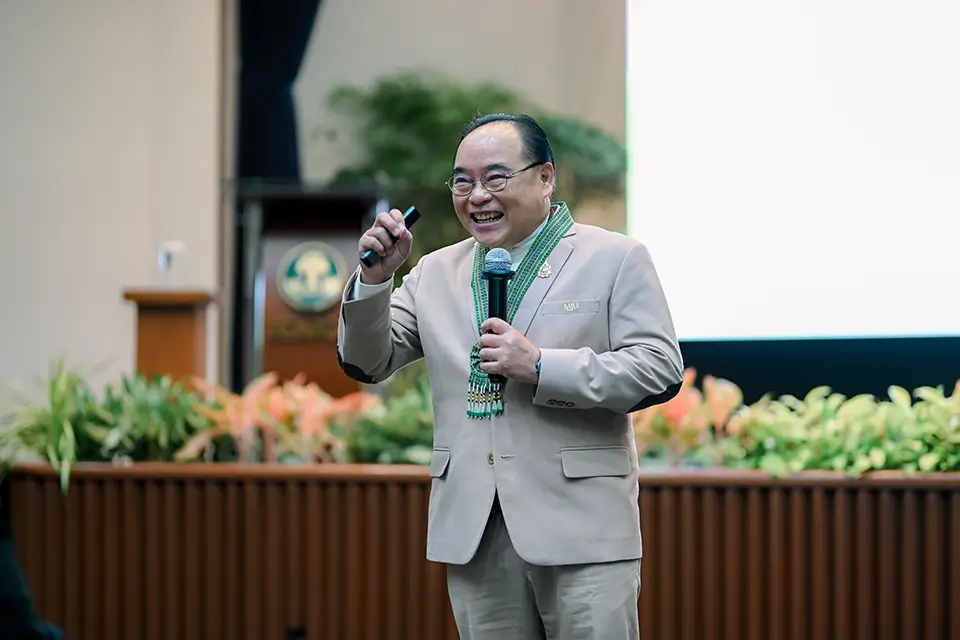
Fellow OSSA awardee Dr. Weerapon Thongma, President of Maejo University in Thailand, discussed how universities can build community capacities and strengthen local ownership of development initiatives. Drawing on university–community partnerships and community-based tourism initiatives, he stressed that genuine development begins with understanding people's lived experiences.
"Knowledge should come not only from researchers but also from local voices and experience," he remarked.
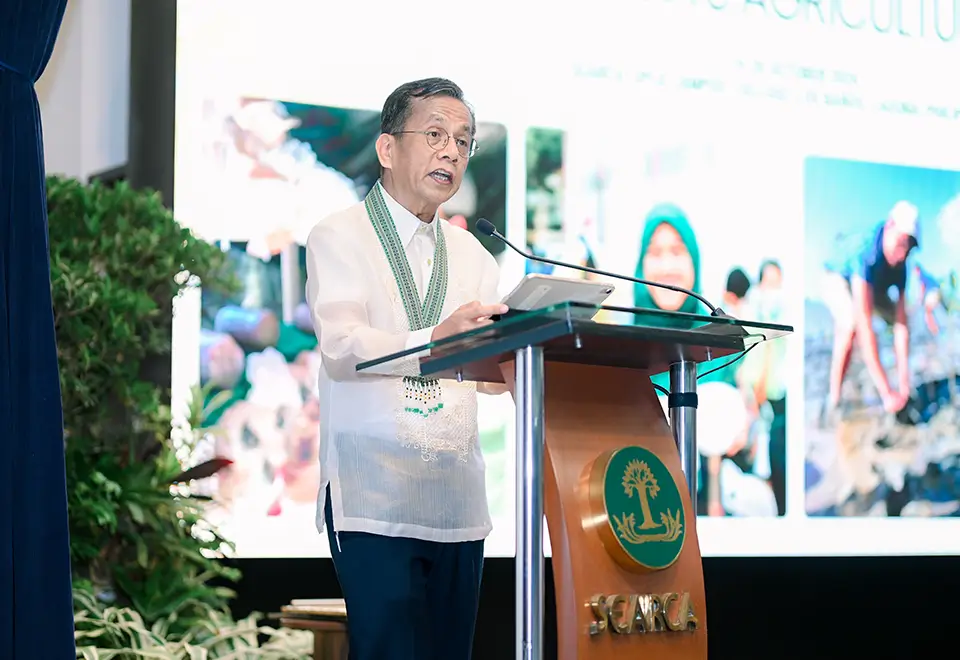
Dr. Arsenio M. Balisacan, Secretary of the Philippines' Department of Economy, Planning and Development, a German Academic Exchange Service (DAAD)–SEARCA scholarship alumnus, and former SEARCA Center Director, identified five critical challenges shaping Southeast Asia's agricultural future: climate change, geopolitical tensions and supply chain disruptions, artificial intelligence and emerging technologies, the energy transition, and the need to expand human opportunities. Drawing on his extensive experience in agricultural economics, development policy, and public service, Balisacan urged scholars and practitioners to assess who benefits from development interventions, who bears the costs, and whether solutions respond to the actual needs of rural families.
The two-day conference underscored that agricultural innovation must be supported by education, effective institutions, and partnerships to translate research into tangible improvements in people's lives. It also strengthened opportunities for regional knowledge exchange and collaboration as SEARCA enters its seventh decade of advancing agricultural and rural development in Southeast Asia.
Balisacan's captured the conference's central call to action: "The agricultural futures we seek will take shape through the research we undertake, the institutions we strengthen, and the opportunities we help others create."