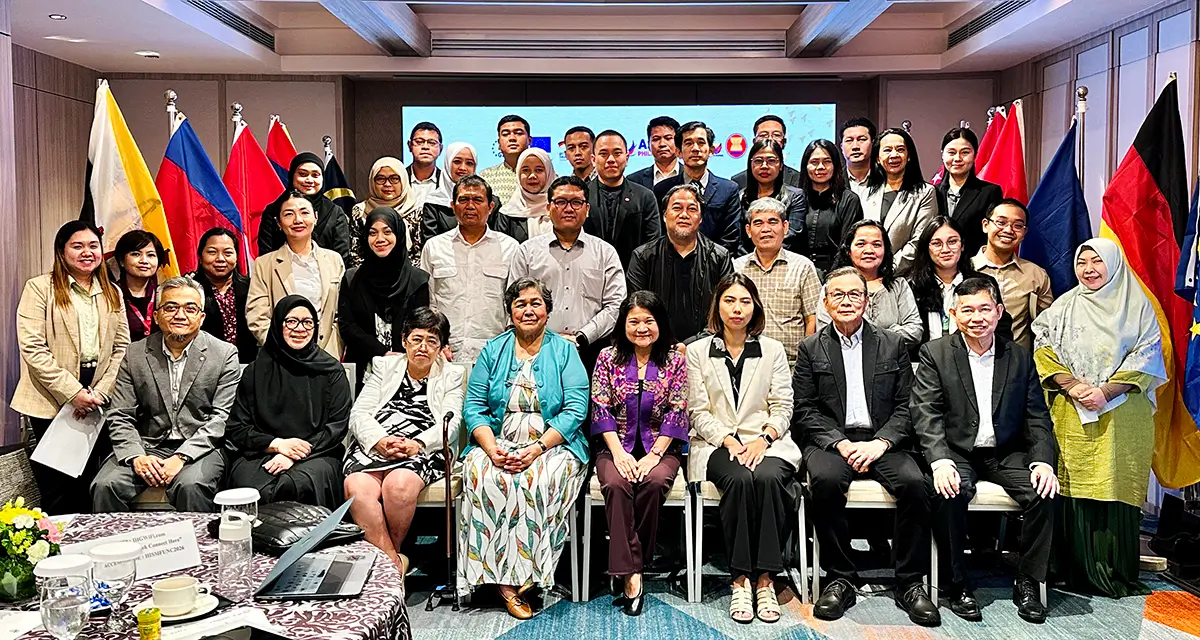
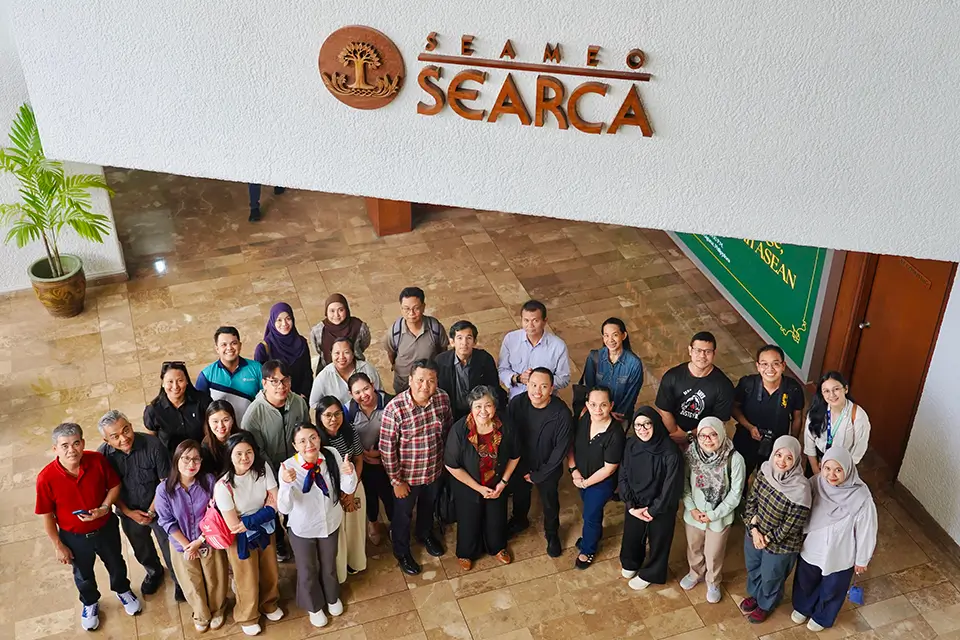
 Regional validation workshop delegates and key partners gather for an official group photo. (Front row, from left) Mr. Dian Sukmajaya, Senior Officer of ASEAN Secretariat Food Agriculture and Forestry Division; Ms. Mardiah Hayati, Senior Officer of ASEAN Secretariat Environment Division; Dir. Elenida Basug, Director of DENR Climate Change Service Division; Dr. Mercedita Sombilla, SEARCA Center Director; Dr. Noralene Uy, DENR Assistant Secretary for Policy, Planning, International Affairs, and Climate Change; Ms. Ferosa Arsadita, GIZ Indonesia Climate Change Advisor; Dr. Rex Victor Cruz, SEARCA-LULUCF Project Team Leader; Dr. Juan Pulhin, SEARCA-LULUCF Project Climate Policy Expert; and key stakeholders and representatives from the ASEAN Member States and partners
MAKATI, Philippines—Regional climate experts, policymakers, and forestry specialists gathered for a four-day regional validation workshop to validate geospatial land use data, examine national policy alignment, and strengthen climate mitigation across the Land Use, Land Use Change, and Forestry (LULUCF) sector in Southeast Asia.
The workshop brought together 34 key stakeholders to review findings from a regional LULUCF study led by the Philippine Department of Environment and Natural Resources (DENR) under its ASEAN Chairmanship. The study is supported by the ASEAN-EU-German Climate Action Programme (CAP), funded by the European Union and Germany and implemented by GIZ, with technical implementation by the Southeast Asian Regional Center for Graduate Study and Research in Agriculture (SEARCA).
The initiative addresses the need for comprehensive, spatially explicit land use and forestry data amid rapid agricultural expansion, infrastructure development, and urbanization across ASEAN Member States (AMS).
Participants included representatives from the ASEAN Working Group on Climate Change (AWGCC), ASEAN Senior Officials on Forestry (ASOF), national mapping agencies, the ASEAN Secretariat, academic institutions, and international development partners.
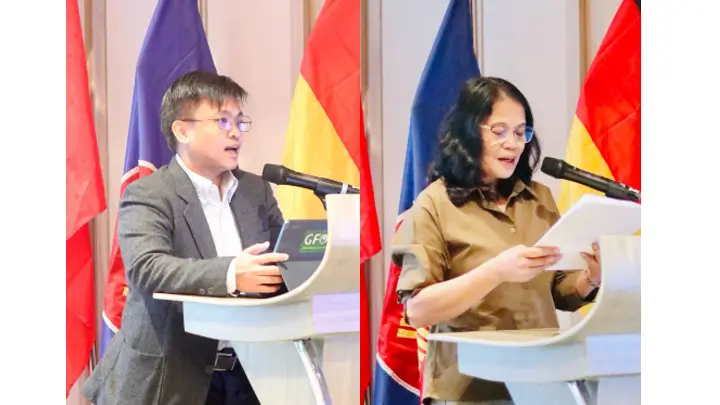
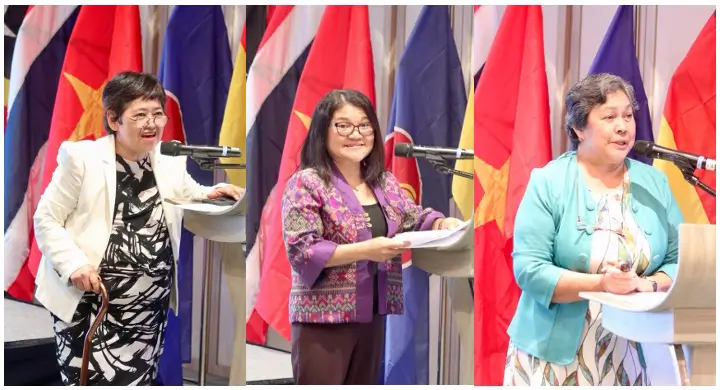 Workshop opening ceremonies. (From left) Dir. Basug delivers opening remarks; Dr. Uy presents the welcome message; Dr. Sombilla outlines the LULUCF project.
Opening the workshop, Dir. Elenida Basug, Director of the DENR Climate Change Service Division, stressed that the LULUCF sector plays a dual role in Southeast Asia's climate balance. Depending on management, she noted, landscapes can serve as either vital carbon sinks or major sources of greenhouse gas emissions. Basug urged delegates to critically evaluate data and share domestic experiences to ensure the study produces practical regional benefits. Dr. Noralene Uy, DENR Assistant Secretary for Policy, Planning, International Affairs, and Climate Change, welcomed participants, likewise emphasized the importance of cross-border cooperation and open dialogue in translating shared climate commitments into practical, measurable actions.
Ms. Ferosa Arsadita of GIZ Indonesia outlined the objectives of the LULUCF study, while Dr. Mercedita Sombilla, SEARCA Center Director, presented the project scope and its role in supporting regional climate mitigation planning.
Carbon sink or source? Building robust LULUCF baselines
The technical agenda opened with a presentation on geospatial baseline trends from 2000 to 2022 by SEARCA experts Dr. Rex Victor Cruz and Dr. Cristino Tiburan, Jr., Country data audits, co-moderated by SEARCA and GIZ, followed. ASEAN Member State representatives presented their national land use categories, methodologies, data sources, and mapping intervals. Facilitated by Dr. Tiburan, delegates compared national records with regional datasets from GLC_FCS30D, identified mapping discrepancies, and annotated the datasets for further verification.
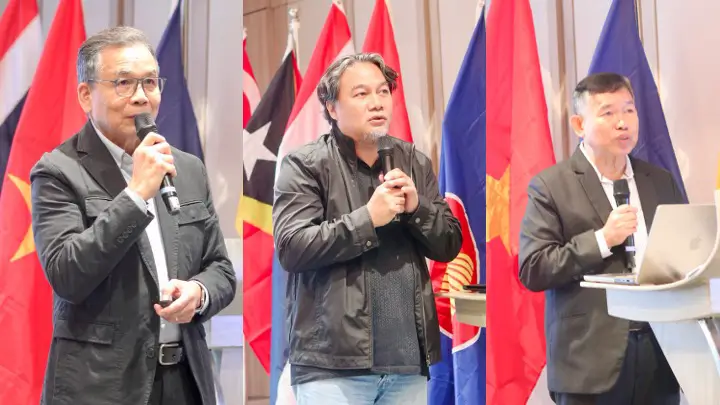 Technical sessions in progress. (From left) Dr. Rex Victor Cruz, Dr. Cristino Tiburan, Jr., and Dr. Juan Pulhin facilitate deliberations on regional baselines and policy integration.
Day 1 culminated in a panel discussion led by SEARCA Climate Policy Expert Dr. Juan M. Pulhin, examining synergies between domestic land-use policies and Nationally Determined Contributions (NDCs). Focal points from Cambodia, the Philippines, Thailand, and Singapore assessed national policy gaps and potential synergies between domestic land use policies and international climate targets, identifying areas for stronger policy alignment.
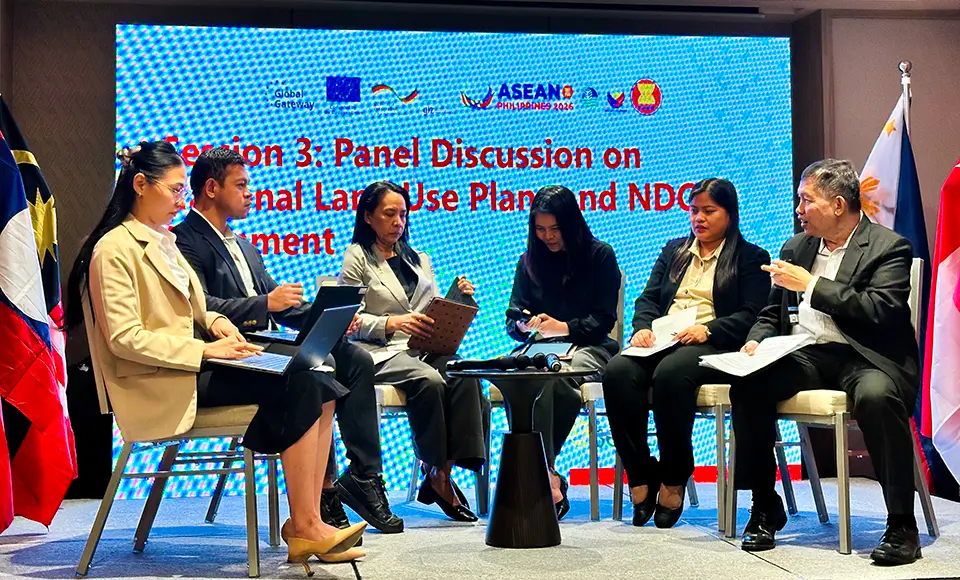 Dr. Pulhin facilitates the panel discussion on aligning national land use plans with Nationally Determined Contributions (NDCs), featuring AWGCC and ASOF focal points from Cambodia, the Philippines, Thailand, and Singapore.
Local case studies and sustainable solutions
Following an opening synthesis by SEARCA Program Specialist Anna Gale Vallez on Day 2, discussions shifted to local case studies, beginning with the Laguna de Bay Basin in the Philippines. This overview segued into a focused contextual orientation of the Philippine case study site, the Laguna de Bay Basin. Forester Lars Aggabao of the DENR-Forest Management Bureau (FMB) and Forester Soledad Reyes of the Laguna Lake Development Authority (LLDA) detailed the basin's ecological challenges, forestry dynamics, institutional capacities, and key drivers of land use change. Dr. Tiburan then presented ground truth findings on LULUCF dynamics in both the Laguna Lake Basin and Cambodia's Keo Seima Wildlife Sanctuary.
 From left: Forester Larlyn Faith Aggabao of the DENR-Forest Management Bureau (FMB) and Forester Soledad Reyes of the Laguna Lake Development Authority (LLDA) present the Philippine case study, including key forestry and land use challenges in the Laguna de Bay Basin.
Dr. Cruz facilitated a session on integrating biophysical and policy drivers. Through a collaborative workshop, participants assessed local driver models and developed a comprehensive matrix of direct and indirect technological, economic, and policy factors shaping landscape change. A plenary session then consolidated stakeholder inputs on the causal models for case study sites.
The afternoon focused on identifying sustainable land management practices with potential for wider regional applications. Guided by policy expert Dr. Pulhin, participants co-developed regional criteria for identifying and scaling sustainable land management (SLM) practices across the ASEAN Member States (AMS). Following a presentation by Dr. Cruz on existing sectoral indicators across forestry, agriculture, agroforestry, and urban domains, participants compiled an initial set of promising SLM field interventions. Day 2 concluded with a strategic roadmap for completing the project, including timelines for a forthcoming policy brief and an online interactive database.
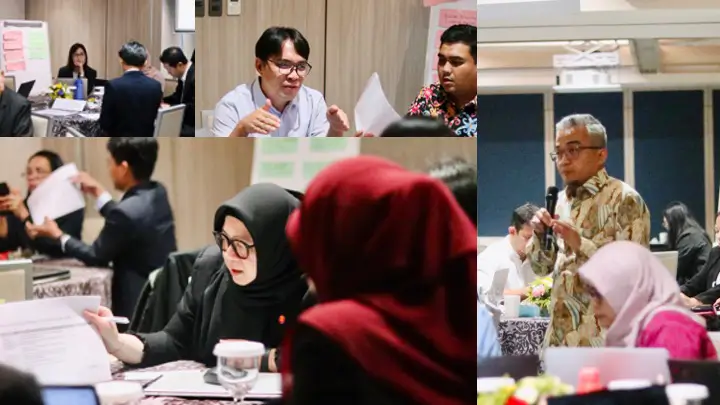 Participants exchange insights during collaborative group discussions on LULUCF data, policies, and sustainable land management practices.
Field verification and LULUCF database rollout
As a practical complement to the technical discussions, the workshop featured a field visit to Los Baños, Laguna, enabling delegates to conduct field validation of local biophysical and spatial drivers at the University of the Philippines Los Baños (UPLB) Makiling Center for Mountain Ecosystems (MCME). The delegation was received by Prof. Marlo Mendoza, Dean of the College of Forestry and Natural Resources. Following his welcome address, MCME Director Dr. Lerma SJ. Maldia briefed participants on the center's environmental initiatives before leading a guided ecological tour of the Makiling Botanic Gardens. The excursion concluded with an afternoon visit to SEARCA and the SEARCA Hub for Agriculture and Rural Innovation for the Next Generation (SHARING) AgriMuseum where participants learned about selected agricultural innovations.
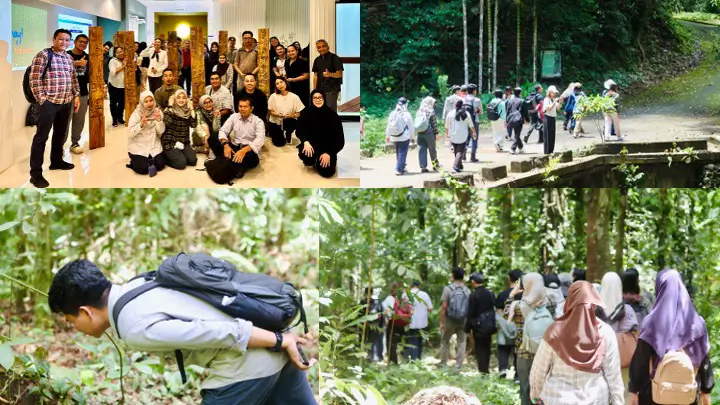
Participants during their field visit to the Makiling Botanic Gardens, SEARCA and the SHARING AgriMuseum, all in Los Baños, Laguna.
The final day opened with field takeaways synthesized by Ms. Vallez, followed by presentations in which ASEAN Member States shared their respective workshop outputs.
Technical proceedings concluded with a live plenary demonstration of the LULUCF Database Inventory Platform led by SEARCA Data Inventory Analyst Dr. Val Randolf Madrid. Delegates tested the system's layout, interface, and query functions and provided user feedback to refine the platform for regional use.
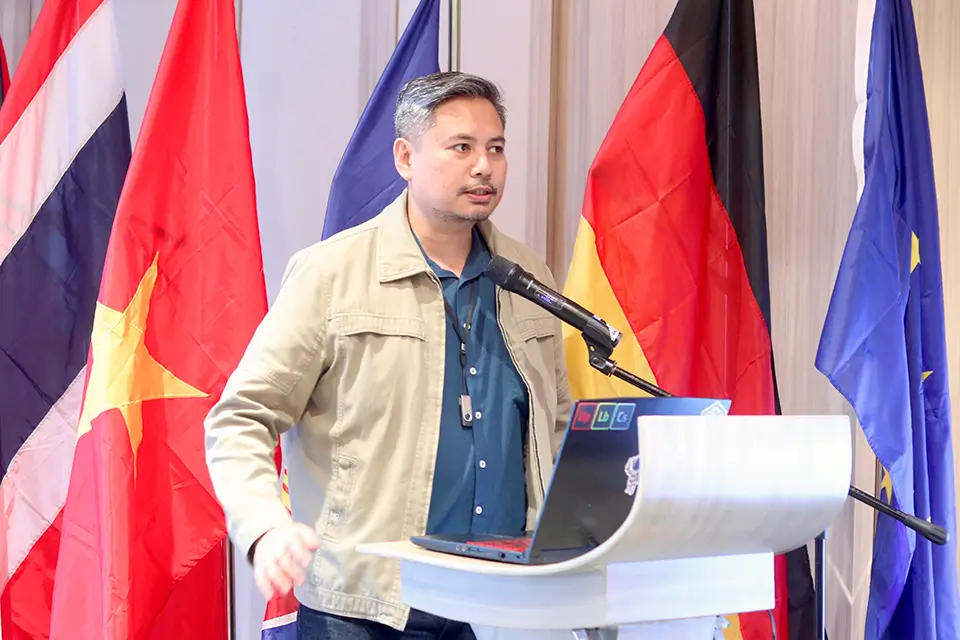 Dr. Val Randolf Madrid presents the LULUCF Database Inventory Platform.
The workshop officially closed with joint evaluations and closing statements from the DENR and GIZ, marking a central milestone in establishing a reliable, unified LULUCF evidence base for Southeast Asia.