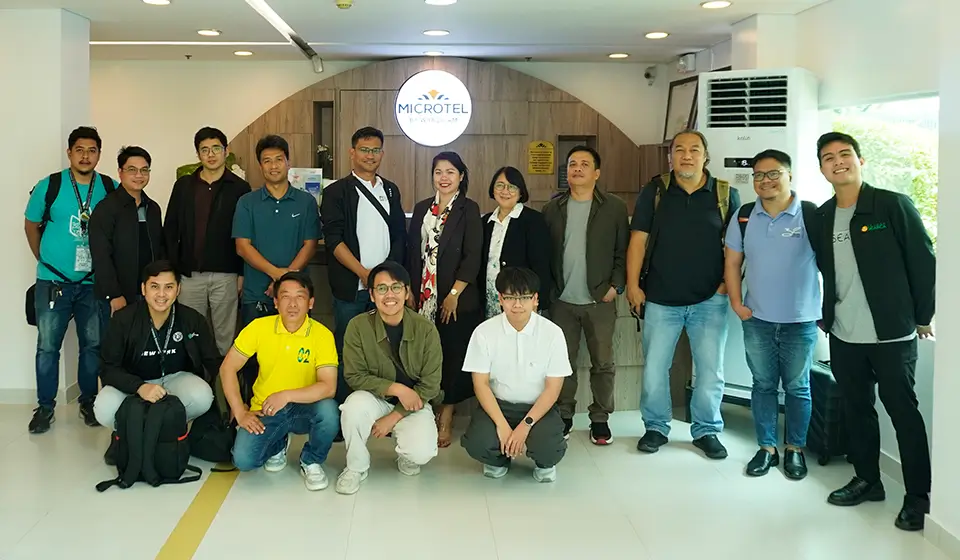
 Participants of the workshop gather for a group photo at Microtel by Wyndham UP Technohub following the training sessions.
QUEZON CITY, Philippines—The Southeast Asian Regional Center for Graduate Study and Research in Agriculture (SEARCA), in partnership with EcoSecurities and the University of the Philippines Los Baños Foundation Inc. (UPLBFI), conducted a two-day capacity-building workshop to advance climate-resilient agricultural finance.
Titled "Data-Driven Parametric Crop Insurance for Corn: Loss Modeling, Climate Risk, and GIS-Based Payout Systems for PCIC," the workshop was held on 5–6 March 2026 at Microtel by Wyndham UP Technohub in Quezon City.
 Mr. Rowell C. Dikitanan, Head of SEARCA's Project Development and Technical Services Unit (PDTSU), welcomes the participants during the workshop's opening session.
The event brought together technical staff from the Philippine Crop Insurance Corporation (PCIC) and partner institutions to enhance their technical capabilities in developing innovative parametric crop insurance products. These financial tools are designed to bolster the resilience of corn farmers facing climate-induced calamities in the Philippines.
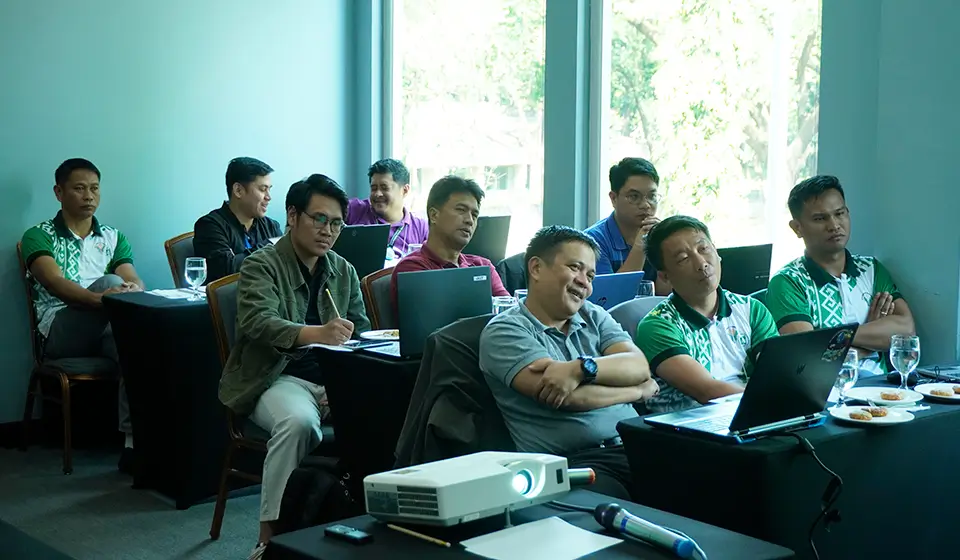
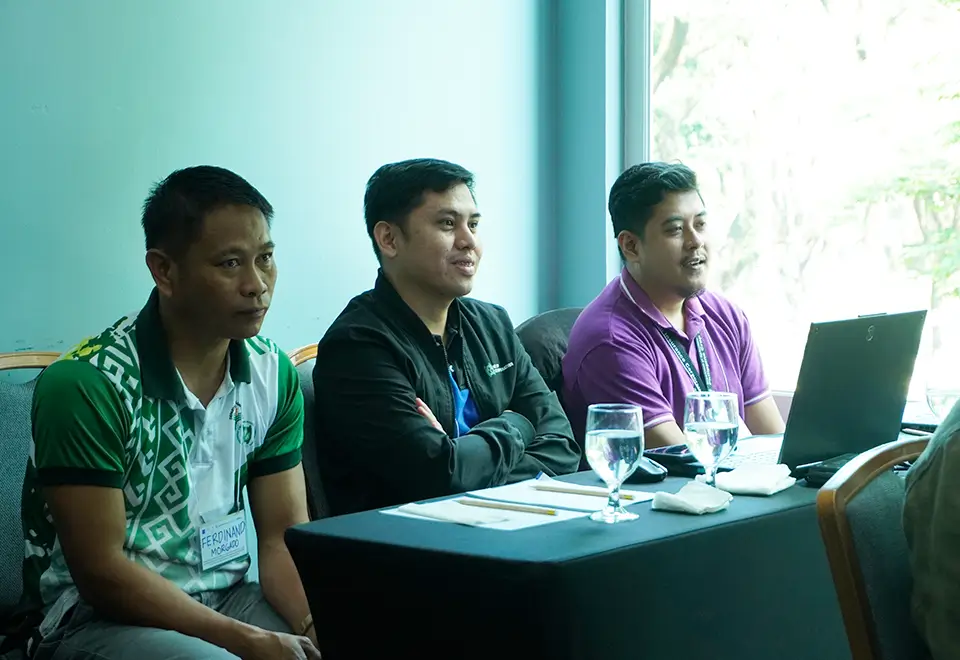
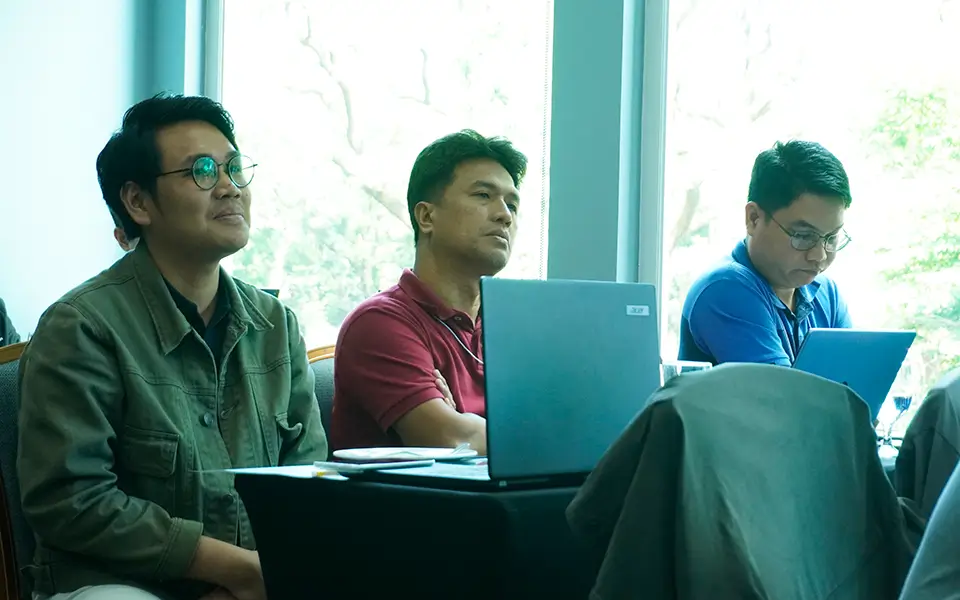
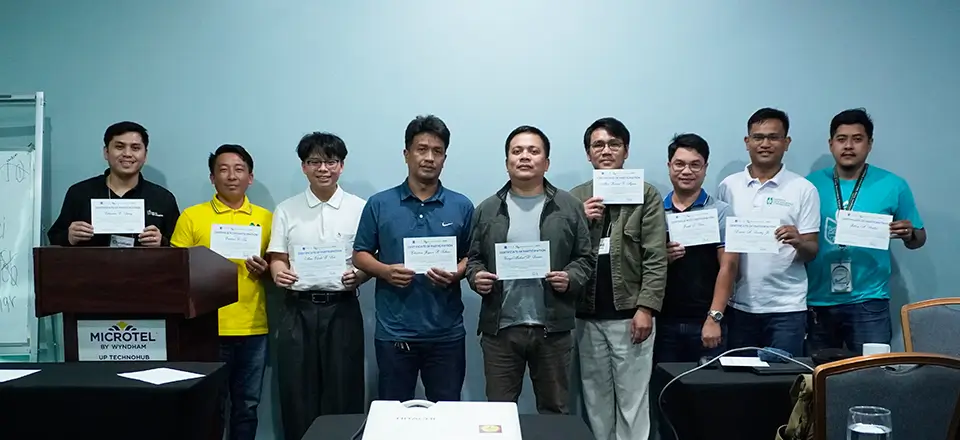
Participants from the Philippine Crop Insurance Corporation (PCIC) listen to the presentations and receive certificates of participation.
The workshop forms part of the ongoing Asian Development Bank (ADB) Technical Assistance program TA-10009: Accelerating Climate Resilience in Agriculture, Natural Resources, and the Environment. The program supports the country's Climate Change Action Program (CCAP) currently implemented by SEARCA, Ecosecurities, and UPLBFI.
Through a combination of lectures and hands-on exercises, participants developed an end-to-end prototype of a parametric insurance scheme for corn, integrating climate risk assessment, loss modeling, geospatial trigger design, and payout calculation. Sessions covered Philippine climate and weather systems, parametric insurance modeling for corn, loss modeling using the R statistical software, development of Excel-based payout frameworks, and the application of geographic information systems (GIS) for spatial analysis and trigger design.
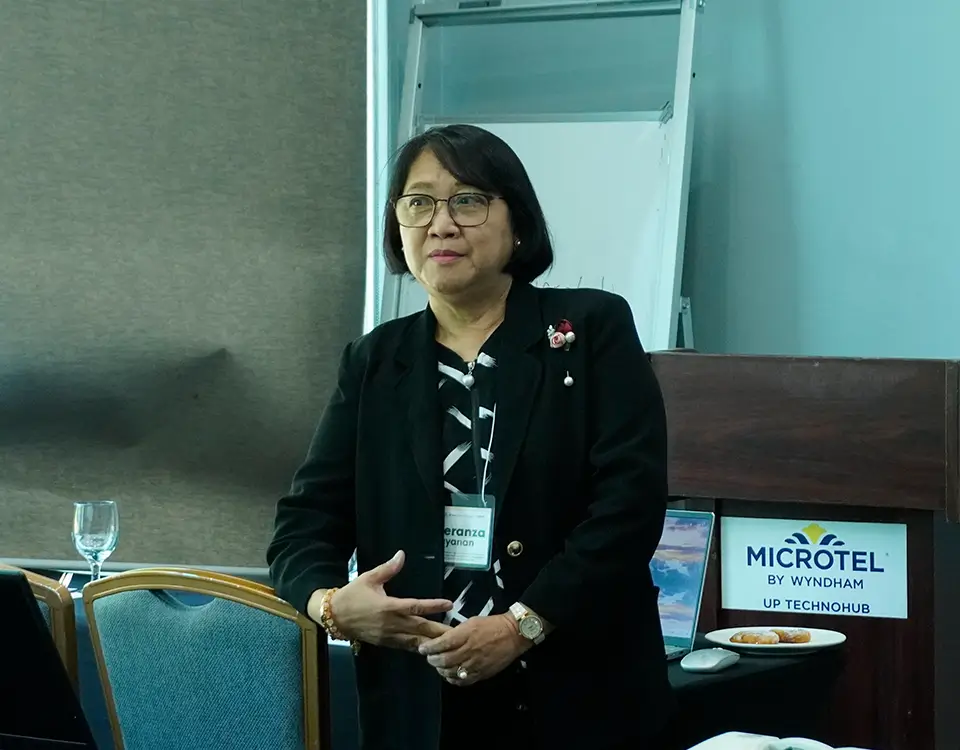 Dr. Esperanza Cayanan, Climatologist and Meteorologist, delivers her presentation on climate and weather systems in the Philippines, highlighting their implications for agricultural risk assessment.
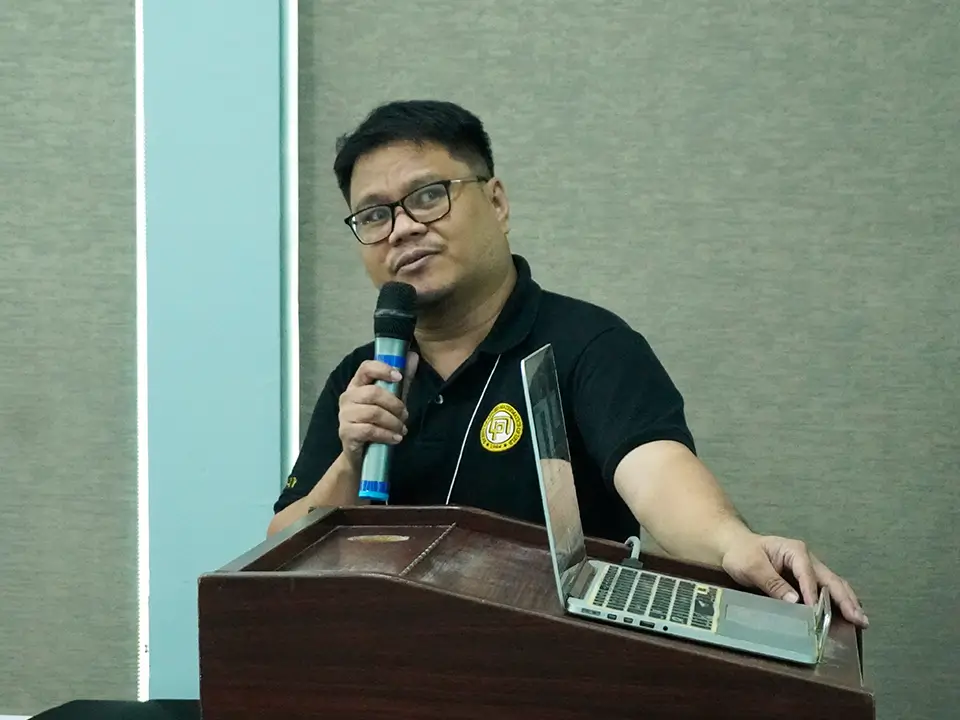 Mr. Jonathan Mamplata, Actuarial Assistant, presents on parametric insurance modeling for corn, explaining the structure of trigger-based insurance mechanisms for climate-related crop risks.
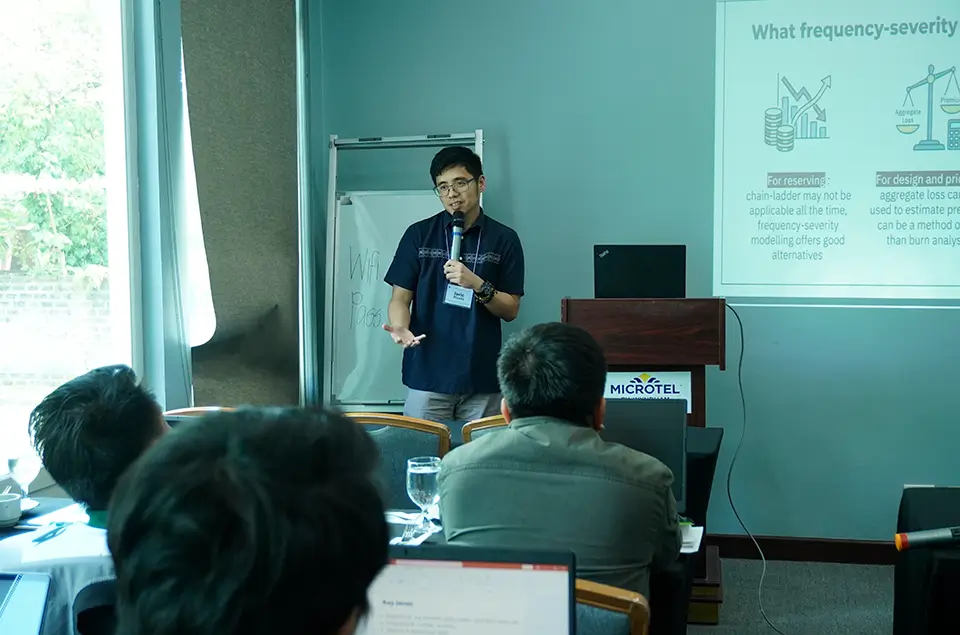 Mr. Jeric Alcala, Actuarial Expert, gives a lecture on loss modeling using R, demonstrating statistical techniques for analyzing and quantifying agricultural risk.
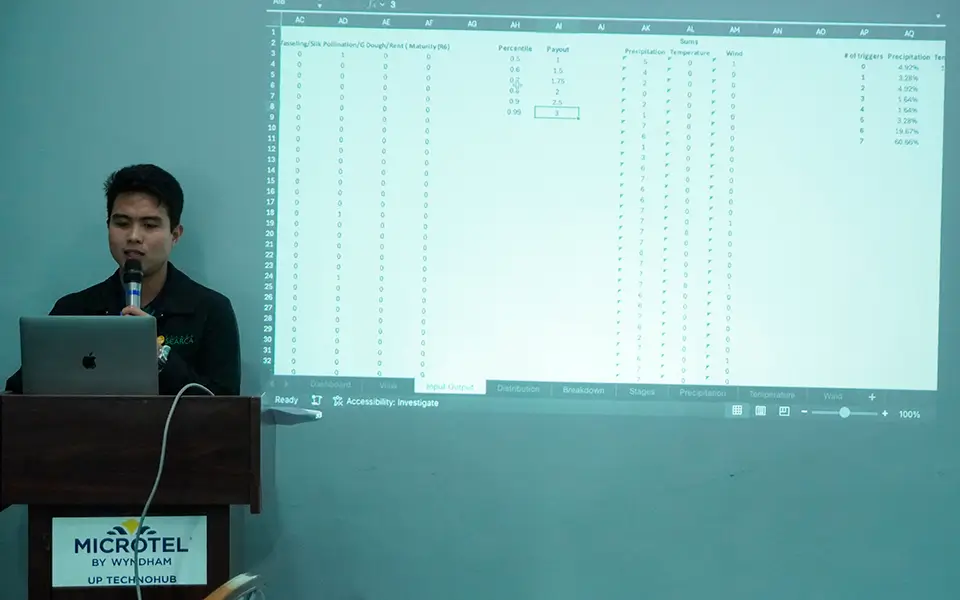 Mr. Carl Jason Cubero, Project Associate of the ADB-ANRE Project, presents the Excel-based VBA framework developed for parametric crop insurance modeling during the workshop session.
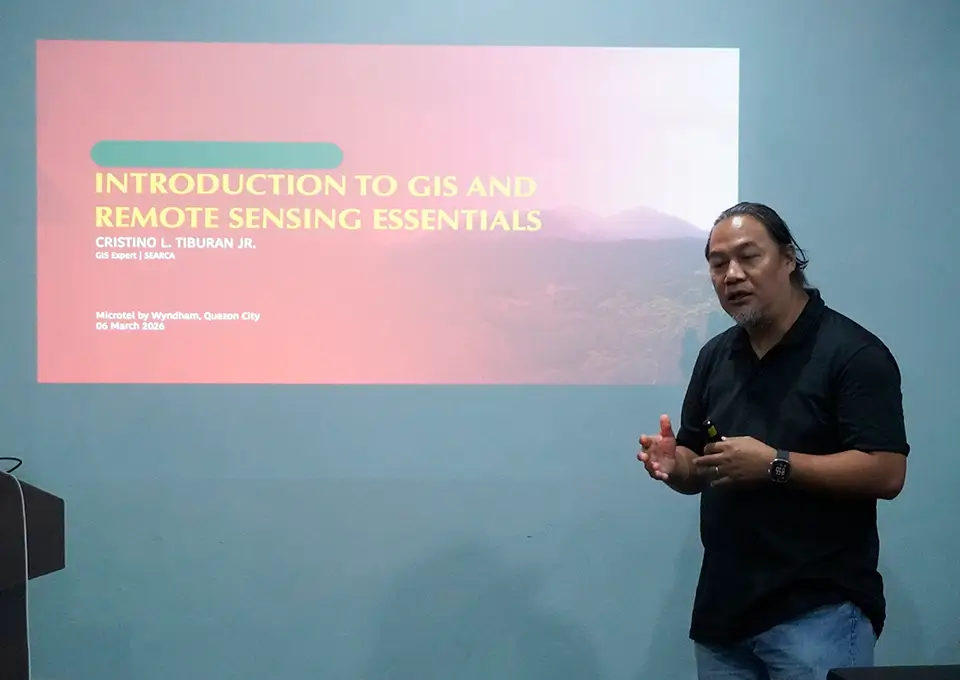 Dr. Cristino Tiburan, GIS Expert, discusses the application of Geographic Information Systems (GIS) in agricultural risk analysis and climate data visualization.
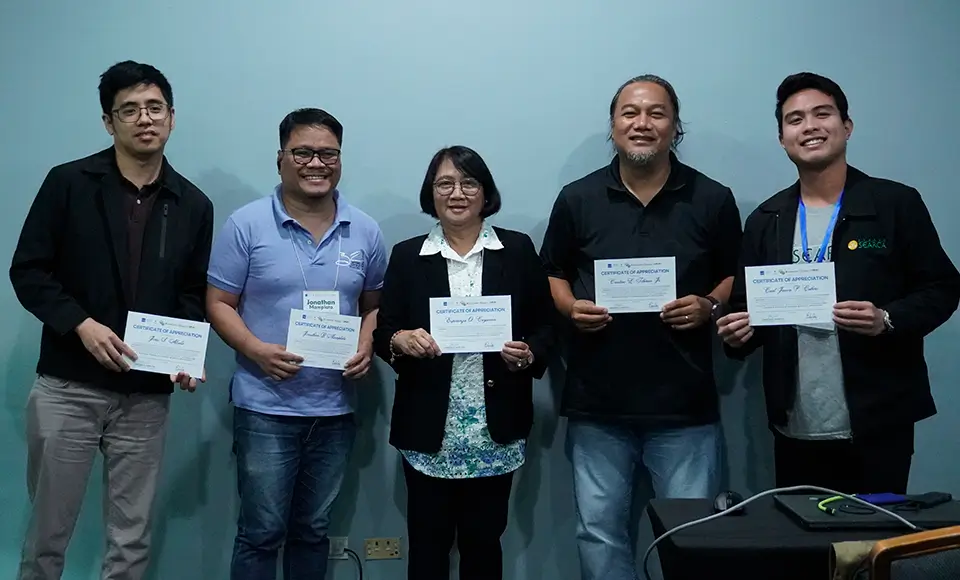 Resource speakers (from left) Mr. Jeric Alcala, Mr. Jonathan Mamplata, Dr. Esperanza Cayanan, Dr. Cristino Tiburan, and Mr. Carl Jason Cubero receive their certificates of appreciation after the workshop sessions.
The workshop provided PCIC technical staff with practical tools to develop, test, and scale innovative agricultural insurance products.
By enhancing climate risk management in the agriculture sector, the initiative contributes to the development of climate-responsive insurance mechanisms that protect farmers against increasing climate variability and extreme weather events. It also aligns with national policy actions under the CCAP to pilot parametric insurance solutions and strengthen climate resilience in agriculture.
SEARCA continues to support collaborative research and capacity building a that leverage data-driven decision-making and innovative financial tools to strengthen the resilience of agricultural systems in the Philippines and across Southeast Asia.