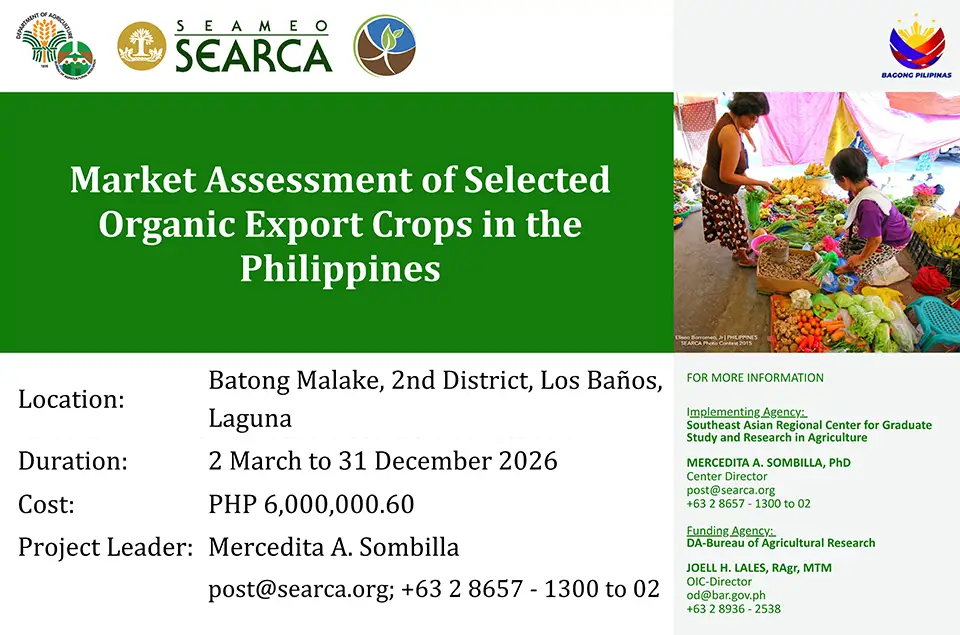
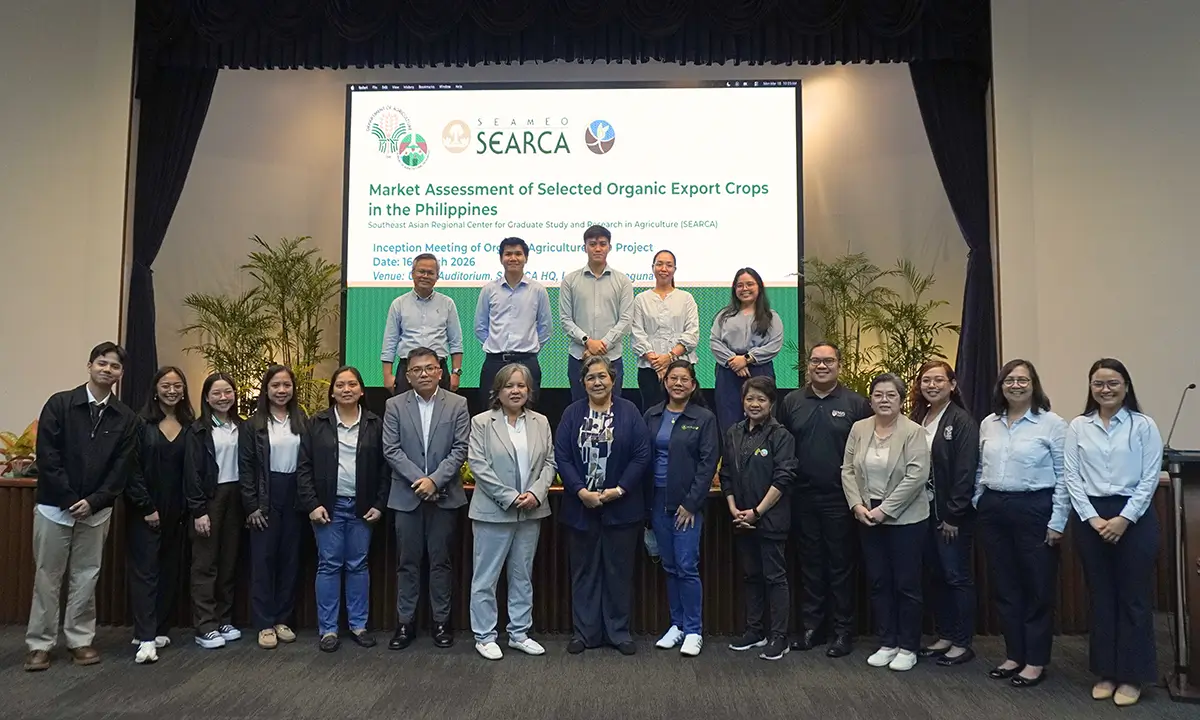
LOS BAÑOS, Philippines—The Southeast Asian Regional Center for Graduate Study and Research in Agriculture (SEARCA), Department of Agriculture-Bureau of Agricultural Research (DA-BAR), and the National Organic Agriculture Program (NOAP) formally launched the project titled Market Assessment of Selected Organic Export Crops in the Philippines through an inception meeting on 16 March 2026 at SEARCA in Los Baños, Laguna.
The initiative follows the enactment of Republic Act No. 10068, the Organic Agriculture Act of 2010, which sought to develop and promote organic agriculture in the Philippines. This measure was later amended by RA 11511 to establish a comprehensive organic agriculture program, focusing on the promoting and commercialization of organic farming through the NOAP – National Program Coordinating Office.
Despite the growing global demand for organic products, the Philippines has limited participation in the organic export market. As of July 2025, the country's certified organic area represented less than one percent of total agricultural output, with only 589 hectares under the Participatory Guarantee System (PGS) and third-party certification. This underscores the need for a more comprehensive assessment of the sector's market opportunities and constraints.
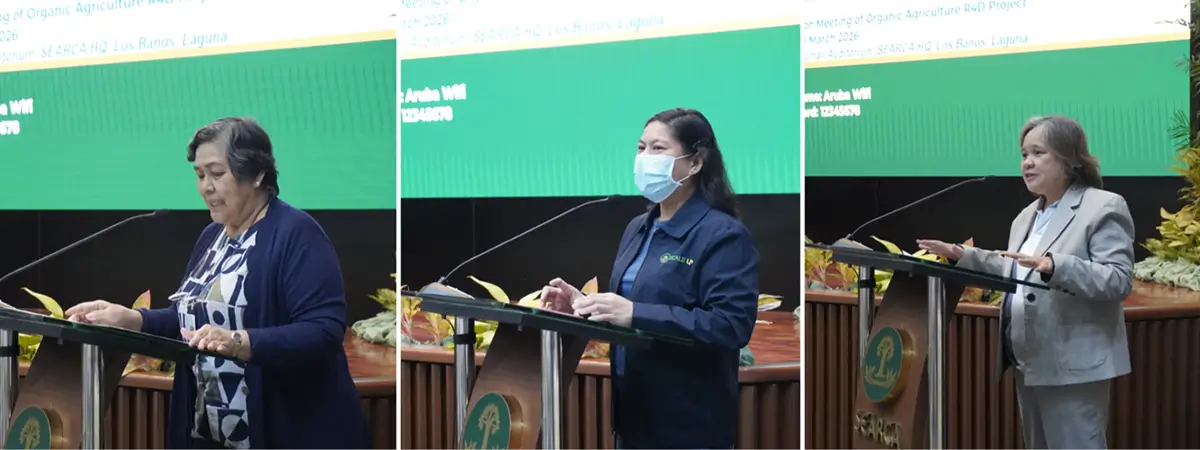 From left Dr. Mercedita Sombilla, SEARCA Center Director; Ms. Kris Thea Marie Hernandez, DA-BAR Senior Agriculturist; and Ms. Bernadette San Juan, NOAP Director, deliver their messages of support for the project.
The program opened with a message from Dr. Mercedita Sombilla, SEARCA Center Director, who highlighted the importance of generating evidence-based insights to guide the development of the country's organic agriculture sector amid the current global demand.
Messages of support were also conveyed by DA-BAR OIC-Director Joell Lales, represented by Senior Agriculturist Kris Thea Hernandez, and by DA-NOAP Director Bernadette San Juan. San Juan underscored the importance of the project in determining which value chains offer the best opportunities for Philippine organic exports. The meeting served as a platform to align expectations, discuss project objectives, and finalize the technical approach with DA-BAR and NOAP officials, together with the SEARCA project team.
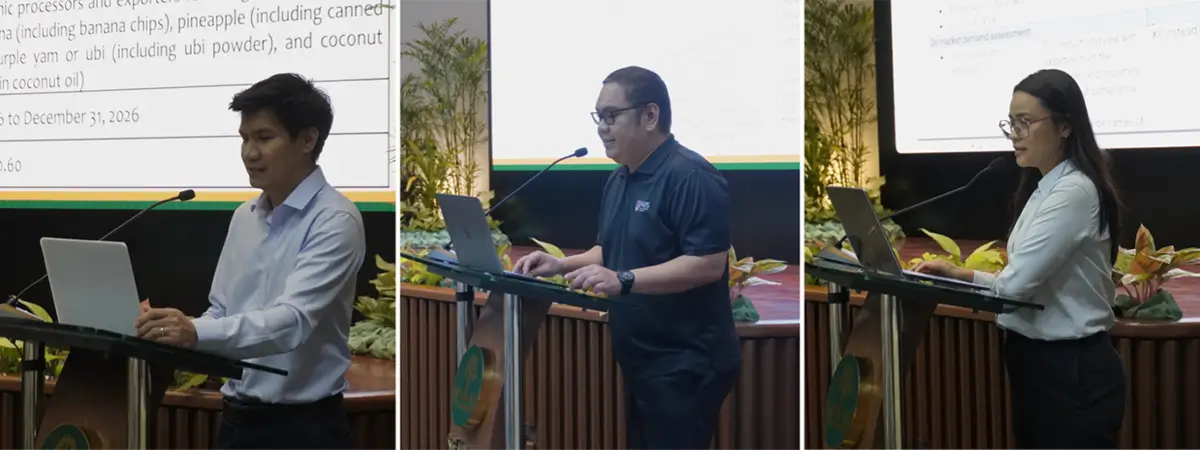 From left: Mr. Rowell Dikitanan, Head of SEARCA’s Project Development and Technical Unit, and Dr. Bates Bathan, Agricultural Economist, present the project’s scope, while Ms. Ma. Christina Corales, SEARCA’s Program Specialist, presents the key agreements and action points of the study
During the meeting, Mr. Rowell Dikitanan, Head of SEARCA's Project Development and Technical Services (PDTS) Unit, presented the project background, objectives, and expected outputs. This was followed by a detailed methodology and workplan presentation by Dr. Bates Bathan. Focusing on five target organic crops—mango, banana, pineapple, purple yam (ube), and coconut—Bathan emphasized that the study aims to assess market demand and identify opportunities for expanding organic production. He noted that the results will provide strong evidence of market potential to encourage conventional producers to transition to organic farming systems. An open forum followed, allowing participants to share comments and clarify implementation details. SEARCA Program Specialist Ma. Christina Corales presented the key agreements and action points between SEARCA and DA-BAR.
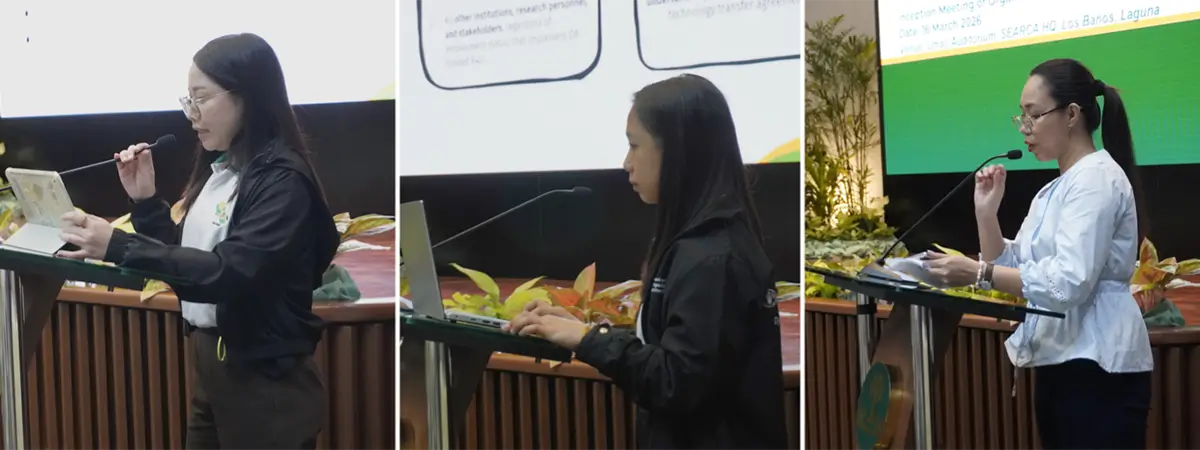 From left: DA-BAR representatives Jusmine Maun and Marla Metiam discuss the monitoring and evaluation guidelines and research ethics, while SEARCA Project Coordinator Abby Grace Bermejo presents the synthesis of the meeting
Representatives from DA-BAR also discussed key project guidance, including monitoring and evaluation (M&E) guidelines, intellectual property and technology transfer guidelines, and research ethics. The session concluded with a synthesis of discussions presented by the project team.
In his closing remarks, Dr. Rico Ancog, SEARCA Deputy Director for Administration, thanked the partner agencies and participants for their contribution to the discussion. He highlighted that the insights gathered during the meeting will be critical in shaping the direction of the study and ensuring its relevance to the organic agriculture industry.
The market assessment of organic export crops lays the groundwork for strategies and investments that can improve farmer livelihoods, strengthen rural enterprises, and expand the Philippines' participation in high-value organic markets. It also reflects SEARCA's commitment to advancing agricultural and rural development through research, innovation, and knowledge-based solutions.