LOS BAÑOS, Philippines—The Southeast Asian Regional Center for Graduate Study and Research in Agriculture (SEARCA) hosted the fifth session of its Meet the Diplomat Series on 29 July 2026, featuring Her Excellency Yuliia Fediv, Ambassador Extraordinary and Plenipotentiary of Ukraine to the Republic of the Philippines. Following four successful installments featuring diplomatic representatives from Thailand, Spain, Vietnam, and the European Union, the Ukraine session focused on expanding agricultural markets, strengthening bilateral trade, and academic collaboration between Ukraine and the Philippines.
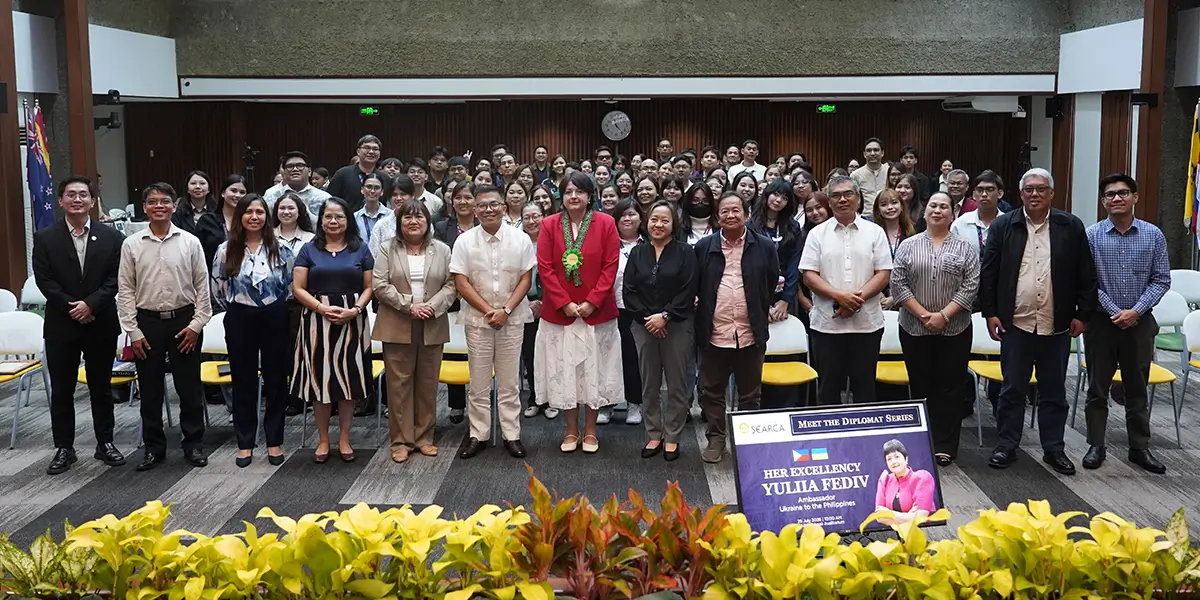
In her presentation titled "Between the Skies and Planes," Fediv provided an overview of Ukraine's national profile and rich cultural heritage as well as its enduring role as the breadbasket of Europe. She illustrated how the country continues to sustain agricultural production and participate in global trade despite supply chain disruptions amid ongoing geopolitical challenges. She also noted that Ukraine's commitment to diplomatic engagement in Asia, Africa, and Latin America remains central to its strategy for strengthening long-term international partnerships and visibility.
Discussing potential synergies between Ukraine and the Philippines, she said there is substantial room for economic expansion across agricultural and industrial sectors, with bilateral trade between the countries standing at approximately USD 60 million. She outlined key commercial opportunities, including Ukrainian exports of wheat, sunflower products, and meat to the Philippines and Ukrainian imports of Philippine processed foods and tropical fruits. Fediv shared that a formal agreement between Ukraine's Ministry of Agriculture and the Philippines' Department of Agriculture is in its final stages, with signing targeted before the end of the year.
Beyond trade, Fediv emphasized technological and academic partnerships as tools for addressing shared global vulnerabilities such as climate change and supply chain disruptions. Drawing on models developed with partners including Japan, the United Kingdom, and Canada, she shared that Ukraine is pioneering online inspection mechanisms as an alternative to physical site visits for food safety and product certification. Fediv noted that digitalization in public services and agriculture could provide a framework adaptable to disaster-prone countries such as the Philippines. She also explained that SEARCA and academic institutions such as the University of the Philippines Los Baños could tap into the Global Coalition of Ukrainian Studies for opportunities in joint research programs, faculty and student exchanges, and educational initiatives.
These collaborative efforts directly align with the 2024 Ukraine-ASEAN Strategy, which prioritizes food security, trade and investment recovery, and people-to-people relations.
During the open forum, Fediv addressed inquiries on youth engagement and civic solidarity. Responding to a question from a Grade 12 student from Colegio de San Juan de Letran in Calamba, Laguna, Philippines, Fediv underscored that international diplomacy extends far beyond government channels. She encouraged young Filipinos to help amplify Ukrainian perspectives on digital platforms, participate in academic initiatives, and foster cross-cultural dialogue.
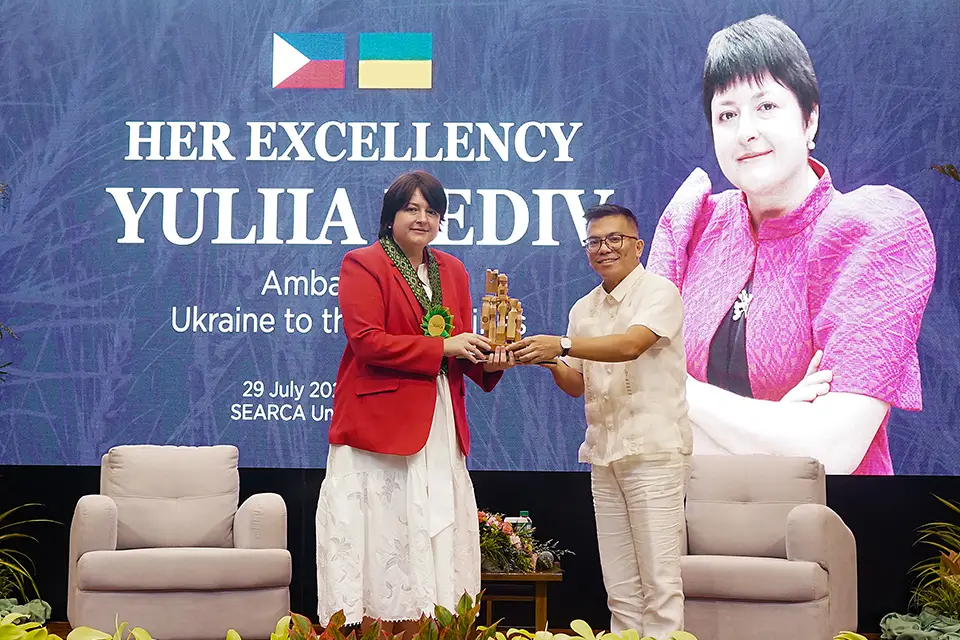
The session concluded with SEARCA Deputy Director for Administration Dr. Rico Ancog presenting the ambassador with a replica of the SEARCA Growth Monument, which consists of 11 stylized human figures linked internally on a square base. The monument symbolizes synergy amid the diversity of the 11 member countries of the Southeast Asian Ministers of Education Organization (SEAMEO) and their shared aspiration for a more prosperous Southeast Asia.
Overall, the fifth MDS session highlighted how economic partnerships, shared innovation, and people-to-people engagement can serve as active investments in global stability, democratic endurance, and food security. Anchored in SEARCA's 12th Five-Year Development Plan: SUSTAIN Southeast Asia (Sustainable Transformation of Agricultural Systems through Innovation in Southeast Asia), the session reinforced SEARCA's continuing role in bridging diplomacy, science, and policy to advance the region's agricultural development.
Missed the session? Watch the presentation here: https://bit.ly/MDS-Ukraine