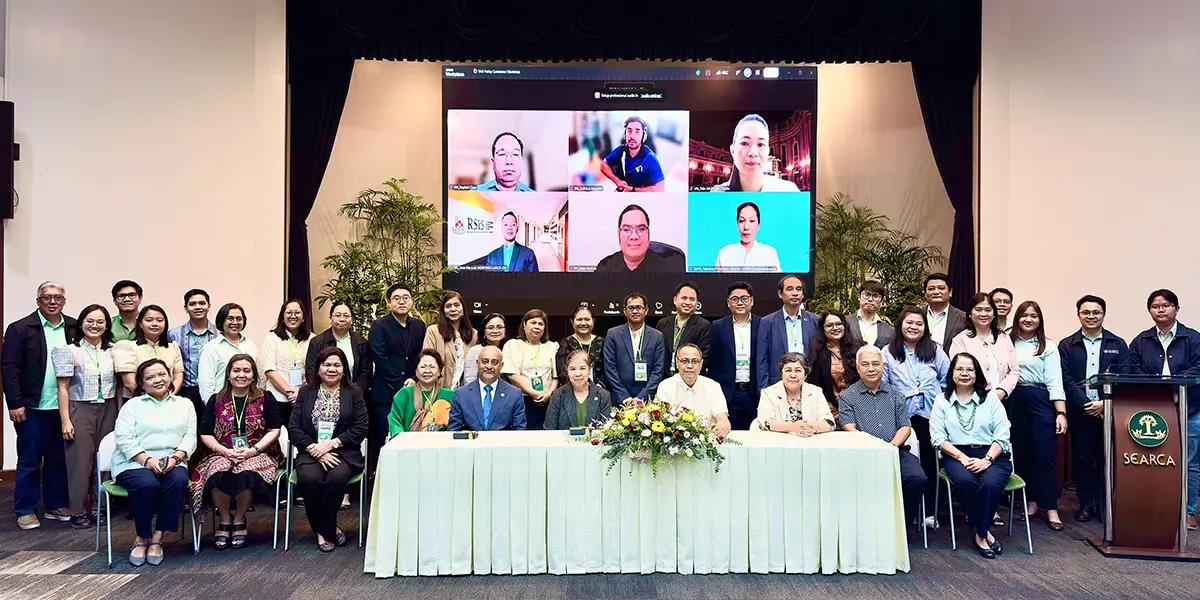
LOS BAÑOS, Philippines—The Southeast Asian Regional Center for Graduate Study and Research in Agriculture (SEARCA), in collaboration with the Food and Agriculture Organization of the United Nations - Regional Office for Asia and the Pacific (FAO-RAP) and the University of the Philippines Los Baños College of Human Ecology (UPLB-CHE), convened the Regional Workshop on Policy Coherence and the Financing Landscapes for Agrifood Systems Transformation in ASEAN Countries on 24-26 August 2026.
The workshop aimed to promote more coherent policies and stable, strategic investments to address food insecurity and malnutrition while strengthening long-term economic resilience.
Participants from Cambodia, Indonesia, Lao PDR, Thailand, the Philippines, Timor-Leste, and Vietnam discussed country-specific assessments of policy coherence for sustainable agrifood systems transformation and examined financial landscapes that can support such transformation.
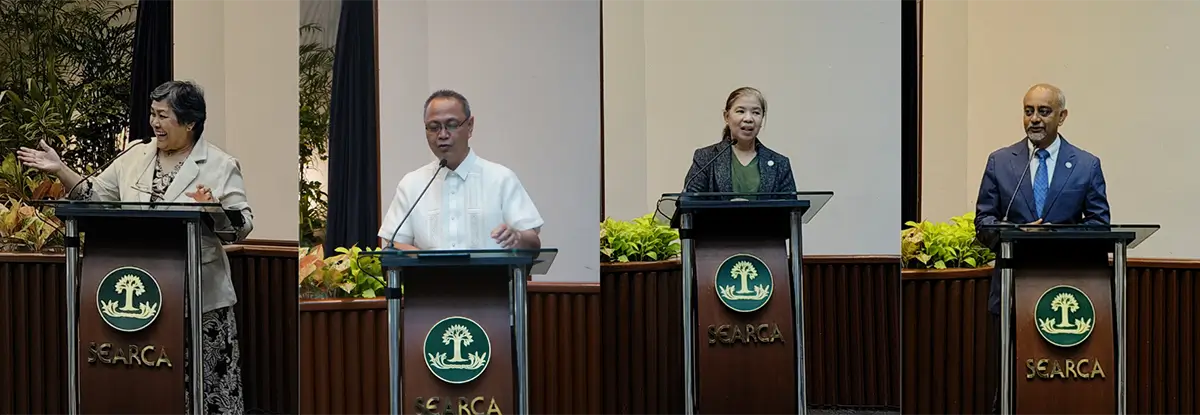
SEARCA Center Director Dr. Mercedita Sombilla, in her welcome remarks, reminded the participants that agrifood systems transformation will be measured not only by the frameworks being designed but also by the difference these make in the lives of farmers and communities; the resilience of food systems; and the availability of safe, nutritious, affordable, and sustainable food. She encouraged participants to keep these outcomes in mind as they develop their respective country assessments.
Representing UPLB Chancellor Dr. Jose Camacho, Jr., Dr. Nathaniel Bantayan, UPLB Vice Chancellor for Research and Extension, emphasized in his welcome remarks that ending food insecurity and all forms of malnutrition cannot be carried alone by any single country or institution. Rather, it requires the kind of collective action that the workshop embodies – shared evidence, shared frameworks, and shared resolve.
Meanwhile, Ms. Dulce Carandang, Assistant FAO Representative for Programme of FAO Philippines, representing Mr. Lionel Dabaddie, said, "Only through stronger policy alignment and more strategic financing can we accelerate the transformation of agri-food systems to become more efficient, inclusive, resilient, and sustainable."
Offering a healthy diets perspective, Dr. Sridhar Dharmapuri, FAO-RAP Senior Food Safety and Nutrition Officer, said in his welcome remarks, "We're looking beyond simply saying that healthy diets are made up of optimal combinations of foods. We're also thinking about where food groups are coming from, what their impact is on the climate, whether they're resilient or not, whether they promote livelihoods, as well as what kind of socioeconomic impacts there are."
Strengthening governance and cross-sectoral coordination
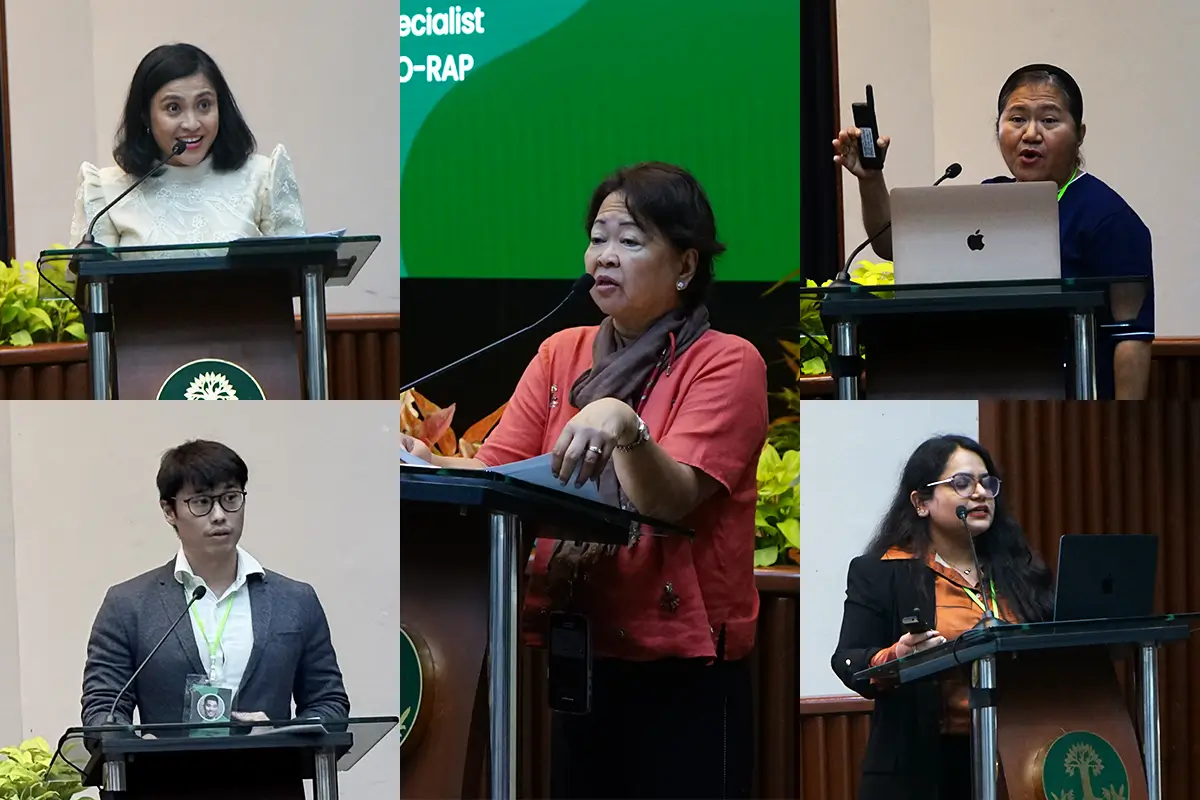 Counterclockwise from top left: Dr. Jennifer Marie S. Amparo of University of the Philippines Los Baños-College of Human Ecology (UPLB-CHE), (bottom left) Dr. Ti Kian Seow of Food and Agriculture Organization Regional Office for Asia and the Pacific (FAO-RAP), (center) Dr. Maria Antonia G. Tuazon of FAO-RAP, (bottom right) Dr. Vaishali Bansal of FAO-RAP, and (top right) Dr. Leila S. Africa of UPLB-CHE.
Providing an overview of the workshop, Dr. Maria Antonia G. Tuazon, Senior Nutrition and Food Systems Specialist of FAO-RAP, highlighted the importance of policy coherence and financing, the role of parliamentarians and other policymakers, and untapped sources of financing for agrifood systems transformation.
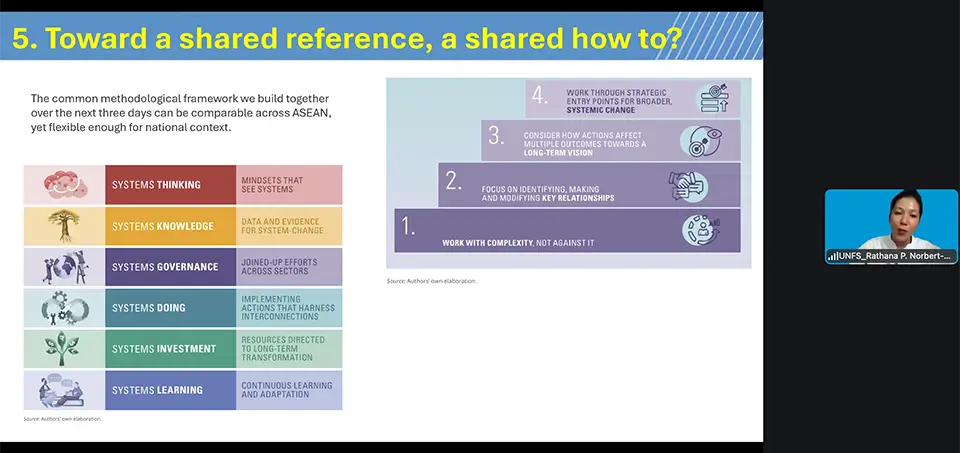 Dr. Rathana Peou Norbert-Munns of UNFSCH underscored that policy coherence must extend beyond intent to effective community implementation, legislative action, and feedback that shapes future policy.
Dr. Rathana Peou Norbert-Munns, AP Focal Point of the UN Food Systems Coordination Hub, emphasized that while numerous policies exist, what matters most is how they are implemented in communities and translated into legislative acts. She stressed the need for "...not only a coherence of want, but also a coherence of impact and feedback that informs the next future generation of policy."
Echoing the importance of policy coherence, Dr. Jennifer S. Amparo, Dean of the UPLB College of Human Ecology, highlighted the human element driving implementation: "Behind every number in this deck are the people who make coherence possible on the ground: local nutrition committees, civil society organizations, and barangay nutrition scholars. Decentralization only works for nutrition when it is paired with people, budget, and leadership—all at once."
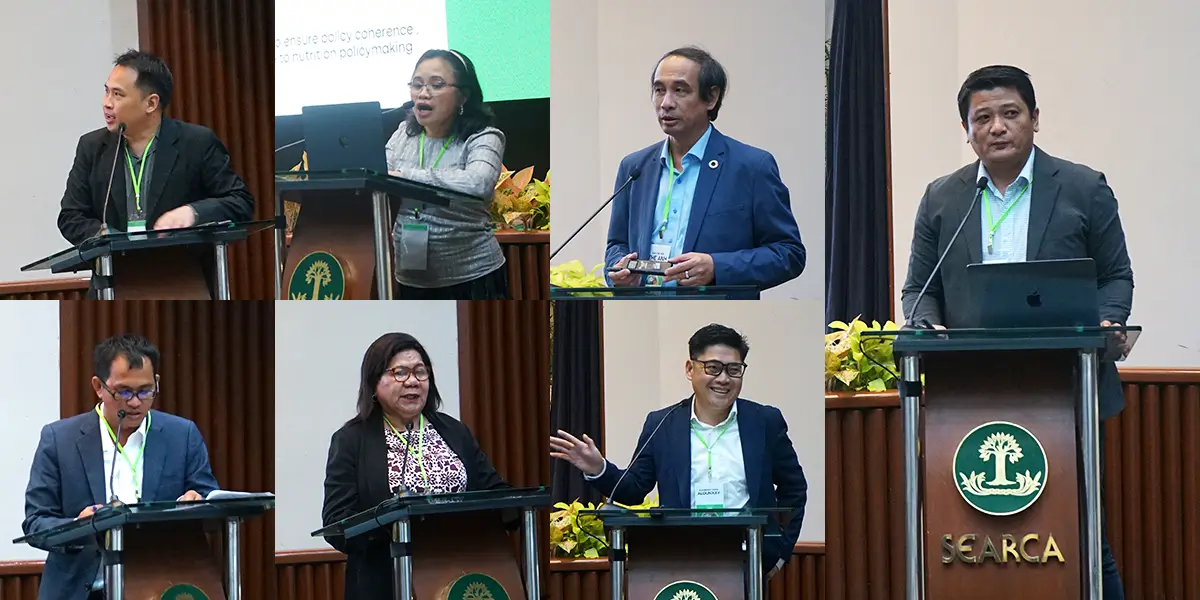 Clockwise from top left: Mr. Thitipong Srisombut from the Office of Agricultural Economics in Thailand, Dr. Marivic S. Samson from the National Nutrition Council - Department of Health Philippines, Dr. Dao The Anh from Vietnam Rural Development Science Association (PHANO), (larger photo) Mr. Ifan Martino from the Ministry of National Development Planning/BAPPENAS Indonesia, (from bottom left) Mr. Meas Vanna from the Council for Agricultural and Rural Development (CARD), Dr Maria Odete do Céu Guterres from the Ministry of Agriculture and Fisheries (MAF) Timor-Leste, and Mr. Alounxay Onta from the Ministry of Agriculture and Environment, Lao PDR.
The delegates presented their key findings, challenges, and good practices in promoting policy coherence and financing alignment based on their policy coherence assessment. The presentations examined policy alignment, governance gaps, and their effect on food systems' outcomes, and country priorities.
The delegates agreed that there is a need to strengthen and formalize cross-sectoral coordination and stakeholder engagement as the single most widely recommended action; establish or strengthen results-based M&E and data systems to build a shared, results-based evidence; integrate nutrition into agriculture and food policies and mobilize and align financing with national priorities; and build subnational and local institutional capacity for delivery.
Participants also reflected on the applicability of the proposed policy coherence methodological framework and provided feedback on its refinement and implementation at the country level. One core finding of the assessment was that regional and local entities, such as local government units, often struggle to effectively implement top-down frameworks because of constrained budgets, weak institutional mandates, or misaligned priorities.
Aligning policies and financing agrifood systems transformation in ASEAN
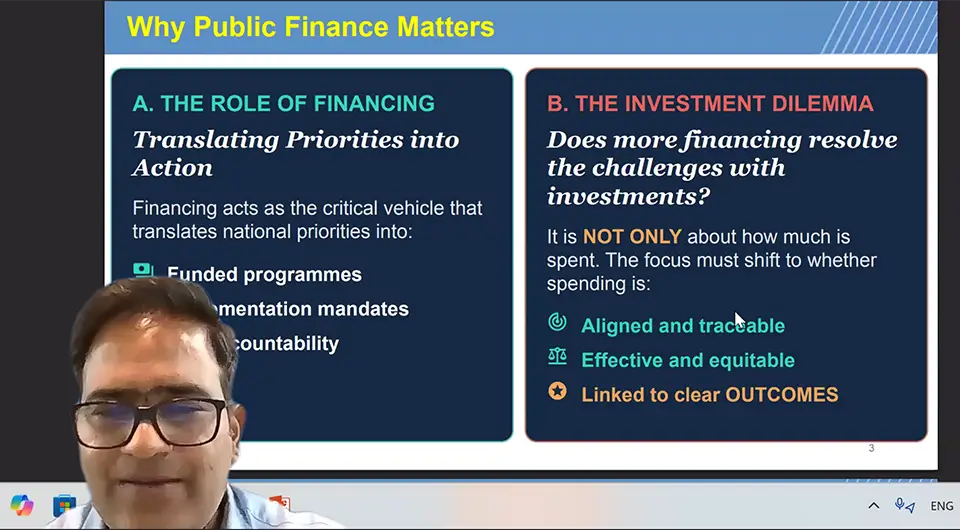 Dr. Eadara Srikanth highlighted expenditure tagging and budget tracking as key tools for strengthening accountability and guiding more effective agrifood systems investments.
Dr. Eadara Srikanth, Regional Representative of Asia Scaling Up for Nutrition (SUN) Movement, emphasized that expenditure tagging and budget tracking are valuable tools for improving decision-making and accountability in agrifood systems financing. He noted that several countries are exploring ways to better track investments in nutrition and agrifood systems to inform future budget allocations and policy decisions.
During the second breakout session, which focused on financing landscapes, participants highlighted several key country-level challenges, including fragmented and uneven public financing, constrained access to internal and external finance, and significant coordination and investment gaps across sectors and institutions.
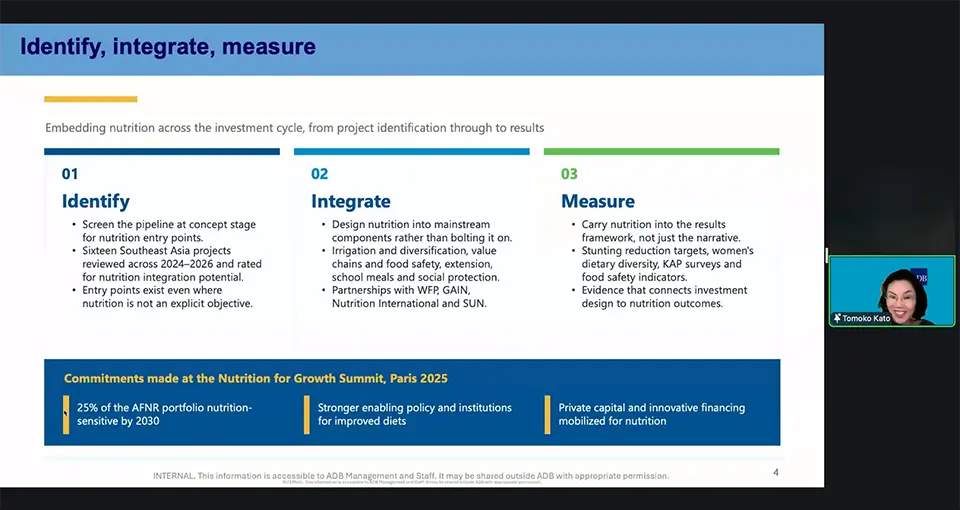 Ms. Tomoko Kato emphasized integrating nutrition throughout agricultural investments to better address the region’s simultaneous burdens of undernutrition and obesity.
In the final presentation, Ms. Tomoko Kato, Senior Food and Nutrition Specialist at the Asian Development Bank (ADB), shared insights on financing food systems transformation for nutrition and healthy diets. She stressed that nutrition must be integrated directly into agricultural projects rather than treated as a separate extension, noting: "Around 70 million children are stunted [in Asia and the Pacific region], while at the same time, more than 1 billion adults are overweight or obese," she explained.
From evidence to action for ASEAN agrifood systems transformation
Workshop discussions indicated that the way forward for ASEAN agrifood systems transformation lies in connecting governance with financing. The multisectoral approach can help translate shared priorities into funded actions by agreeing on shared food-security priorities; mapping stakeholders, roles, incentives, and funds; embedding priorities in plans and investment programs; and monitoring progress, communicating results, and adjusting approaches as needed.
The delegates agreed on four priority actions. First, they called for stronger and more institutionalized cross-sectoral coordination and stakeholder engagement. Second, they emphasized the need to enhance results-based monitoring, evaluation, and data systems through the generation and use of shared evidence. Third, they underscored the importance of better integrating nutrition objectives into agriculture and food policies while aligning financing with national priorities. Finally, they called for stronger subnational and local institutional capacities for implementation and service delivery.
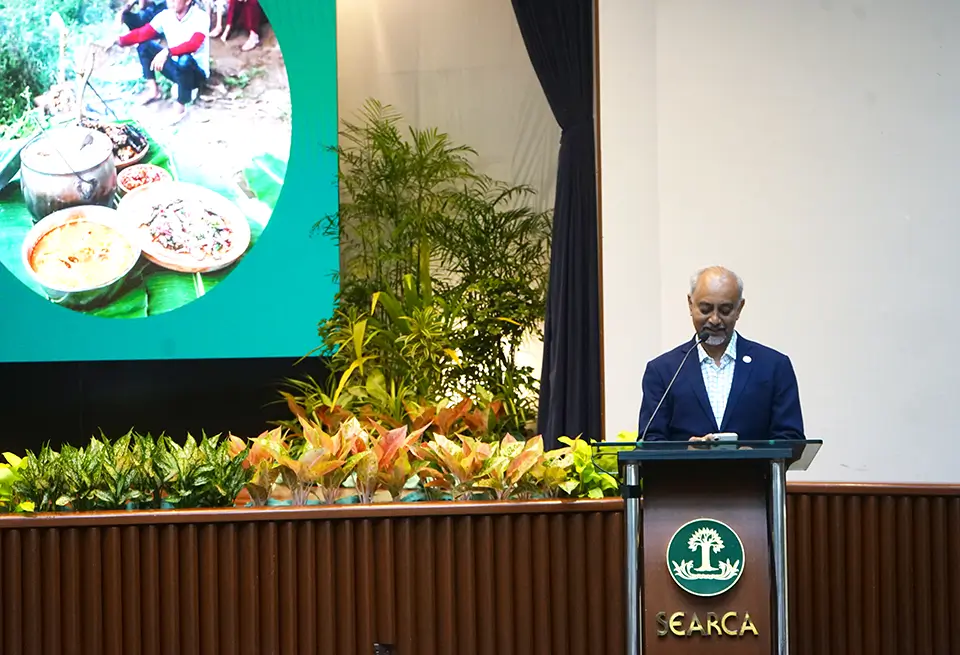 Dr. Sridhar Dharmapuri called for sustained partnerships to move agrifood systems financing in ASEAN from dialogue to concrete action.
At the end of the workshop, Dr. Sridhar Dharmapuri expressed hope that the stronger partnerships and collaborations to finance agrifood systems transformation in ASEAN will continue beyond the workshop.
"Through the instruments that our regional office is putting forward, so is our work with ASEAN on the food systems model, with SEARCA on the cost of a healthy diet, and other projects that we have in individual countries, including UN SDGs, we hope that we can continue not just this conversation, but also put many of these things into action," he added.