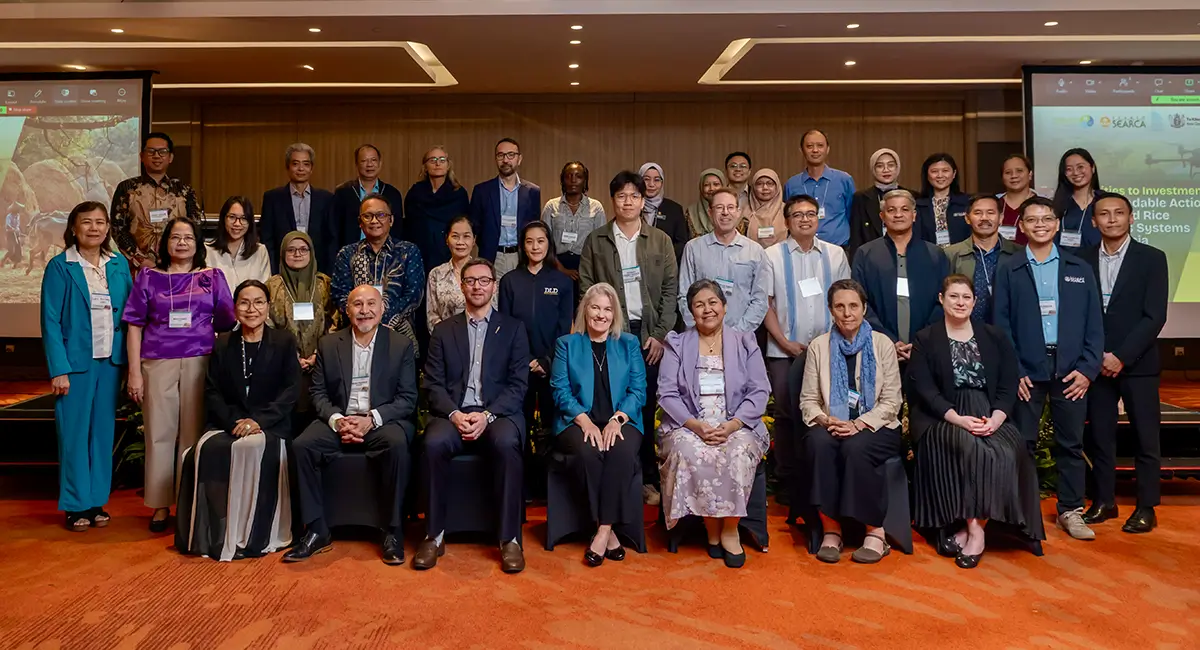
JAKARTA, Indonesia—Forty-five researchers, policymakers, and development partners from across Southeast Asia and beyond convened on 1–2 October 2026 at the hybrid ASEAN Climate-Smart Agriculture (CSA) workshop, "From Priorities to Investment: Advancing Fundable Actions in Livestock and Rice Low-Emissions Systems in Southeast Asia," held at Holiday Inn & Suites in Jakarta, Indonesia and via Zoom.
The workshop aimed to develop an implementation plan for activities under the ASEAN CSA Initiative, using livestock and rice systems to demonstrate how research-based solutions can be scaled up.
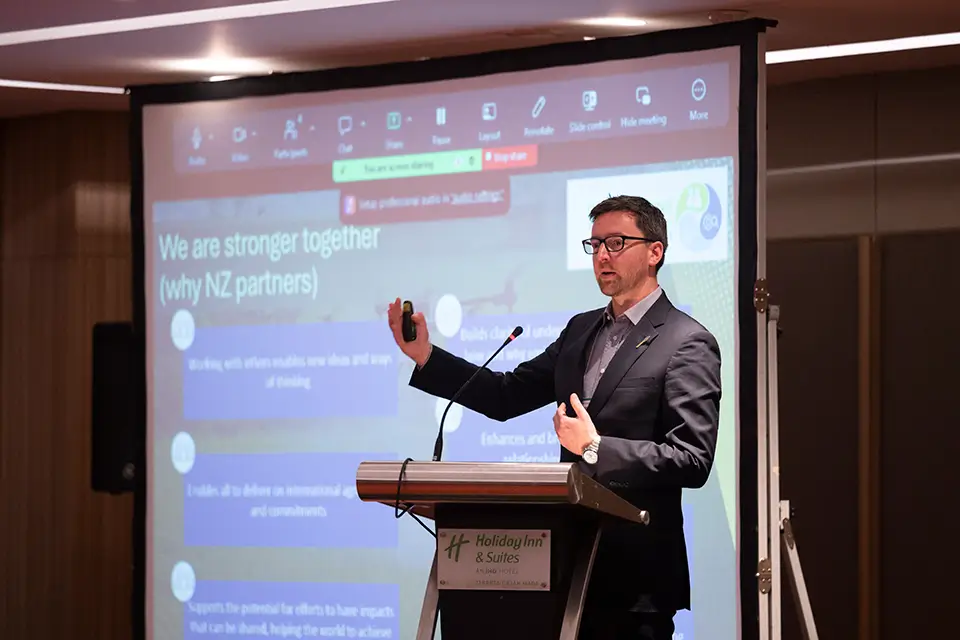
Her Excellency Joanna Anderson, New Zealand Ambassador to ASEAN, and Dr. Mercedita Sombilla, Center Director of the Southeast Asian Regional Center for Graduate Study and Research in Agriculture (SEARCA), opened the workshop, emphasizing regional cooperation and the need to translate agricultural research into practical investments.
Anderson affirmed New Zealand's longstanding partnership with ASEAN, which marked 50 years of diplomatic relations in 2025, and its continued support for climate-smart agriculture.
"Over the last five years, New Zealand invested NZD 10 million in the ASEAN Climate Smart Agriculture Initiative, supporting ASEAN members and the region to measure and identify low-emissions-high productivity agriculture practices. We complemented this with a NZD 19 million contribution to the CGIAR Asian Mega Deltas initiative, including work to develop high-quality, low-emissions rice systems in the Mekong Delta," she shared.
The envoy also announced that the New Zealand government contributed NZD 610,000 to extend the ASEAN Climate Smart Agriculture Initiative until June 2027.
"Together, through this extension, we will advance the research, policies, investments, and practical solutions needed to increase agriculture productivity and achieve globally significant reductions in greenhouse gas emissions," she added.
Sombilla, meanwhile, called for stronger partnerships, concrete investments, and scalable solutions that benefit farmers, strengthen food security, and reduce agricultural emissions.
"We believe that knowledge creates value only when it improves lives. Research becomes meaningful when it informs decisions. Innovation becomes transformative when it reaches farm communities and institutions that can put it into practice," she said.
She urged participants to turn their discussions into action.
"Together, we have an opportunity not only to discuss the future of climate-smart agriculture in Southeast Asia, but to help shape it. Let us turn priorities into investments, investments into action, and action into lasting impact for the farmers, the families, and communities we ultimately serve."
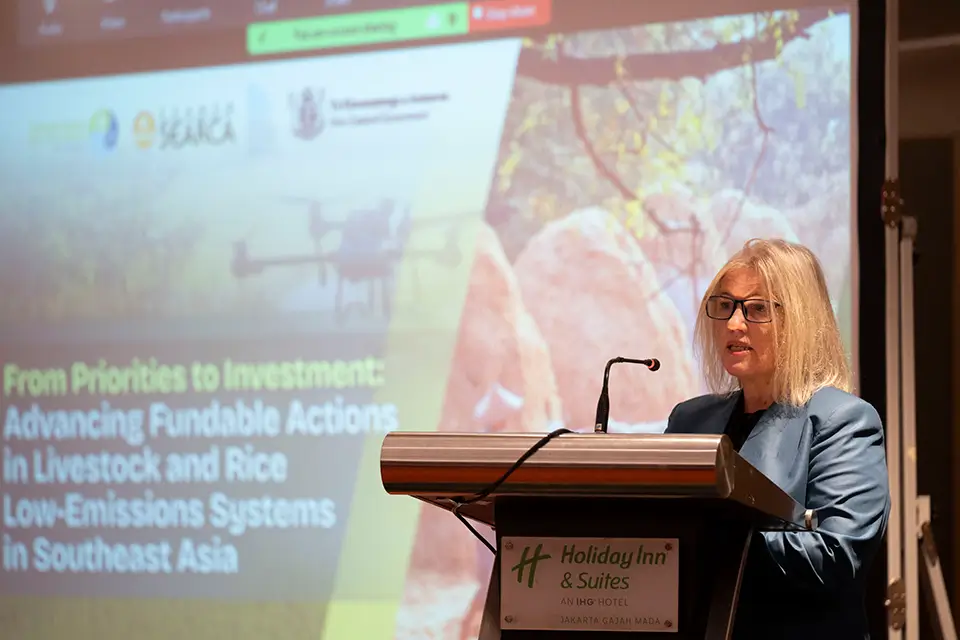
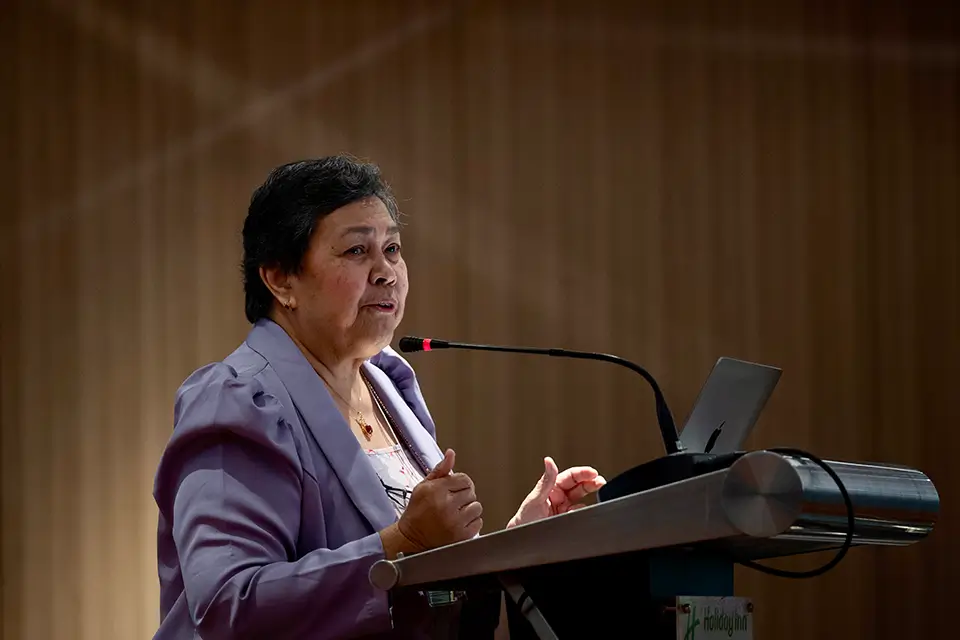
From left: New Zealand Ambassador to ASEAN Joanna Anderson and SEARCA Center Director Dr. Mercedita Sombilla delivered their welcome remarks at the regional workshop in Jakarta, Indonesia.
Technical presentations covered measurement, reporting, and verification (MRV) systems for livestock and rice, the CGIAR Climate Action Science Program, the Global Methane Hub's portfolio, the climate-smart agriculture investment plans of the FAO Regional Office for Asia and the Pacific (FAO-RAP), and farmer-led adoption pathways.
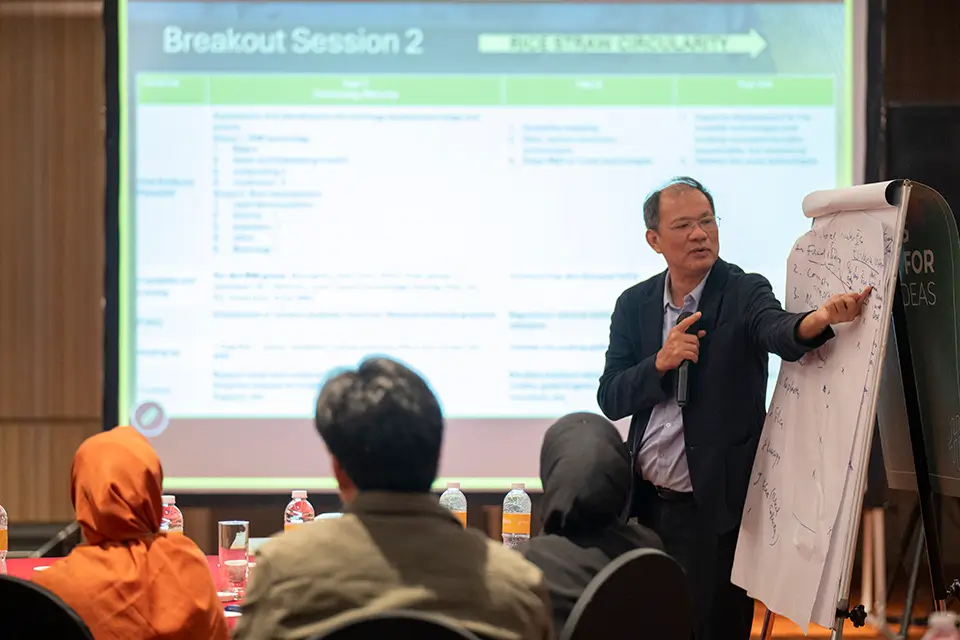
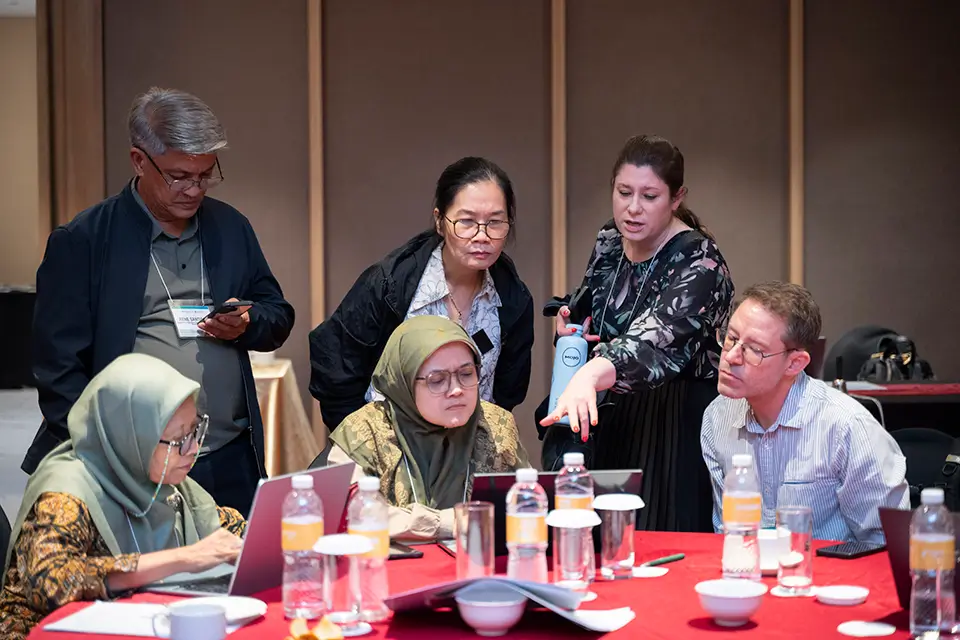
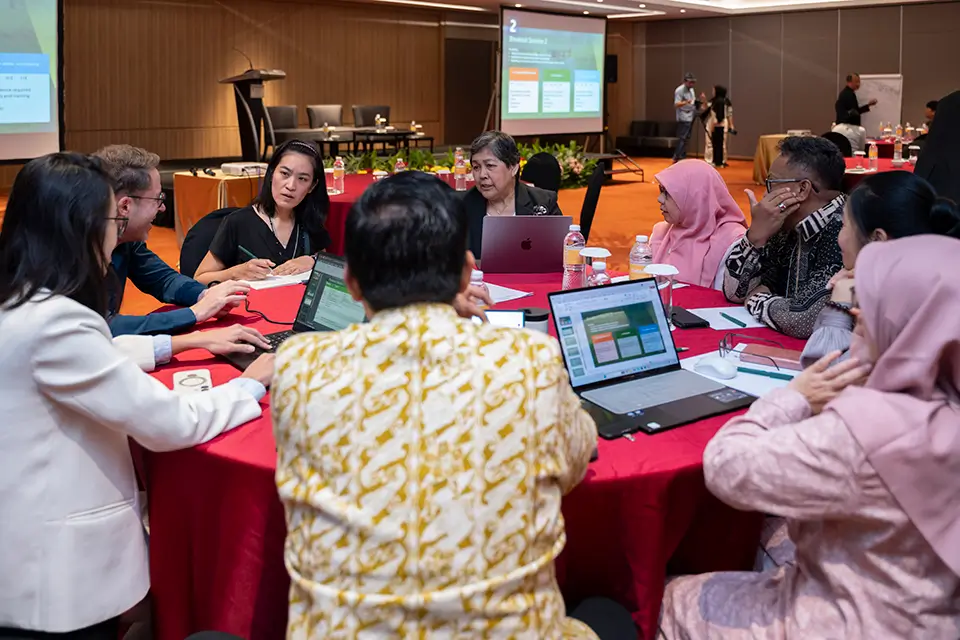
In breakout discussions, participants identified regional research priorities covering livestock-rice integration, life cycle assessment, harmonized MRV systems, livestock feed options, animal health quantification, circular uses of rice straw, and farmer incentive schemes.
A strong consensus emerged that livestock and rice systems must be addressed together rather than in silos, and that farmer-centered co-design is essential for scaling-up solutions. Participants also emphasized that productivity improvements and farmer economic benefits must be central to any mitigation strategy to encourage wider adoption.
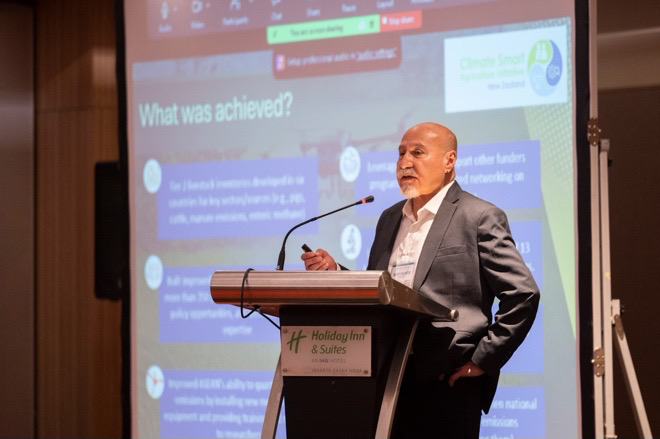
As the workshop drew to a close, representatives from CGIAR, SEARCA, and the New Zealand Government discussed key outcomes and proposed next steps.
Dr. Bjoern Ole Sander of the International Rice Research Institute (IRRI), a CGIAR research center, highlighted insights into livestock MRV, data collection challenges, and opportunities to integrate livestock and rice interventions. He proposed joint scoping of livestock and rice systems to identify existing pilots and practices, assess interventions with potential for scaling up, and determine the evidence needed for wider adoption.
Sombilla emphasized the importance of maintaining the partnerships established through the workshop and continuing to bring rice and livestock perspectives together rather than working in silos. She reaffirmed SEARCA's commitment to supporting this collaborative effort through its regional networks and partnerships across the 11 Southeast Asian countries. She also identified SEARCA's Consortium for Agricultural Policy and Research Initiatives (CAPRI) as a potential platform for further collaboration.
Mr. William Aikenhead of the New Zealand Ministry for Primary Industries (MPI) described the workshop as an important starting point for developing a fundable regional plan for low-emissions agriculture. He said MPI will continue discussions with partners in the region and implement research, training, and extension activities through June 2027, with insights generated during the workshop informing the design and delivery of said activities. New Zealand is also considering longer-term engagement with ASEAN on climate and agriculture for 2027–2030, with the workshop outputs serving as an important basis for future investment and support plans.
The New Zealand MPI, Ag Emissions Centre, CGIAR, and SEARCA co-organized the regional capacity-building workshop.