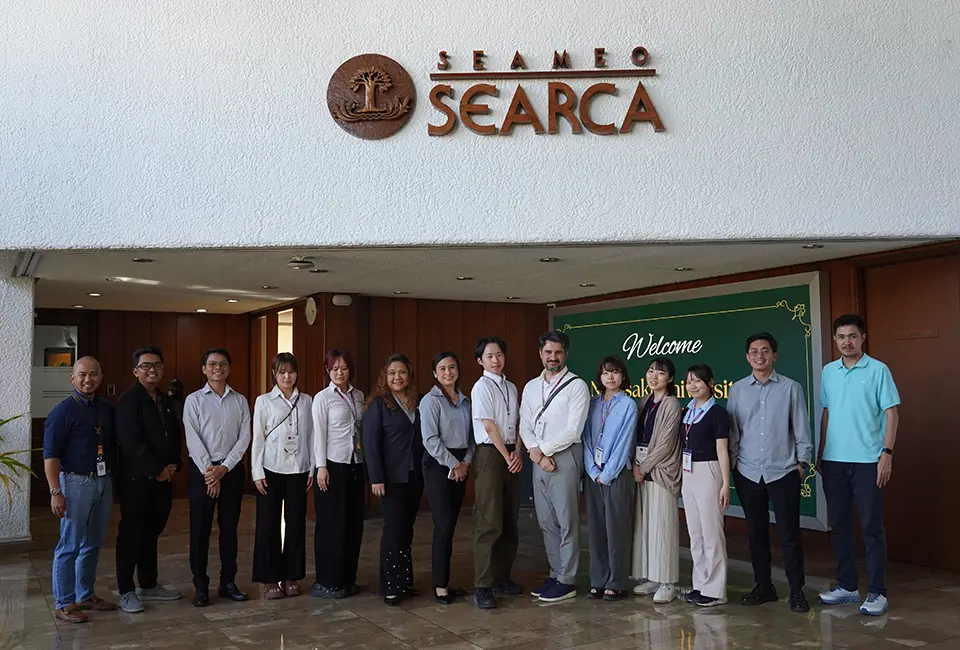
LOS BAÑOS, Philippines—Six students from Nagasaki University visited the Southeast Asian Regional Center for Graduate Study and Research in Agriculture (SEARCA) on 26 February 2026 as part of the Global Social Responsibility (GSR) Short-Term Study Program. The visit aimed to provide a deeper their understanding of Philippine business, culture, economy, and entrepreneurship.
The students were accompanied by Asst. Prof. Bebio Vieira Amaro of Nagasaki University and Asst. Prof. Rei Chino Pua of the University of the Philippines Los Baños - Department of Agribusiness Management and Entrepreneurship (UPLB-DAME).
Nagasaki University, a national institution in Japan, is committed to becoming a world-leading university in promoting Planetary Health. In 2023, seven of its students also visited SEARCA under the same program.
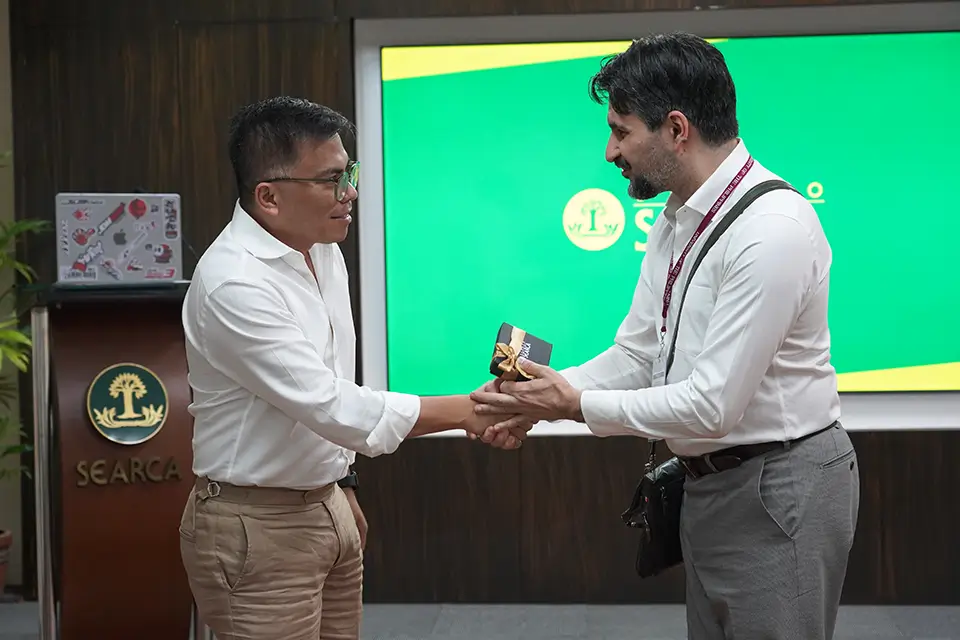 SEARCA Deputy Director for Administration, Dr. Rico Ancog, presents a token of appreciation to Asst. Prof. Bebio Vieira Amaro of Nagasaki University.
During this year's visit, Mr. Joseph Matthew Hedreyda, Senior Associate for Partnership and Advocacy, Partnerships Unit (PU), presented the Center's mandates and its 12th Five-Year Development Plan: Sustainable Transformation of Agricultural Systems through Innovation in Southeast Asia (SUSTAIN Southeast Asia). He highlighted SUSTAIN Southeast Asia's 4Ps framework, which focuses on boosting farmer incomes (Pocket), enhancing food security (Plate), building climate resilience (Place), and empowering the next generation of stakeholders (People).
The delegation also received an overview of SEARCA's initiatives across its core programs on education, research, and innovation. For education, Ms. Blessie Saez, Senior Program Associate of the Education and Collective Learning Department (ECLD) - Graduate Scholarship and Institutional Development Unit (GSIDU), elaborated on the SEARCA Graduate Scholarship Program, which provides full MS and PhD scholarships, PhD research scholarships, and non-degree scholarships to Southeast Asians, in partnership with various academic institutions. She also highlighted SEARCA's academic grants, including the Regional Professorial Chair Grants, the Academic Bridging Program for Cambodia, Lao PDR, Myanmar, Vietnam (CLMV) and Timor-Leste, and the Faculty and Student Mobility Grant. These initiatives aim to strengthen academic capacity, enhance research exposure, and support professional growth among scholars in the region.
She also introduced the group to the Center's Institutional Development Assistance (IDA) Program, which supports strategically located universities across Southeast Asia by strengthening their systems, skills, and resources to meet evolving human resource and economic needs. Saez also presented the Southeast Asian University Consortium for Graduate Education in Agriculture and Natural Resources (UC), a network of premier universities in Southeast Asia, Canada, Germany, Japan, and Taiwan, for which SEARCA serves as Secretariat.
The visitors also learned about SEARCA's capacity-building programs, including short-term training courses and executive programs aimed at enhancing the competencies of professionals in agriculture and rural development. Saez shared information on SEARCA's regular learning events, such as the SEARCA Online Learning and Virtual Engagements (SOLVE) Webinar Series, the Agriculture and Development Seminar Series (ADSS), and the Meet the Diplomat Series, which collectively foster knowledge exchange and thought leadership in agriculture and development.
She likewise presented SEARCA's youth-focused initiative, Young Forces for Agricultural Innovation (#Y4AGRI), which encourages young leaders to pursue careers and entrepreneurial opportunities in agriculture while developing innovative solutions to strengthen the agri-food system.
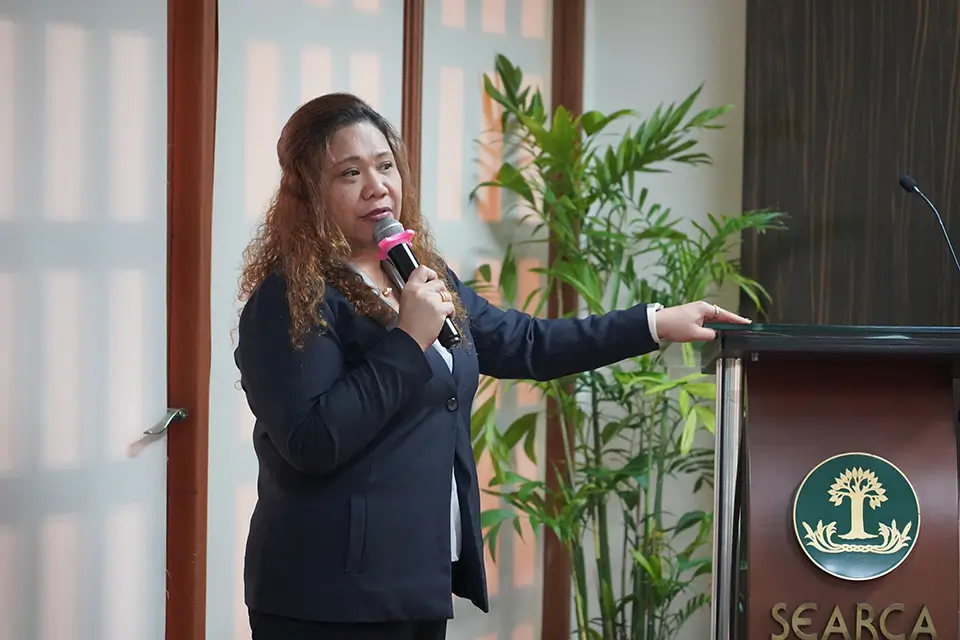
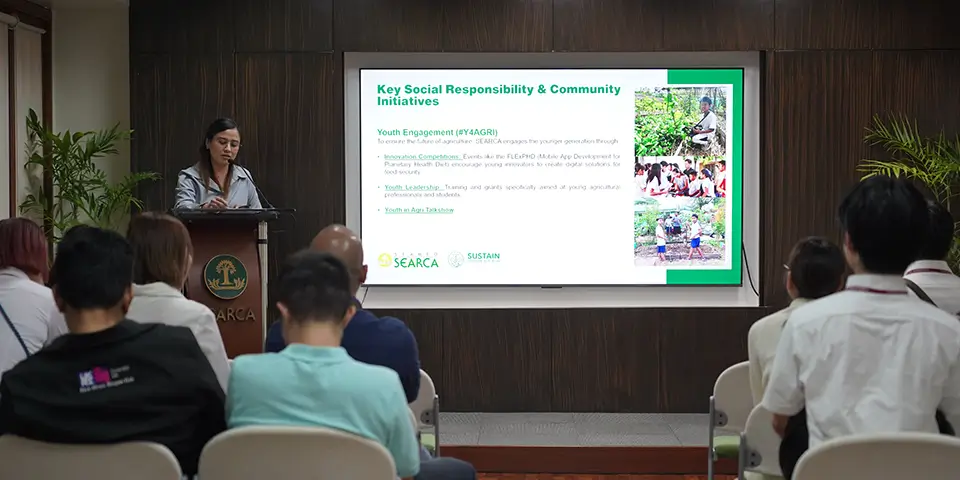
Ms. Maria Carla Dolores, Senior Program Associate of the Research and Thought Leadership Department (RTLD), introduced SEARCA's social responsibility and community development research initiatives. She highlighted the School-plus-Home Gardens Program (S+HGP), which addresses malnutrition while promoting agricultural education, and its offshoots—the School and Home Gardens cum Biodiversity Enhancement Enterprise (SHGBEE) in the Philippines and Cambodia, and the School Edible Landscaping for Entrepreneurship (SEL4E) project in Rizal, Philippines.
Dolores also discussed SEARCA's support for inclusive growth through its work on value chains, particularly its involvement in developing the calamansi and coconut industry roadmaps in Oriental Mindoro and Quezon Province, Philippines. These projects include value chain assessments and capacity-building activities to help farmer cooperatives secure better markets and access government programs.
In addition, the delegation was introduced to SEARCA's support programs and knowledge platform, including the Seed Fund for Research and Training (SFRT), the SEARCA Travel Grants Program (STGP), the Adjunct Fellows, Postdoctoral, and Visiting Research Fellows Program, and the Agriculture, Forestry, and Natural Resources (AFNR) Knowledge Platform, which provides access to policy briefs, datasets, and knowledge-sharing communities.
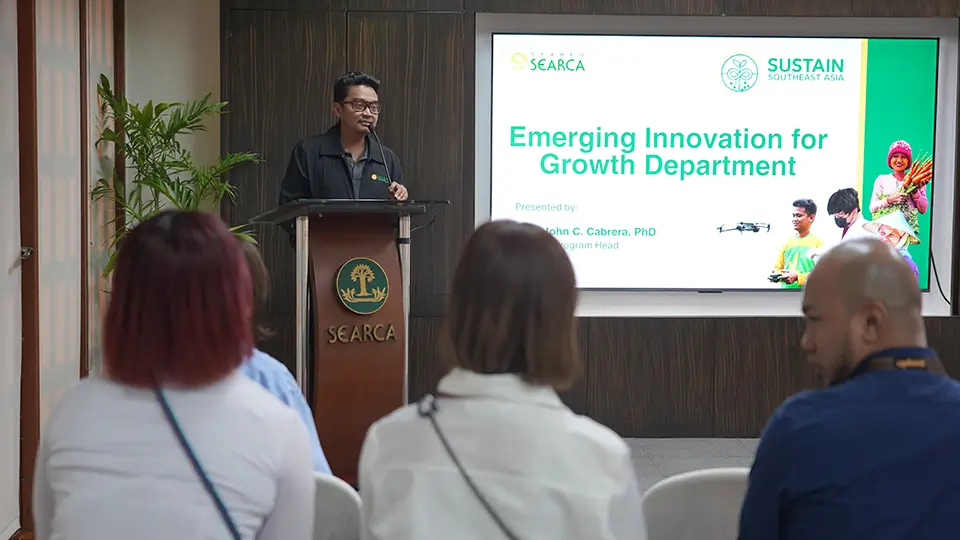
Following the presentations on education and research, Dr. Emil John Cabrera, Program Head of the Emerging Innovation for Growth Department (EIGD), presented SEARCA's innovation-focused initiatives.
He highlighted projects under the Grants for Research towards Agricultural Innovative Solutions (GRAINS), which support prototype development addressing agricultural challenges. Featured projects included affordable hydroponic probiotics for Lao PDR farmers, black soldier fly technology for organic waste conversion in the Philippines, and an agri-financing platform connecting Myanmar farmers to investors.
Cabrera also discussed the ACCELERATOR Program, which provides startups with diagnostics, mentorship, market linkage, and networking support. Among its partners are ADS, a fruit and vegetable onsite-online platform, and Preksvay Farm, which empowers women farmers through vermicomposting. He also listed agri-innovation competitions and hackathons organized by SEARCA.
Finally, he discussed SEARCA's efforts to expand smart farming, agri-robotics, and farm mechanization to improve productivity and enhance climate resilience. Among these are international and local knowledge-sharing events that promote awareness and collaboration on agri-robotics adoption, as well as the co-organization of the SEA Network of Open Systems and Sustainable Agri-Machinery Manufacturing (OSAMM), which advances localized agri-machinery design and manufacturing in collaboration with farmers and industry partners.
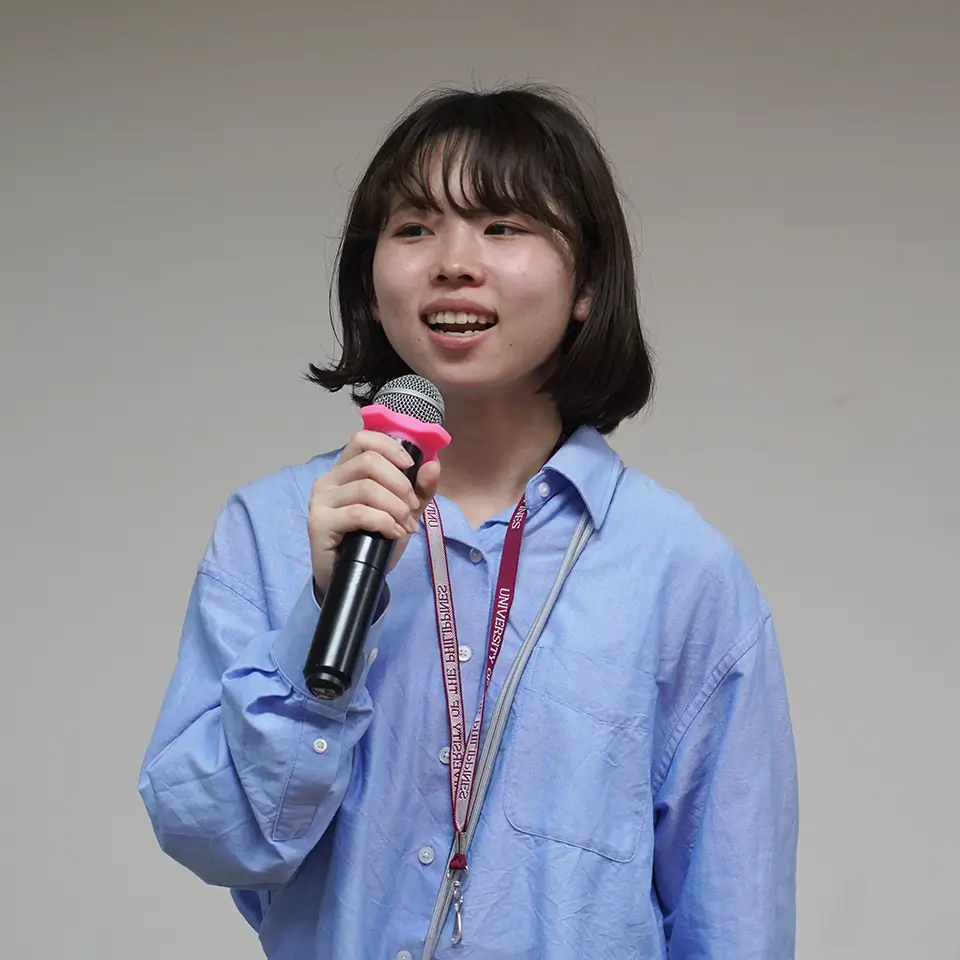
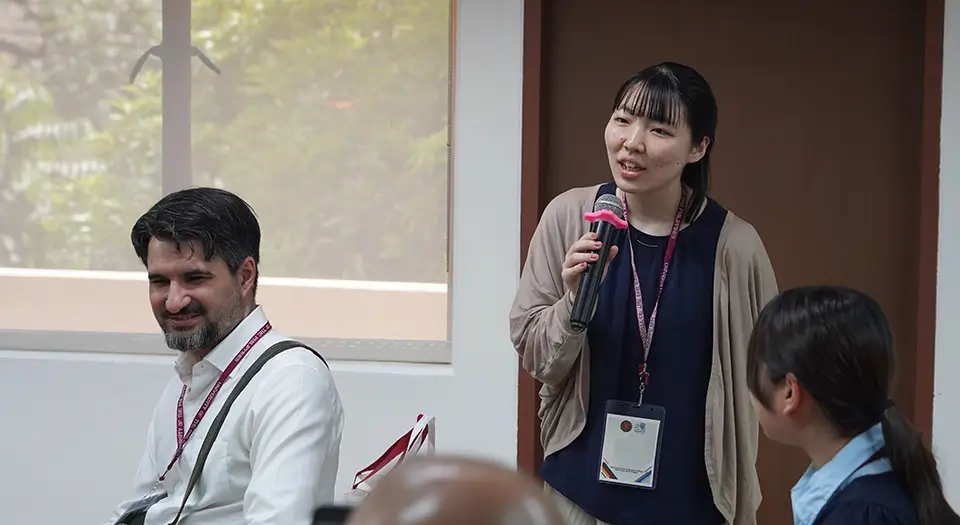
SEARCA opens its doors to such visits as part of its commitment to inspiring the next generation of agricultural leaders. With youth engagement as one of its key priority areas, the Center welcomes international students and agriculture practitioners to bridge theory and practice, foster cross-cultural learning, and emphasize agriculture's crucial role in addressing global challenges and exploring emerging opportunities. These exchanges spark ideas, nurture future changemakers, and strengthen partnerships for inclusive and sustainable agricultural transformation in Southeast Asia and beyond.