
LOS BAÑOS, Philippines—Ten Development Communication and Communication students from Ateneo de Naga University, accompanied by their professor, Mr. Jan Victor Agna, visited the Southeast Asian Regional Center for Graduate Study and Research in Agriculture (SEARCA) on 6 March 2026 to learn about the Center's communication initiatives and the critical role of communication in advancing agriculture.
During the learning visit, Ms. Zara Mae Estareja, SEARCA Senior Associate for Public Relations, provided an overview of SEARCA's 12th Five-Year Development Plan: Sustainable Transformation of Agricultural Systems through Innovation in Southeast Asia (SUSTAIN Southeast Asia). She highlighted the Center's work under its 4Ps framework: boosting farmer incomes (Pocket), enhancing food security (Plate), building climate resilience (Place), and empowering the next generation of stakeholders (People). She also discussed SEARCA's core programs spanning education, research, and innovation, as well as the Center's longstanding thrust to catalyze agricultural and rural development across Southeast Asia.
Estareja emphasized the persistent communication challenges facing the agriculture sector, such as the complexity of scientific information, the prevalence of misinformation, and the difficulty of mobilizing stakeholder action. She explained SEARCA's communication approaches to these challenges, including demystifying technical research for general audiences, debunking inaccurate narratives, and crafting messages that activate stakeholders, helping them understand not only the information but also its real-world implications.
"Communicating agricultural science bridges research and practice—so innovations don't just sit on paper; they reach fields, markets, and homes," she said.
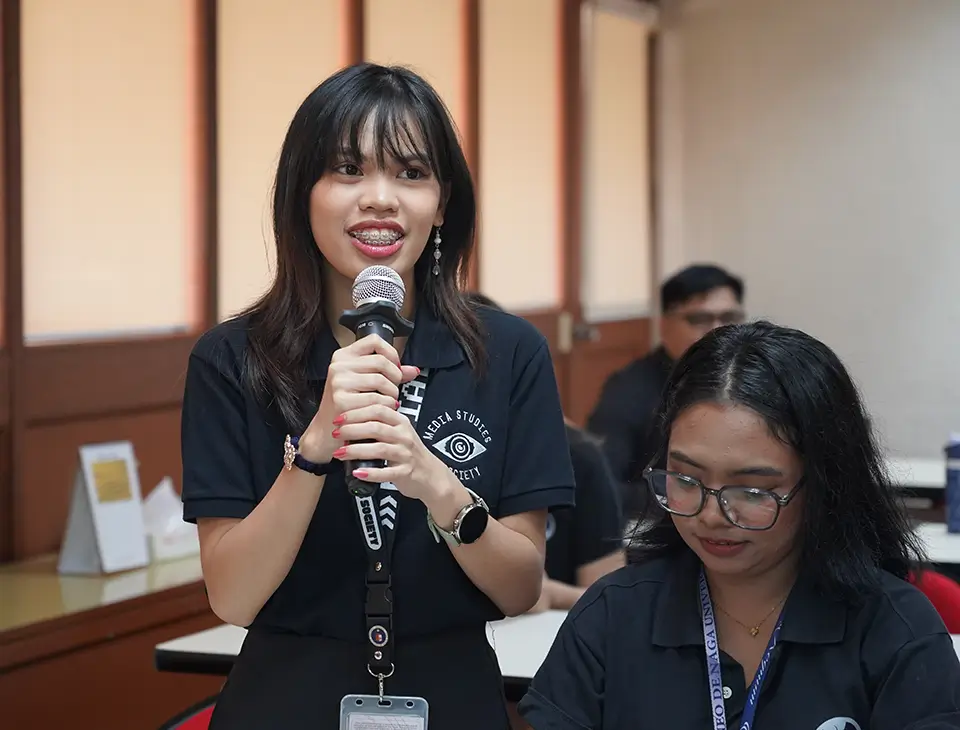

Estareja also highlighted SEARCA's communication strategies for disseminating agriculture breakthroughs, including public relations, publications, knowledge events, and the SEARCA Hub for Agriculture and Rural Innovation for the Next Generation (SHARING) AgriMuseum and Café. She further discussed how the Center's grants support the sharing of non-SEARCA agricultural research findings. These strategies ensure the broad and rapid dissemination of credible agricultural information while fostering dialogue, collaboration, and innovation.
She emphasized that "science is not finished until it is communicated," underscoring the responsibility of future development communication professionals to serve as "narrators of progress" who shape public understanding and drive positive change in agriculture.
To cap the visit, the students toured the SHARING AgriMuseum, where they learned about Southeast Asia's agricultural history and landscape, stories of farm innovation, and agripreneurship products, and enjoyed interactive games.


SEARCA welcomes students from basic, secondary, and tertiary levels as part of its commitment to inspiring the next generation of agricultural leaders. With youth engagement as a key priority, the Center continues to foster a deeper appreciation and understanding of agriculture among young people.