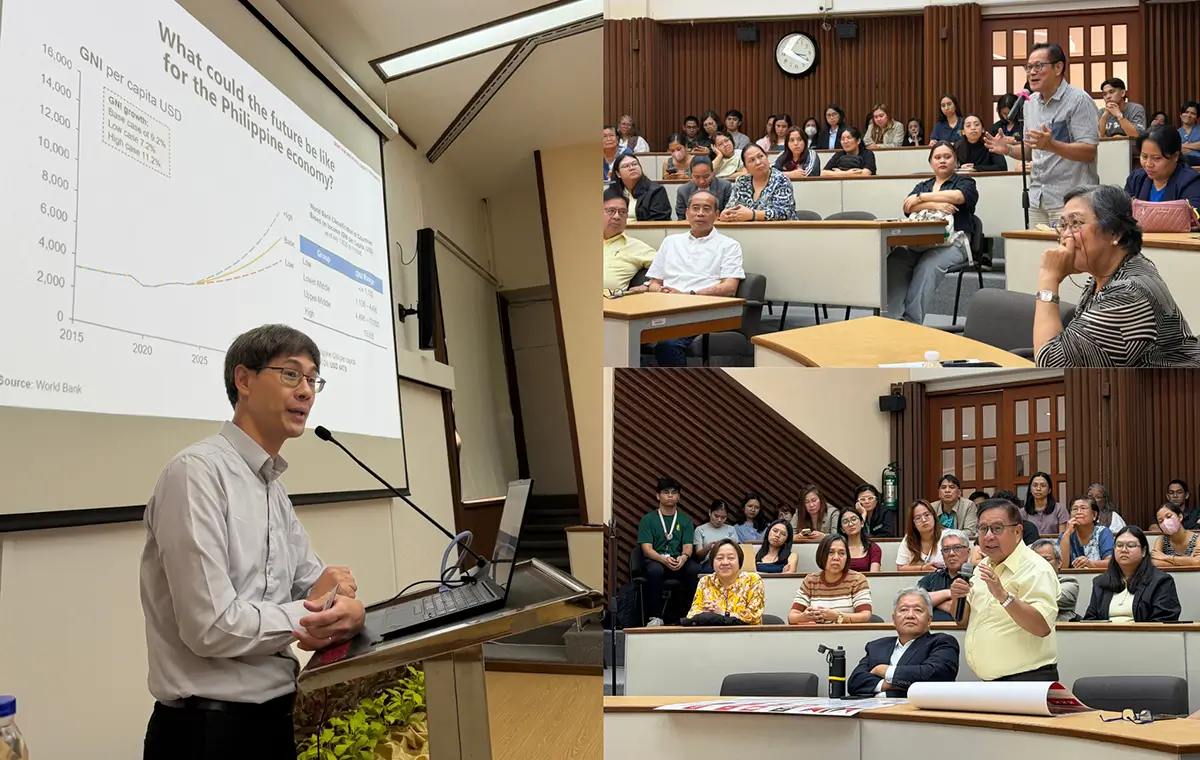
LOS BAÑOS, Philippines—Former National Economic and Development Authority (NEDA) Secretary Dr. Karl Kendrick Chua underscored that agricultural productivity is the missing foundation in the Philippines' long-delayed structural transformation during a seminar hosted by the Southeast Asian Regional Center for Graduate Study and Research in Agriculture (SEARCA) on 14 November 2025. NEDA has been renamed as the Department of Economy, Planning, and Development (DEPDev).
Speaking at the SEARCA Agriculture and Development Seminar Series (ADSS), Chua said the Philippines remains a stable but not yet a prosperous economy. He emphasized that true prosperity cannot be achieved unless the country begins its transformation in agriculture, where all successful Asian economies began.
Chua emphasized that countries such as Japan, Korea, Taiwan, Indonesia, Thailand, and China all followed a consistent pathway: raising agricultural productivity, enabling farmers to transition or scale up, using rising rural incomes to fuel manufacturing and exports, and achieving inclusive structural transformation.
"The sector that grows the fastest, typically manufacturing, is not the sector that reduces poverty the most. It is agriculture, directly and indirectly, that lifts people out of poverty," he said.
In contrast, the Philippines' transformation "went wrong" when the country skipped this essential first step. While agriculture's share in the economy has declined over the decades, manufacturing has not grown sufficiently to absorb rural labor. Instead, workers moved into low-value informal services, resulting in weak job creation and slow poverty reduction.
A central theme of Chua's lecture was the unfinished and restrictive agrarian reform system, which he described as one of the most binding constraints to agricultural productivity. He cited that East Asian agricultural reforms succeeded because land redistribution was completed within a decade, farmers received secure property rights, land markets were allowed to function, and mechanization and consolidation enabled large-scale, efficient operations.
"Seventy years later, we are still completing land reform," he said, noting that Filipino farmers face restrictions on selling or even leasing their awarded lands. This prevents consolidation, mechanization, and investments that would raise yields and lower food prices.
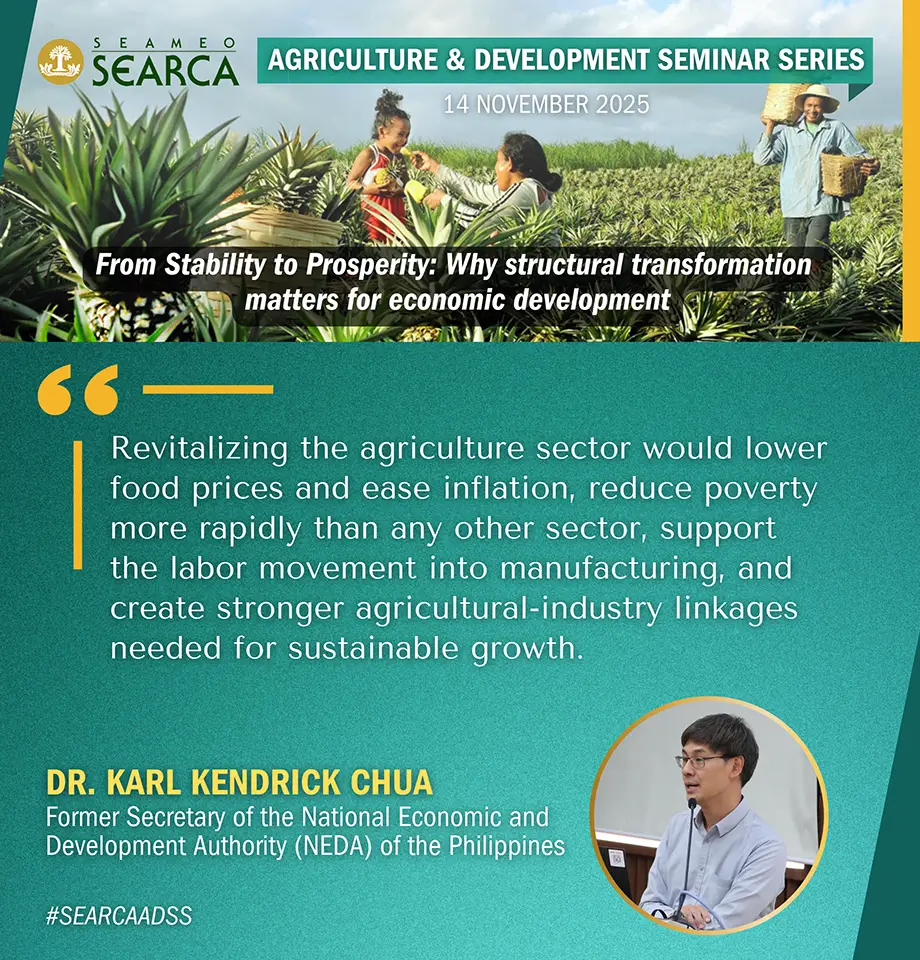
According to Chua, agriculture has grown at an average rate of only 2.2 percent since the 1970s, barely keeping pace with population growth, and has kept the country in a "low-productivity trap." He argued that revitalizing the sector would lower food prices and ease inflation, reduce poverty more rapidly than any other sector, support the labor movement into manufacturing, and create stronger agriculture-industry linkages needed for sustainable growth.
"Fix agriculture, and you allow manufacturing another chance, and then bring people out of poverty," he emphasized.
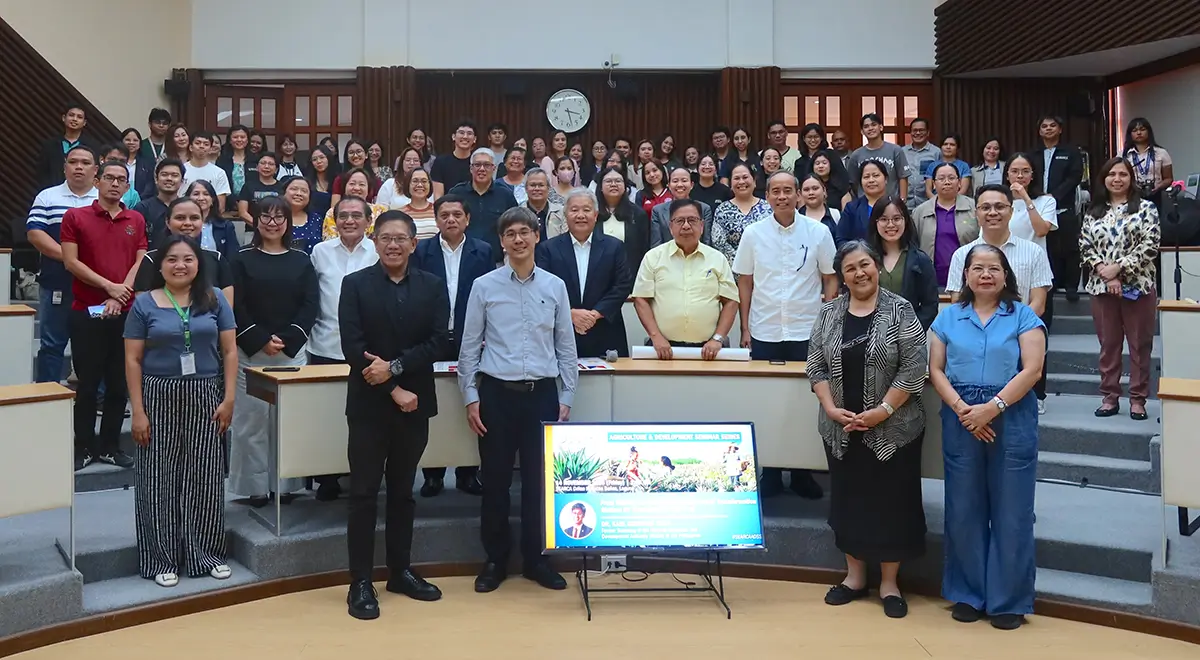
Speaking before academics, students, local government representatives, and development practitioners, Chua encouraged the Los Baños Science Community (LBSC) to take leadership in building the analytical foundation for reform.
"Los Baños is the center of agricultural thinking in the country," he said. "This is where we must rethink and realign policies based on evidence, not constituencies."
Chua outlined the following reform priorities in Philippine agriculture: strengthen property rights and land markets by completing the agrarian reform; shift from equity to efficiency by focusing on increasing scale in farms; reform land administration and titling systems; focus from inputs to farmers, products, and value chains; reallocate public spending to productive public goods and targeted support, as needed; and fully liberalize rice and other key crop markets.
The ADSS is SEARCA's flagship seminar series that encourages the presentation and discussion of development and research issues, as well as their implications for the sustainable transformation of Southeast Asian agricultural systems through innovation. It aims to foster dynamic discussions and knowledge sharing within and beyond the LBSC.