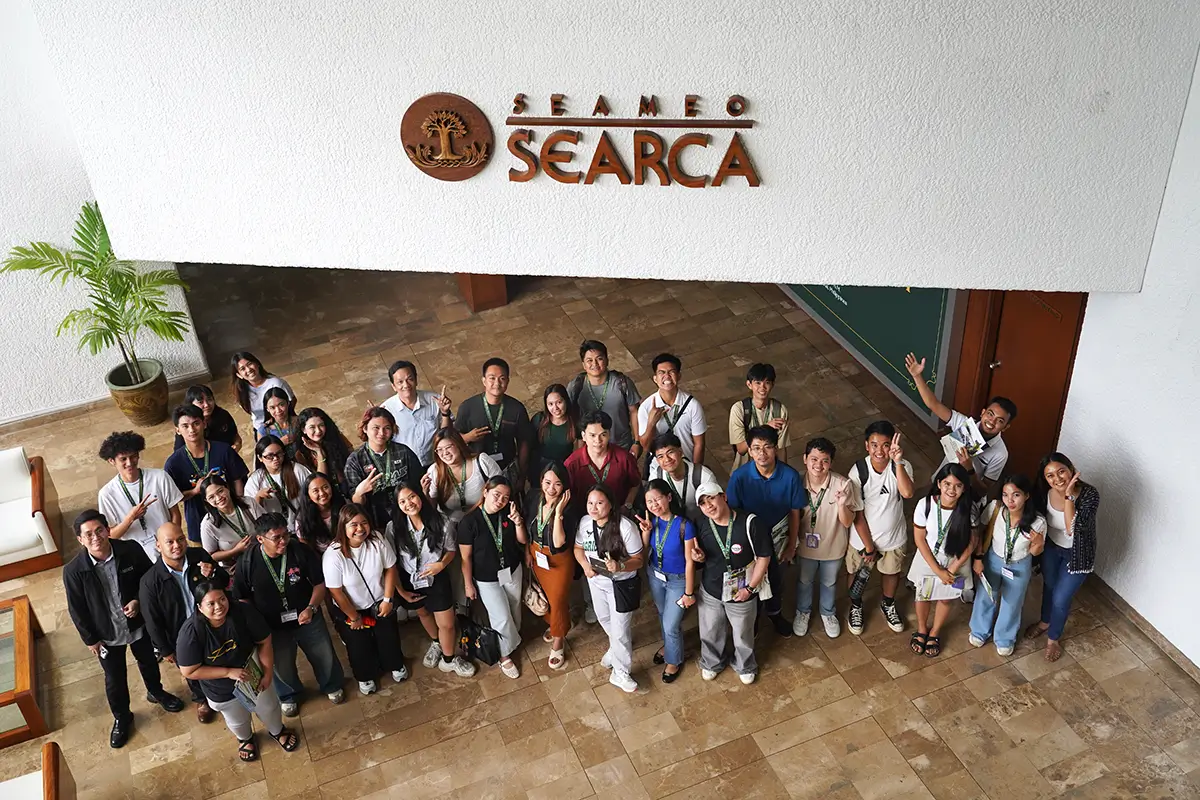
LOS BAÑOS, Philippines—Forty-two students preparing for the Licensure Examination for Agriculturists visited the Southeast Asian Regional Center for Graduate Study and Research in Agriculture (SEARCA) on 11 September 2026. The examinees, who are enrolled at Upstep Review Center (URC), were accompanied by staff, Ms. Joy Aira Bunan, Ms. Christine Joy Quinto, and Mr. Kyle Adaraya.
Established in 2019, the Los Baños, Laguna-based review center aims to help improve national board examination passing rates and prepare future frontline agricultural professionals for careers across Philippine industries. The delegation was the second URC cohort hosted by SEARCA and comprised graduates from state and private universities from Luzon, Visayas, and Mindanao.
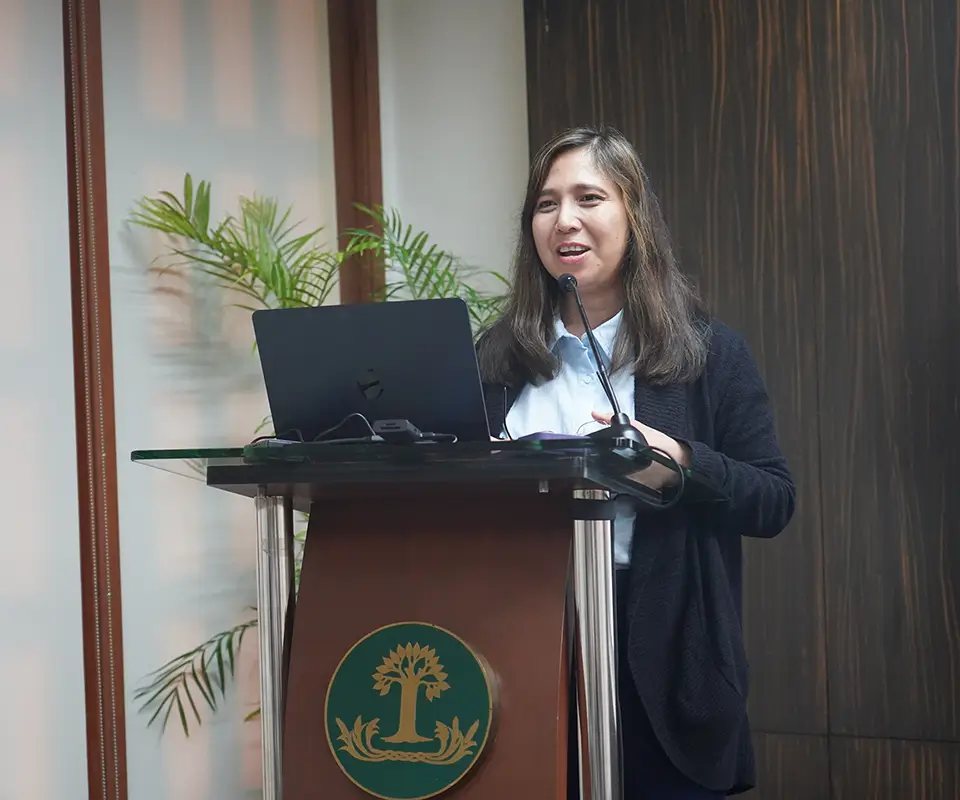
Ms. Sharon Malaiba, Head of the SEARCA Partnerships Unit, presented an overview of the center's mandates, core programs, and flagship initiatives. She emphasized that SEARCA focuses on elevating the welfare and quality of life of agricultural families throughout Southeast Asia by building human and institutional capacities. This mission is pursued through three core programs: Education, which cultivates future agricultural leadership; Research, which informs policy dialogue; and Innovation, which connects farmers with modern technologies and market systems.
Malaiba also presented the strategic framework of SEARCA's 12th Five-Year Development Plan: Sustainable Transformation of Agricultural Systems through Innovation in Southeast Asia (SUSTAIN Southeast Asia), which organizes the Center's work around four outcomes—the 4Ps: Pocket, Plate, Place, and People.
To boost farmers' "Pocket," representing income, she highlighted value chain roadmaps linking smallholders to viable markets, seed grants provided through the Grants for Research towards Agricultural Innovative Solutions (GRAINS) program to develop promising farm technologies, and the Sustainable Agriculture and Food Security Enhancement (SAFE) Acceleration Program, which mentors youth-led, eco-friendly agribusinesses.
Addressing the "Plate," representing food security and nutrition, Malaiba pointed to the School-Plus-Home Garden Program, regional analyses of school meal policies, and the initiative on Measuring the Cost and Affordability of a Healthy Diet in Cambodia, Nepal, the Philippines, and Sri Lanka initiative, which aims to help governments make nutritious food more accessible to vulnerable families. She also cited regional projects on trade and crop biotechnology.
To strengthen resilience in the "Place" where agriculture takes place, she outlined initiatives promoting sustainable and climate-resilient systems. These include the Rice Straw Bioenergy Hub (RSBH), which converts agricultural waste into clean energy and biochar; the ASEAN Partnership for Sustainable Aquaculture (AquASEAN), an eco-friendly aquaculture initiative; the Identification and Analysis of Land Use, Land Use Change and Forestry in the ASEAN Region (LULUCF), which will provide critical data map to track deforestation and carbon emissions; and the Africa, Southeast Asia, and the Caribbean (ASEACA) program to improve cooperation among national and local stakeholders while harmonizing One Health strategies on disease prevention and early response systems.
Concluding with the "People" outcome, Malaiba underscored SEARCA's focus on empowering next generation of agricultural leaders, institutions, and communities through graduate scholarships, flexible micro-credentials in food security and climate change, hands-on technology upskilling in agri-robotics, and executive leadership trainings aimed at modernizing regional higher education institutions and public agencies.
SEARCA also advances its Science-Policy-Practice framework through flagship programs and initiatives. These include the Seed Fund for Research and Training, which supports promising studies to help them attract larger long-term funding; the Consortium for Agricultural Policy Research Initiatives, which provides evidence-based policy advice, facilitates joint research, and shares regional knowledge; the Southeast Asia Agricultural Outlook Series, which tracks regional agricultural trends and identifies practical responses; and the proposed ASEAN Food Policy Framework, which seeks to transform regional food systems through private sector leadership and innovation.
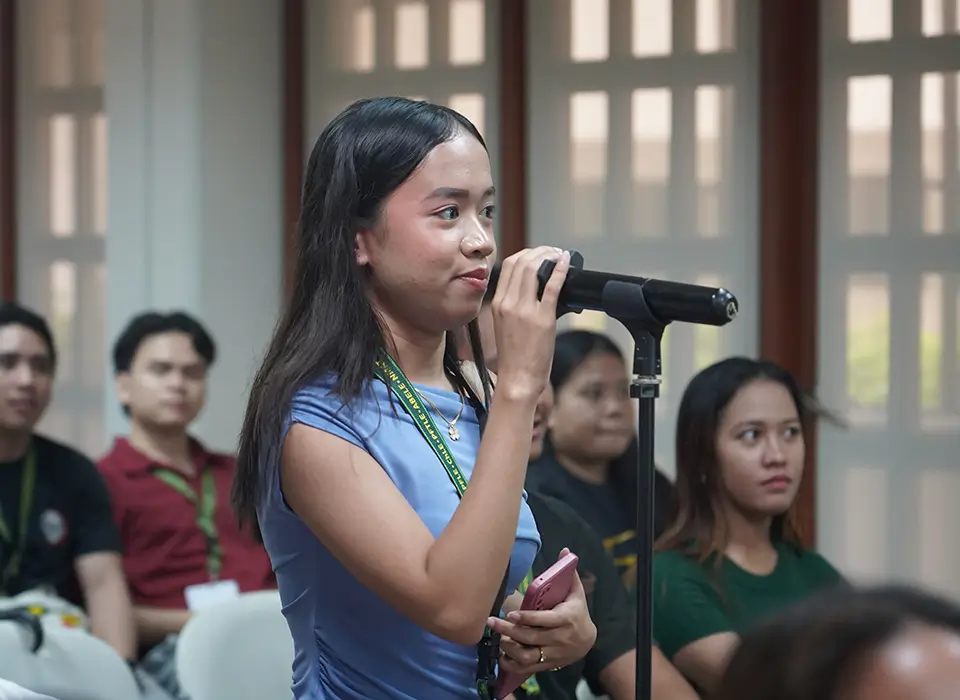
During the open forum, the reviewees expressed strong interest in SEARCA's scholarship offerings. The visit wrapped up with an interactive tour of the SEARCA Hub for Agriculture and Rural Innovation for the Next Generation (SHARING) AgriMuseum, a facility that combines agriculture with art, science, and technology.
The students also attended a special screening of episodes 3 and 4 of the SEARCA Youth in Agri Talk Show, a learning series designed to engage basic education students across Southeast Asia. The episodes spotlighted the positive impact of school and home gardens on student development and youth engagement in climate action.
As a regional center of excellence, SEARCA continues to welcome emerging agricultural leaders who will help address complex challenges in agriculture and drive food security and rural development across the Philippines and Southeast Asia.