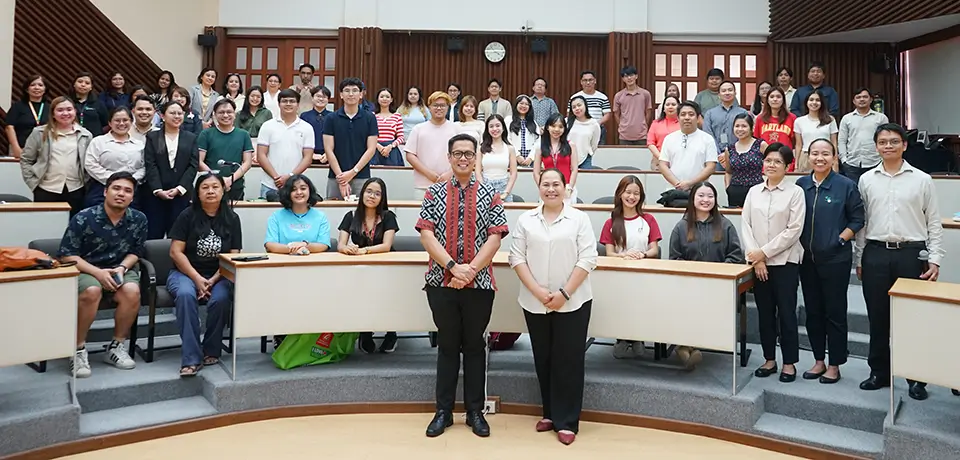
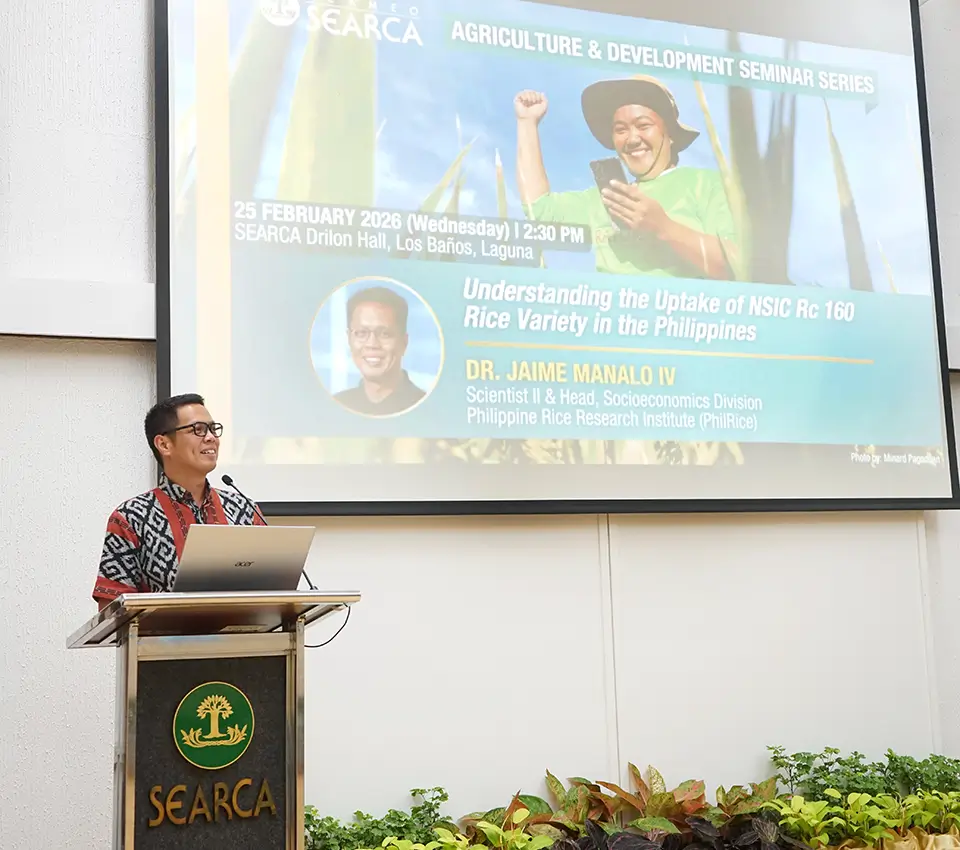
LOS BAÑOS, Philippines—The uptake of any rice variety, from farm to table, is a complex process shaped by the divergent priorities of multiple stakeholders. Presenting his team's study "Understanding the Uptake of NSIC Rc 160 Rice Variety in the Philippines" at the SEARCA Agriculture and Development Seminar Series (ADSS) held on 25 February 2026 at the Southeast Asian Regional Center for Graduate Study and Research in Agriculture (SEARCA) and livestreamed via Facebook, Dr. Jaime Manalo IV of the Philippine Rice Research Institute (PhilRice) underscored how divided priorities along the rice chain have slowed the progress of Rc 160. The variety is noted by some millers as holding export potential if stable volume and quality can be ensured. The research is published in the December 2025 issue of the Asian Journal of Agriculture and Development (AJAD), SEARCA's international scientific journal.
NSIC Rc 160 is a popular homegrown rice variety known for its premium grain and eating quality. Bred by PhilRice and approved for release in 2006 by the National Seed Industry Council, Rc 160 has garnered "nationwide popularity and blockbuster status" across the country's rice market, according to the study.
"Some millers regard it as a strong competitor against imported rice varieties, should there be enough volume to guarantee a profitable business venture," the research noted.
The rice variety's level of success, however, remains modest compared to its potential. To unpack the factors hindering its wider adoption by farmers and its journey to consumers, the research team used innovations mapping, engaging 167 stakeholders (referred to as "actors" in the study) across nine provinces. This methodology shed light on each actor group's distinct roles and the seeming "tug-of-war" among them to achieve group goals, which suggests a significant factor as to why Rc 160's full potential has not been realized 20 years since it became an approved variety.
Seven actor groups were mapped—the government, breeders, seed growers, farmers, rice millers and traders, consumers, and the food industry. Among the key conflicts that surfaced was the millers' perceived exclusion from government plans. There are also concerns regarding the stable and ample supply of Rc 160 amid the push to breed new varieties. Other issues include the marketing and branding of the promising variety as attention shifts to new policies and varieties. There were also allegations of deliberate late harvesting for higher profit at the expense of grain quality, controlled releases to raise prices, and an insufficient supply of certified seeds to ensure harvest purity.
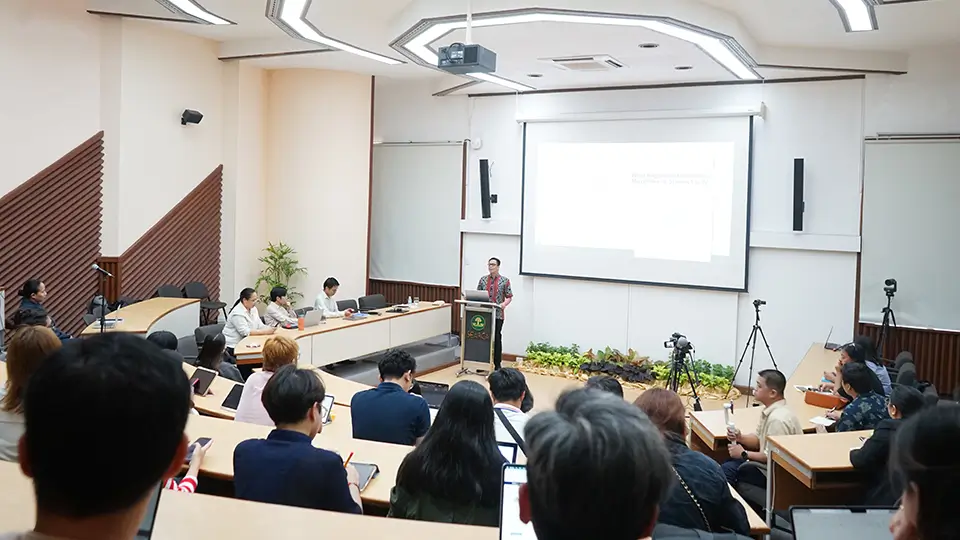
Manalo reflected that while conflicts are inevitable, notably in a democratic society, and lack a quick fix, he sees the need for a facilitated dialogue to iron out the issues impacting the progress of Rc 160.
The study recommends "putting in place policy imperatives to support the continued adoption of technologies like the Rc 160." The study forms part of a broader PhilRice research series on government rice technologies. The findings further underscore the need to harmonize the conflicting stakeholder roles and goals to create a supportive system for agricultural technologies to thrive.
Full access to the AJAD December 2025 issue featuring this seminar paper is available for free at ajad.searca.org. Past issues are archived and available for download from the site, while print copies are available through subscription and from the SEARCA Knowledge Shop in Los Baños, Laguna.
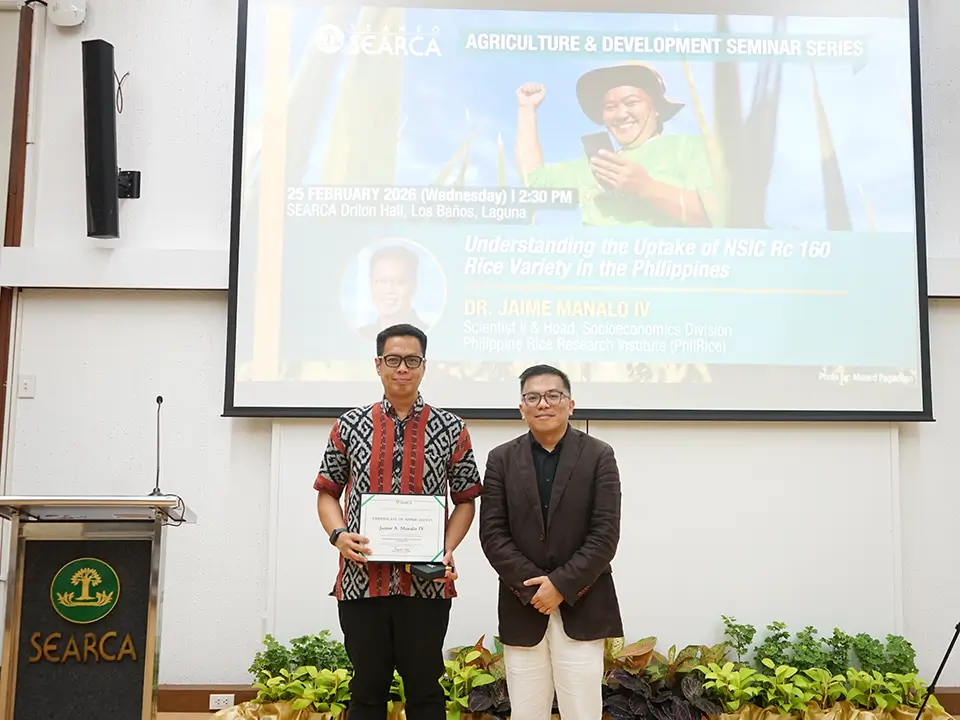
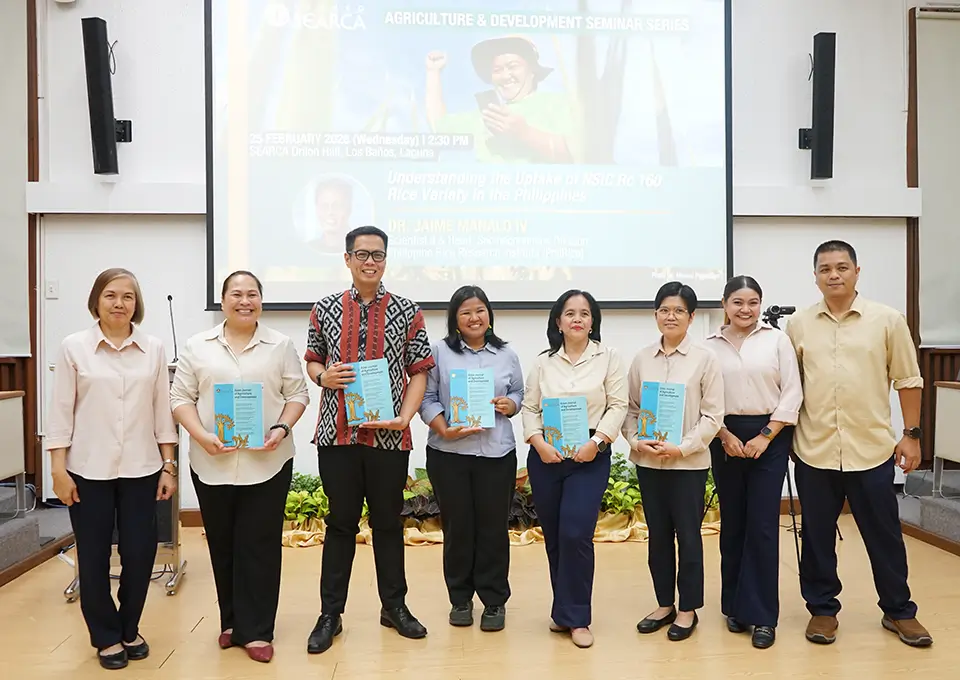
AJAD publishes empirical, policy-oriented, and institutional development studies, as well as perspectives on agriculture and development, the political economy of rural development, and trade issues. Submissions are welcome year-round through https://ajad.searca.org/submit
Meanwhile, the ADSS is SEARCA's flagship seminar series that promotes the presentation and discussion of development and research issues, as well as their implications for the sustainable transformation of Southeast Asian agricultural systems through innovation (SUSTAIN Southeast Asia). It aims to foster a vibrant scientific exchange within and beyond the Los Baños Science Community.