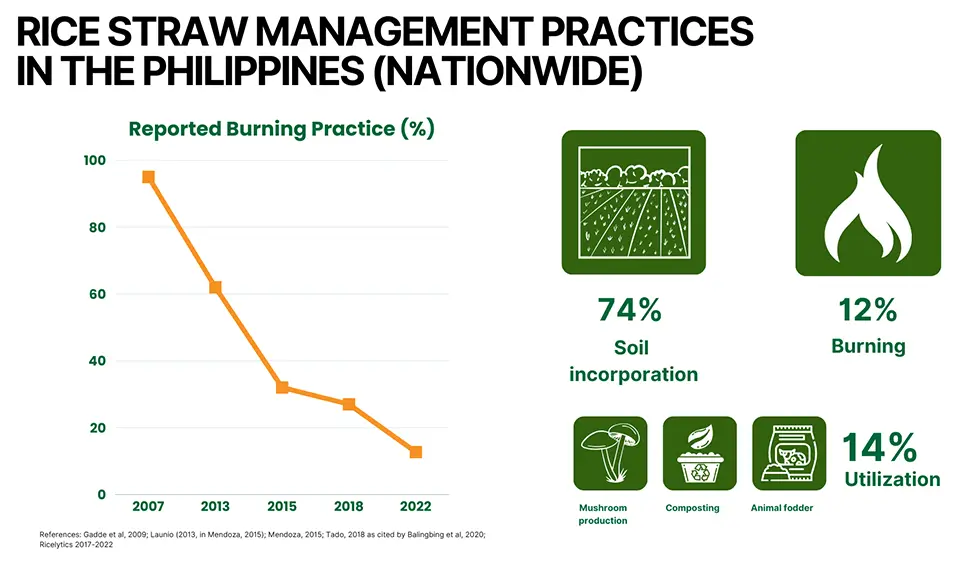
Over the years, incidence of rice straw burning in the Philippines has been reported to have gradually decreased from 95 percent in 2007 to 12 percent in 2022, according to the latest figures from Ricelytics, a Philippine database for rice created by Philippine Rice Research Institute (PhilRice), an agency of the Department of Agriculture (DA). This shift comes after stronger municipal implementation of the Clean Air Act of 1999 (Republic Act No. 8749) and the Ecological Solid Waste Management Act of 2000 (RA 9003) prohibiting open burning of agricultural residues. To complement this, the DA has continuously promoted soil incorporation, a method of keeping rice straw in the field to enrich the soil in lieu of burning. While soil incorporation offers environmental and agronomic benefits, its decomposition in flooded fields increases methane emissions, contributing to greenhouse gas (GHG) buildup.
The Rice Straw Biogas Hub Project, funded by Innovate-UK, is based on the premise of turning rice straw from an environmental liability into a valuable resource. In 2022, Straw Innovations Inc., Southeast Asian Regional Center for Graduate Study and Research in Agriculture (SEARCA), Aston University, and KoolMill Systems partnered to continuously explore ways to increase rice straw utilization for composting, biogas production, mushroom culture, or feed formulation, thereby turning what was once an agricultural waste problem into an opportunity for sustainable innovation. The three-year Philippine-based project constituted research-based studies and recommendations, from innovative straw collection machinery to evidence-based policy.
On 7 October 2025, the very first Rice Straw Bioenergy Hub (RSBH or Dayami Hub), a rice straw management facility in the Philippines was launched in the Pila, Laguna, Philippines. The launch was attended by more than 40 representatives from international organizations, local government units, and farmer groups, who witnessed the potential economic opportunities from rice straw, marking an important milestone for sustainable agriculture and renewable energy in the Philippines. The event is a culmination of years of collaboration between partners to empower the agricultural sector and promote climate action and resilience.
Mr. Lloyd Cameron, Economic and Climate Counsellor of the British Embassy in Manila, attended the launch and expressed his support, emphasizing that the Hub's launch is more than a celebration of innovation; it is also a beacon where science meets purpose- a model that can be replicated across various regions.
"Today marks the greatest step in a transformative journey because the hub is more than a facility. It's a symbol of ingenuity, sustainability, and shared purpose by turning rice straw, mostly considered agricultural waste, into clean energy, biochar, and economic opportunity. We are redefining the future of rice farming across Asia," he said.
This hub not only demonstrates the years of innovative solutions to real-world problems but also showcases the steady and perpetual partnerships between the UK and the Philippines. For Cameron, this hub is a testament to the collaborative efforts to assure farmers in investing in new and innovative technologies. Projects like this help bridge the gap between science and practice, by providing farmers confidence in investing in new technologies, thus showing them that they invest in this kind of opportunity.
In her message, Provincial Board Member Karla Adajar of the 3rd District of Laguna and Chairperson of the Committee on Agriculture-Laguna, thanked the organizations, particularly Innovate UK, that believed in Filipino ingenuity and supported the collaborative event, which benefitted stakeholders, most especially the farmers.
"This hub is not just a facility but also about creating new economic opportunities for our people, that's why it brings together, us, policymakers, innovators, and our farming communities to demonstrate how we can build sustainable, low-emission, profitable, and climate-smart agriculture in Laguna, for our constituents," Adajar mentioned.
Senator Francis "Kiko" Pangilinan also sent a message during the launch of this initiative, recognizing it as a forward-looking effort towards achieving food security and ensuring support for rural communities. He emphasized the vital role of technology and innovation in maximizing productivity and output, as well as increasing incomes in the rural and agricultural sectors.
"Our farmers and fisherfolk in the Philippines are among the poorest of the poor… therefore, innovations like this, [designed to] enable better productivity and output, are critical," he said. "We should continue to work together in terms of introducing additional innovations in the agriculture sector."
Regional Executive Director Fidel Libao represented Agriculture Secretary Francisco Tiu Laurel Jr. during the event and delivered the Secretary's message of support to the participants and stakeholders. In his message, Laurel underscored the need to strengthen systems that connect farmers with the right knowledge, skills, and capacities to effectively adopt innovative practices and technologies in agriculture.
"Rice straw innovation can power a circular agricultural economy, a system where nothing is wasted and every by-product adds value," Laurel said, highlighting the potential of resource-efficient farming systems to improve productivity and sustainability. He further encouraged everyone to envision and work toward a future where rice farming goes beyond sustainability, becoming regenerative, responsible, and empowering future generations.
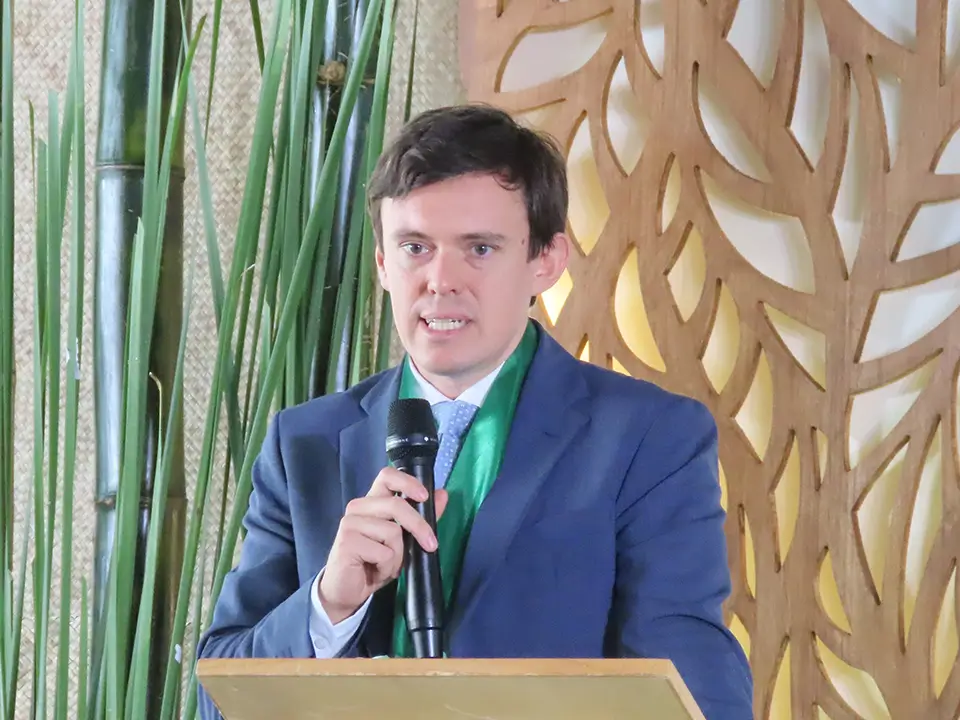
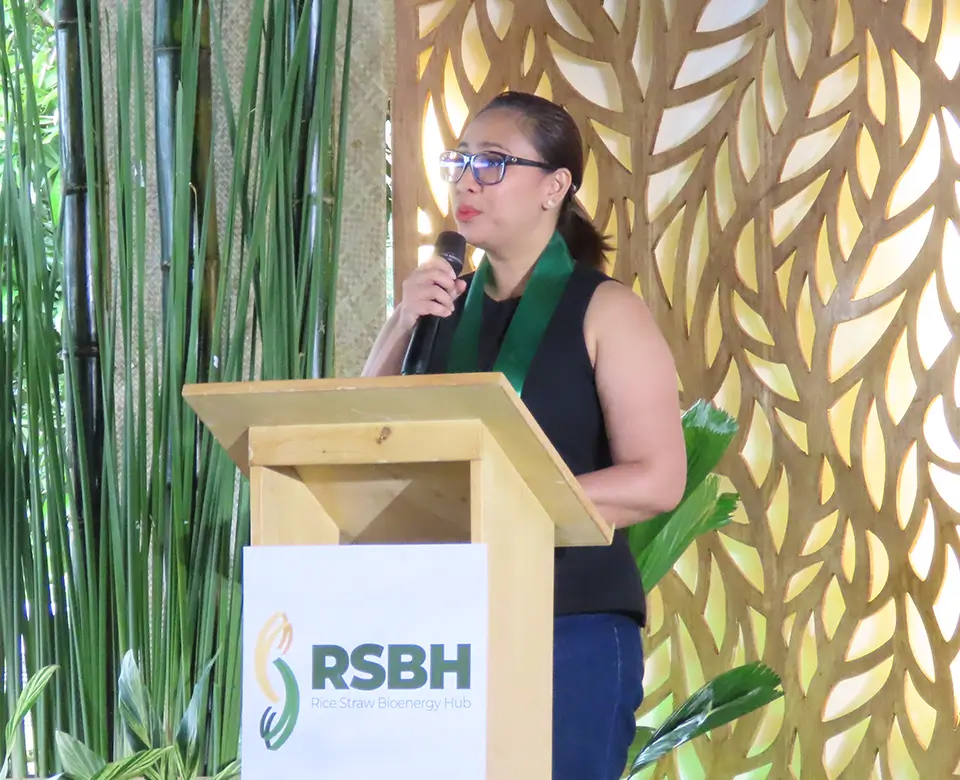
From left: Mr. Lloyd Cameron and Provincial Board Member Karla Adajar both emphasized the importance of the event as a step toward more sustainable action against climate change.
Fruits of collaborative efforts
Another highlight of the event was the presentation by institutional partners, showcasing the results of their years of collaboration on the project. Mr. Craig Jamieson, founder of Straw Innovations, shared how the company has led the way in developing cutting-edge technologies for straw collection. He introduced Straw Innovations' advanced straw collectors, which are capable of operating even in wet field conditions, offering performance beyond that of conventional machines. These collectors not only assist farmers in gathering and spreading straw but also help prepare their land for the next planting season.
"It's one machine for triple impacts," Jamieson remarked, emphasizing the potential benefits not just for Filipino farmers but for agricultural communities worldwide.
In the Philippines, rice straw collectors are still uncommon among farmers. While harvesters are quite popular, rice straw collection is a bother because straw left on the field could act as natural fertilizer, and collection without definite purpose incurs additional costs and manual labor. The introduction of Straw TraktorR (i.e., straw collectors) is deemed to change the landscape. Designed to collect both rice grain and rice straw, the tractor offers farmers new income opportunities and helps curb greenhouse gas emissions associated with burning or letting straw rot in the fields.
The RSBH project is not limited to rice straw management but encompasses the whole rice production, including processing of rice with a portable milling machine. Mr. Alec Anderson, founder and managing director of Koolmill Systems, presented to the participants his low-energy and cost-efficient milling machine, which uses electricity instead of fuel. While rice milling machines are common in the Philippines, Anderson highlighted that the machine's performance could be monitored remotely through wireless connection, either on a mobile phone or computer. Since Anderson offers milling services, the company's market focuses on farmer groups such as cooperatives, thereby minimizing capital expenditures among individual farmers. The machine emphasizes Koolmill Systems' long-term goal of practicing circular economy.
In the hands-on exhibit, Anderson's miller gained attention for its quiet operation, low energy use, and high-quality output. The mobile machine could mill up to 100 kg per hour with a very low rate of broken rice. Koolmill is powered by electrical energy, which is why it is deemed to contribute less to GHG emissions. Anderson also shared that it was the machine's first operation in the Philippines but has already been tested in India. Since rice varies across nations, modifications would be made to cater to the rice varieties planted in the Philippines.
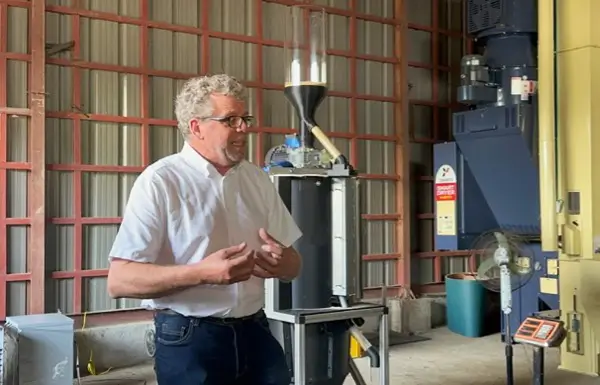
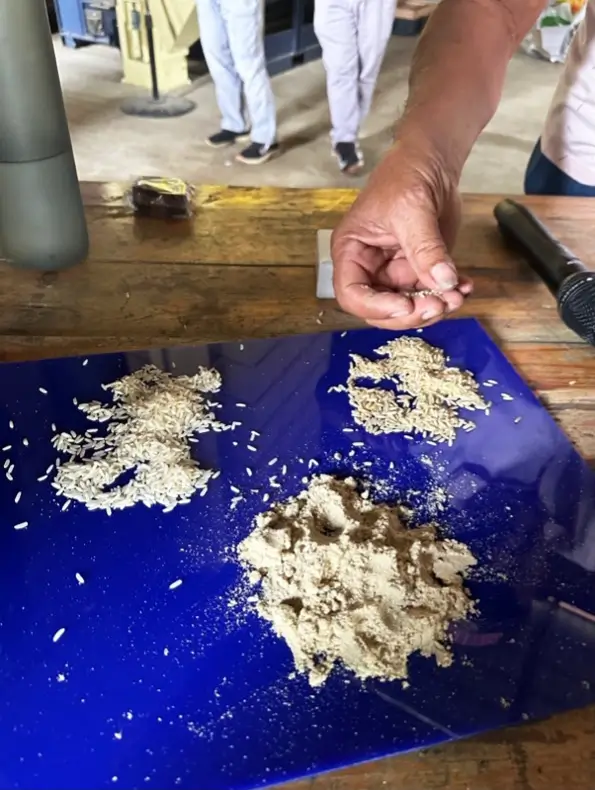
KoolMill machine as showcased by Alec Anderson
Meanwhile, Prof. Mirjam Röder led the presentation of the key findings of the RSBH Work Package 4 on socioeconomic analysis of farmers' acceptability and adoption of biogas using rice straw among the provinces of Laguna, Iloilo, Isabela, and Nueva Ecija. In their study, farmers, service providers, and municipal agriculture offices were immersed in a game that collected their perspectives on rice utilization for bioenergy. The results of the game showed that the participants faced major challenges with climate change, money, and water, particularly in irrigation. They also shared that rice straw could be sustainably managed if there will be income-generating opportunities are presented to them, if they acquire new learnings and skills toward rice straw management, and if they can create new businesses.
Dr. Nur Azura binti Adam, Deputy Director for Programs, represented the Southeast Asian Regional Center for Graduate Study and Research in Agriculture (SEARCA) and presented the Dayami Hub concept, a community-based integrated rice straw management system conceptualized from research on GHG analyses of rice production and from a series of roundtable discussions among rice farming stakeholders. This recommendation was based on several studies on utilization of rice straw in different methods, derived from literatures and from the experiments and life cycle assessments conducted by the project team composed of experts such as chemical engineers and environmental scientists.
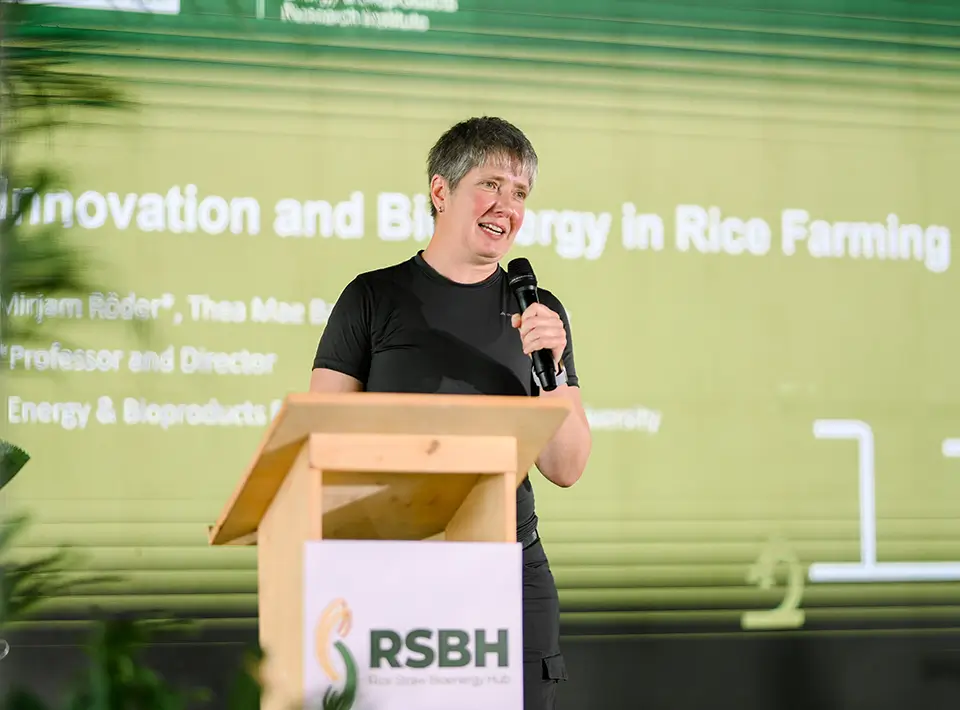
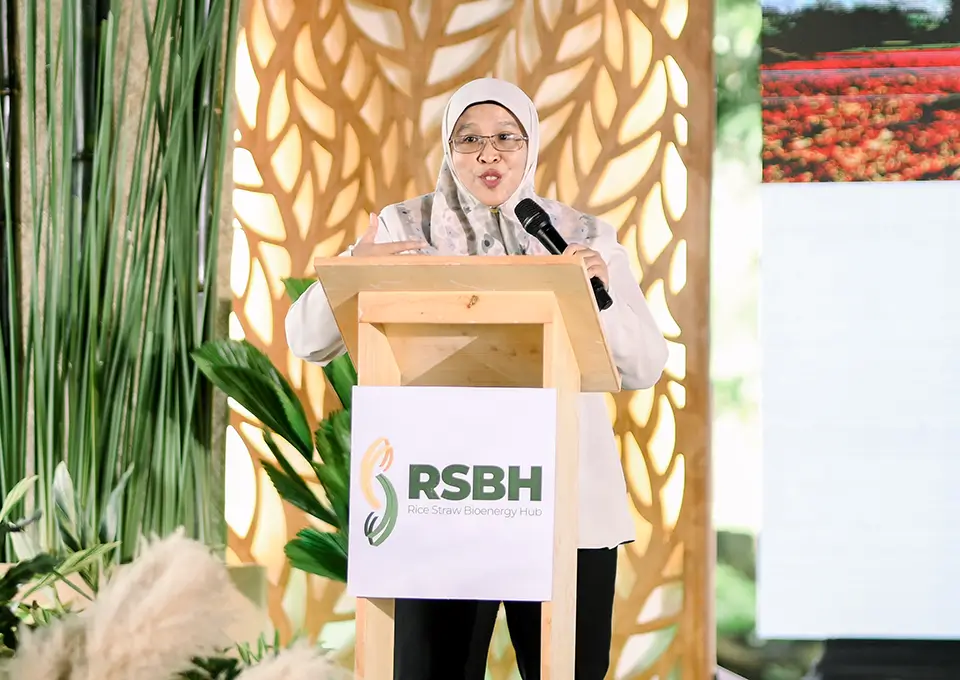
Prof. Roder (left) and Dr. Nur (right) share the results of their respective work packages, both advocating for sustainable rice straw management.
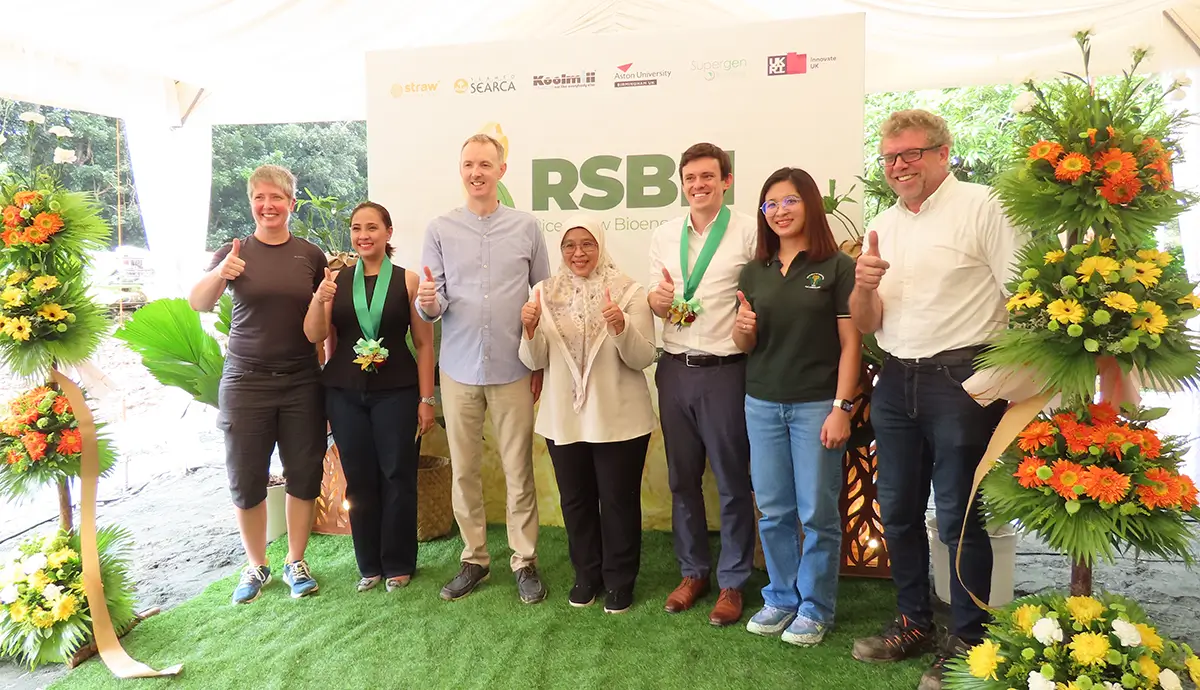 From left: Prof. Mirjam Roeder of Aston University, Hon. Karla Adajar-Lajara of LGU-Laguna, Craig Jamieson of Straw Innovations, Dr. Nur Azura binti Adam of SEARCA, Lloyd Cameron of British Embassy Manila, Marycris Ite of the Department of Agriculture, and Alec Anderson of KoolMill Systems during the ribbon-cutting ceremony of the Rice Straw Bioenergy Hub (RSBH) in Pila, Laguna
Challenges to RSBH implementation
While the intention of the hub is geared toward sustainability and economic gains, especially in the rural communities, implementing a fully operational hub in the Philippines is an ambitious endeavor both economically and socially, given the long-standing struggles of Filipino farmers.
In the panel discussion, representatives from farmer groups and the government and private sectors, dissected the implications of establishing the Dayami Hub.
Dr. Ando Mariot Radanielson, Senior Scientist at the International Rice Research Institute (IRRI), emphasized that there are still scientific gaps in evidence supporting alternative uses of rice straw, noting that current carbon accounting does not consider and recommend rice straw removal. This limitation needs to be addressed so that scientific evidence can effectively support policies aimed at enhancing the value of reducing straw incorporation in the field. Dr. Niño Paul Meynard Banayo, Interim Provincial Agriculturist of the Province of Laguna, highlighted the need to integrate rice straw innovation into existing government agricultural programs like organic agriculture and Rice Competitiveness Enhancement Fund (RCEF), which already provide farm machinery and support.
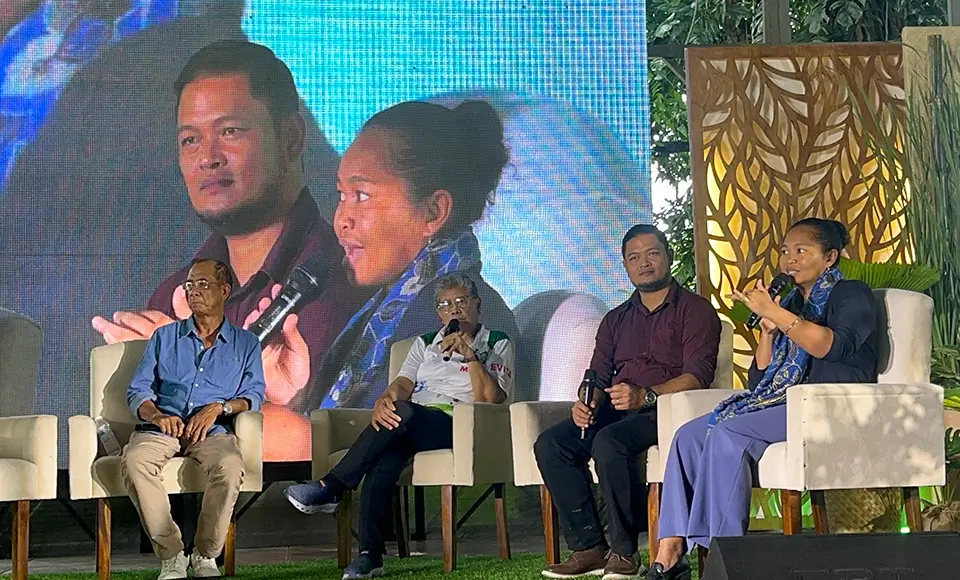 A fruitful discussion of the panelists
When asked how farmers can benefit from the Dayami Hub, Ariel Almalvez, Chairperson of the Calauan Rice Farmers' Federation, responded that it is through training and capacity building that they can better understand and more fully appreciate the initiative. Ms. Ma. Evita Roqueza, Chairperson of the Municipal Agriculture and Fishery Council – Pila, Laguna, suggested that the establishment of trial demonstrations will help farmers recognize the advantages of the Dayami Hub. She echoed that farmers will only believe when they see the results. Radanielson fully agreed and farmers are looking forward to the economic benefits.
Pila Mayor Queen Marilyd Alarva underscored strict enforcement of anti-burning ordinances aligned with the Clean Air Act, which made her strongly support the advocacy of alternative use of rice straw. She said, "We can see value to the things that are valueless to others. With your innovation, we can see that there is beauty in rice straws. We are so lucky here in Pila, Laguna, that the continuous learning and innovation is here."
Overall, the discussion revealed that while technical solutions exist, there are still concerns that need to be addressed such as awareness-building, economic viability, and coordination among relevant institutions.
Showcase of unending community support
During the launch on 8 October 2025, the focus was on farmers who will greatly benefit from the hub. The activity enabled rice farming stakeholders to learn more about the project and how they could potentially earn from rice straws.
In his message, Straw Innovations CEO Brian Arevalo emphasized the critical and important role of farmer-partners and expressed hope that the hub would be a place of connection between science-based and practical farming methods.
More than 30 representatives from Laguna and Pagbilao, Quezon participated in the demonstration day. Aside from the Straw Traktor™ and rice straw collectors, the farmers were shown straw management alternatives, including mushroom production and biogas production from rice straw and dairy waste.
Since the hub's primary intention is to open new economic opportunities, many farmers expressed a strong interest in mushroom production. Straw Innovations shared its willingness to help farmers explore market linkages and potential buyers if the farmers decide to pursue mushroom-growing ventures, especially regarding using rice straw as a substrate.
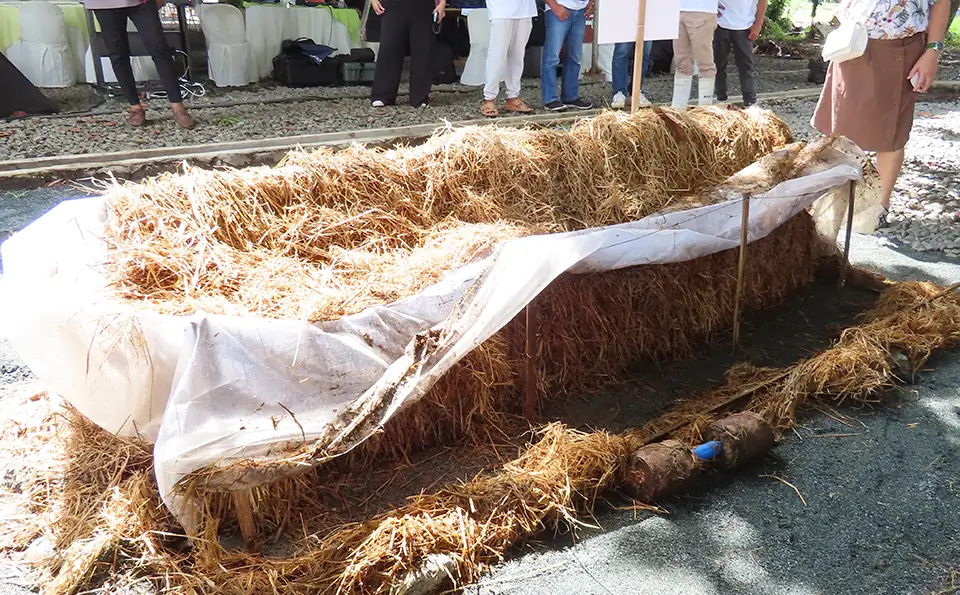 Mushroom production showcase at the Dayami Hub
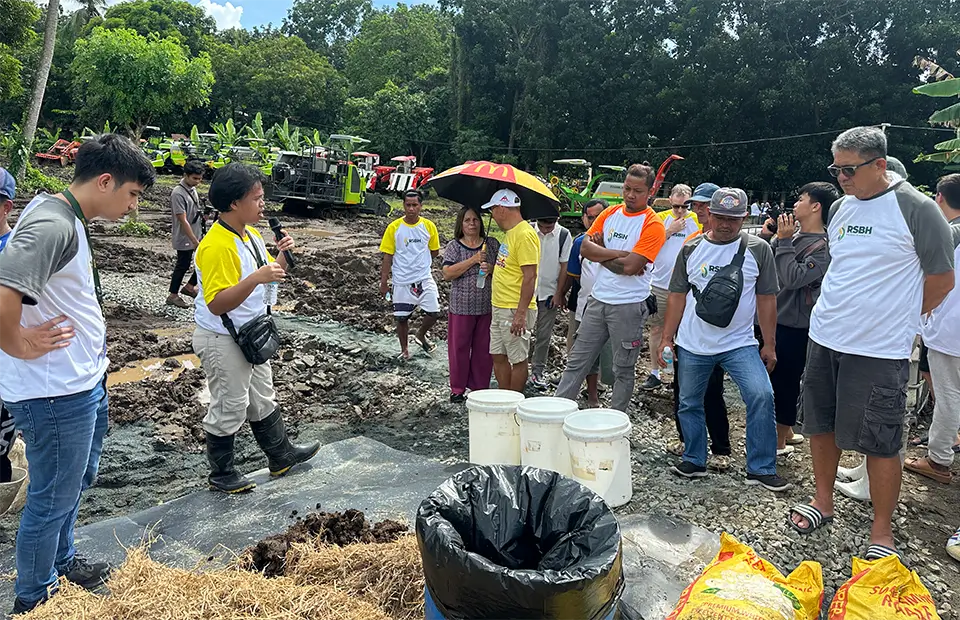 Engr. Joshua Morato explains how the biogas setup works using rice straw as feedstock.
KoolMill, the energy-efficient milling machine, also drew considerable attention, with several farmers curious about its potential to reduce postharvest losses and improve milling efficiency.
The event wasn't without its lighter moments. Amused by the range of uses presented, Almalvez quipped that rice straw seemed so profitable that farmers "might as well plant rice straw over rice."
"I used to think that only coconut trees had a hundred uses, now even rice plants have a hundred uses," he added.
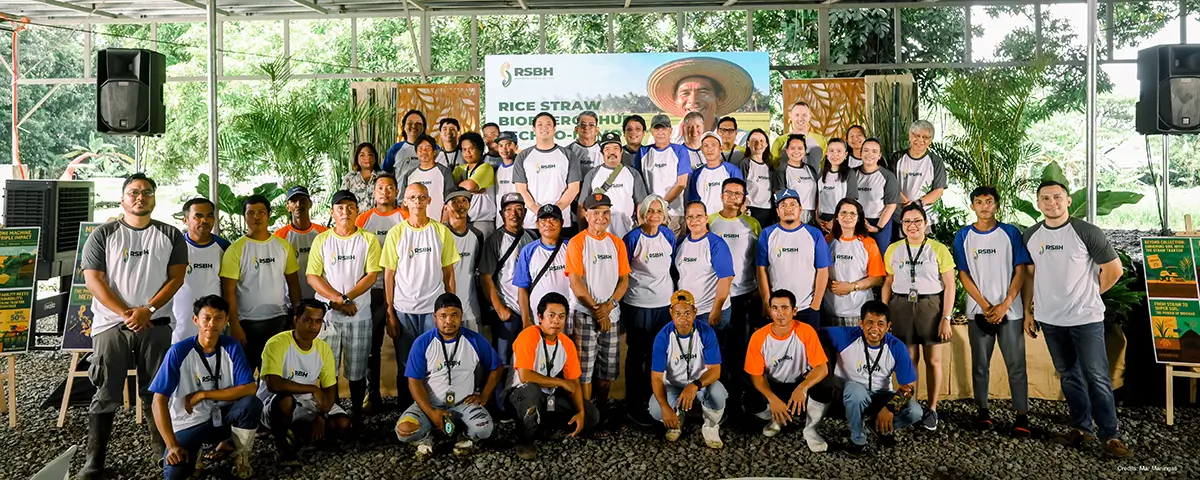
As the demonstration day concluded, many attendees shared optimism about the hub's promise to make rice farming more profitable and climate-resilient, with hopes that continued innovation will empower rural communities in the long term.
(With contributions from Anne Limsuan)