CAMARINES SUR, Philippines — Experts, policymakers, educators, researchers, and community leaders at the CBSUA–SEARCA Joint International Conference 2026 called for stronger institutional action, integrated policies, and community-driven approaches to scale sustainable food systems, biodiversity conservation, agritourism, and climate resilience initiatives across Southeast Asia.
Held from 18–21 March 2026, the conference brought together participants through the 7th International Conference on Education, Environment, and Agriculture (ICEEA7) and the 4th International Conference on School-plus-Home Gardens cum Biodiversity Enhancement and Enterprise (SHGBEE4). The event was organized by the Southeast Asian Regional Center for Graduate Study and Research in Agriculture (SEARCA) and Central Bicol State University of Agriculture (CBSUA) in partnership with Kansas State University. The four-day conference drew a total of 136 participants from across Southeast Asia and other countries, including researchers, policymakers, educators, students, and community representatives.
Anchored on the theme "Policy Pathways to a Sustainable Future: Mainstreaming Biodiversity, Agri/Ecotourism, and Disaster Resilience," the conference emphasized that solutions to food insecurity, environmental degradation, and climate risks already exist, but require stronger institutional commitment and coordinated implementation to reach communities at scale.
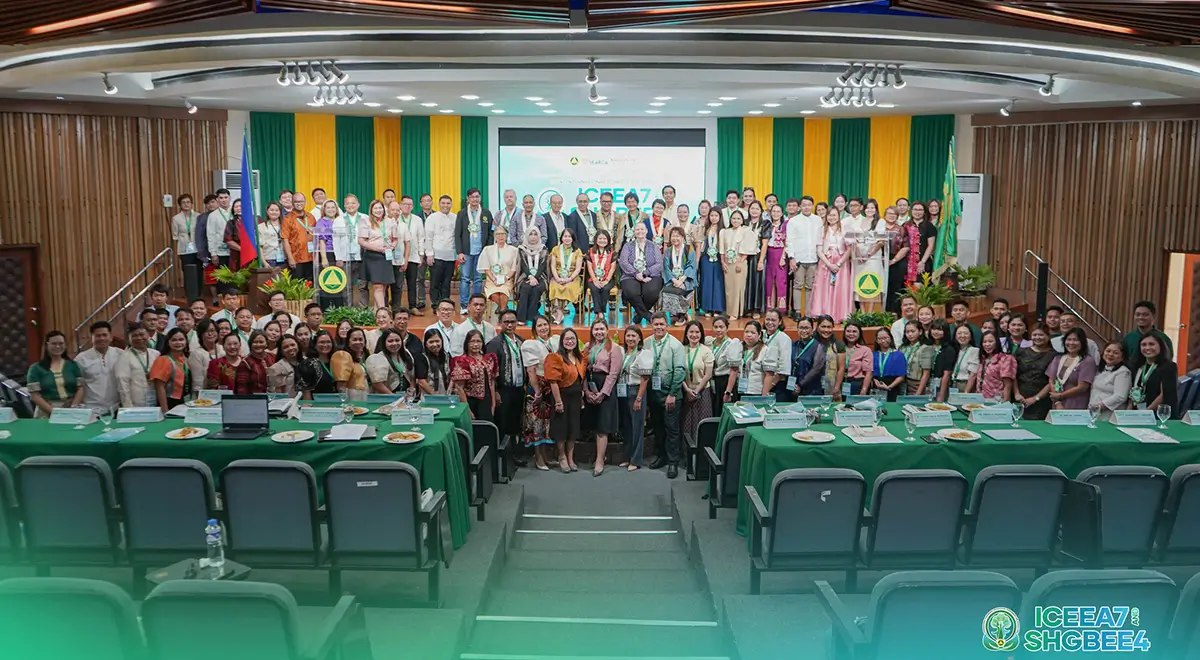 Participants of the CBSUA-SEARCA Joint International Conference 2026 gather for a group photo during the four-day event in Camarines Sur, Philippines. (Photo courtesy of CBSUA)
Linking policy, science, and community action
The conference opened with mobile workshops across Camarines Sur, where participants visited wetlands, marine sanctuaries, school gardens, agro-ecotourism sites, and upland ecosystems to examine how biodiversity conservation, food production, and climate resilience intersect in local communities.
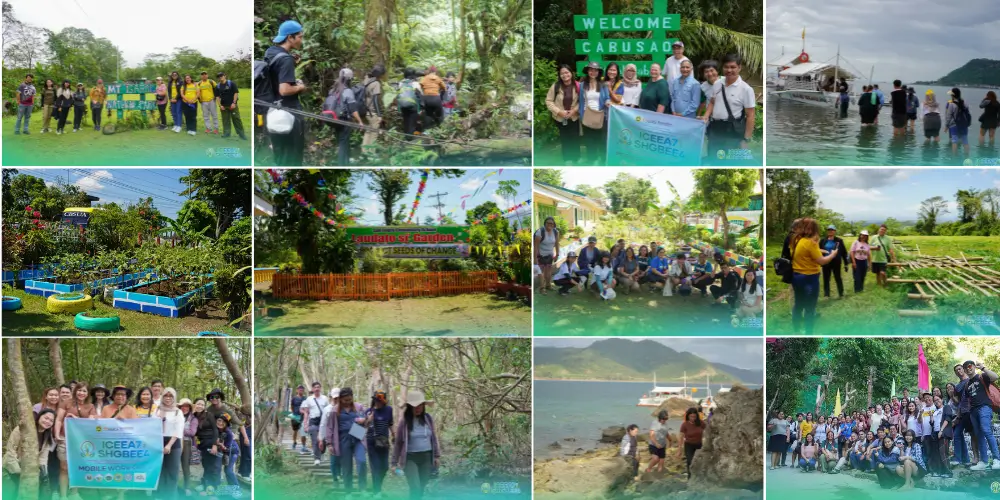 Participants explored ecosystems across Camarines Sur, including the Cabusao Wetlands Critical Habitat, Pawikan Nest and Fish Sanctuary in Pasacao, Mt. Isarog National Park, San Isidro Elementary School, Naga View Adventist College, and Panicuason Hot Spring Resort and Adventure Park. (Photos courtesy of CBSUA)
During the opening ceremony, speakers stressed the urgency of integrated and action-oriented responses to sustainability challenges.
Dr. Dariel Palmiano of Central Bicol State University of Agriculture emphasized that communities experience food security, biodiversity, disaster resilience, and education as interconnected realities rather than separate issues.
Meanwhile, Dr. Mercedita Sombilla, SEARCA Center Director , underscored the importance of linking science, policy, and community action.
"At a time when environmental degradation, food insecurity, and climate risks are increasingly interconnected, this gathering offers an important opportunity to explore how policy, science, and community-driven initiatives can work together to build more resilient and sustainable systems," Sombilla said.
Dr. Alberto Naperi, CBSUA President, likewise called for holistic and inclusive governance, stressing that governments, civil society, private institutions, and local communities must work together while valuing indigenous knowledge alongside scientific innovation.
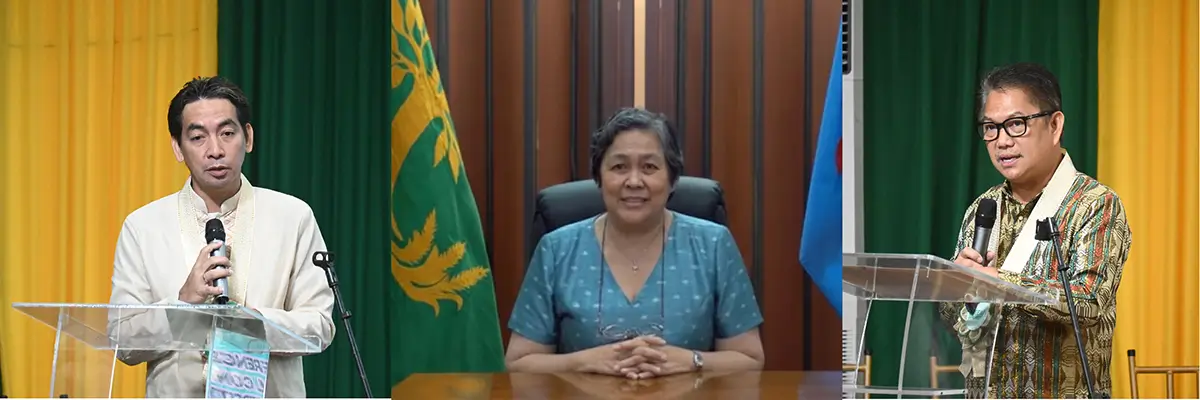 From left: Dr. Dariel Palmiano, CBSUA Vice President for Research and Innovation, delivers his welcome remarks. Dr. Mercedita A. Sombilla, SEARCA Center Director, and Dr. Alberto. Naperi, CBSUA President, deliver their opening messages.
In her keynote address, Dr. Noralene Uy of the Philippine Department of Environment and Natural Resources (DENR) advocated for a whole-of-society approach to sustainability and climate resilience.
"The government cannot do this work alone," Uy said. "Each one of us can contribute to safeguarding people and the planet towards sustainable and resilient development that leaves no one and no ecosystem behind."
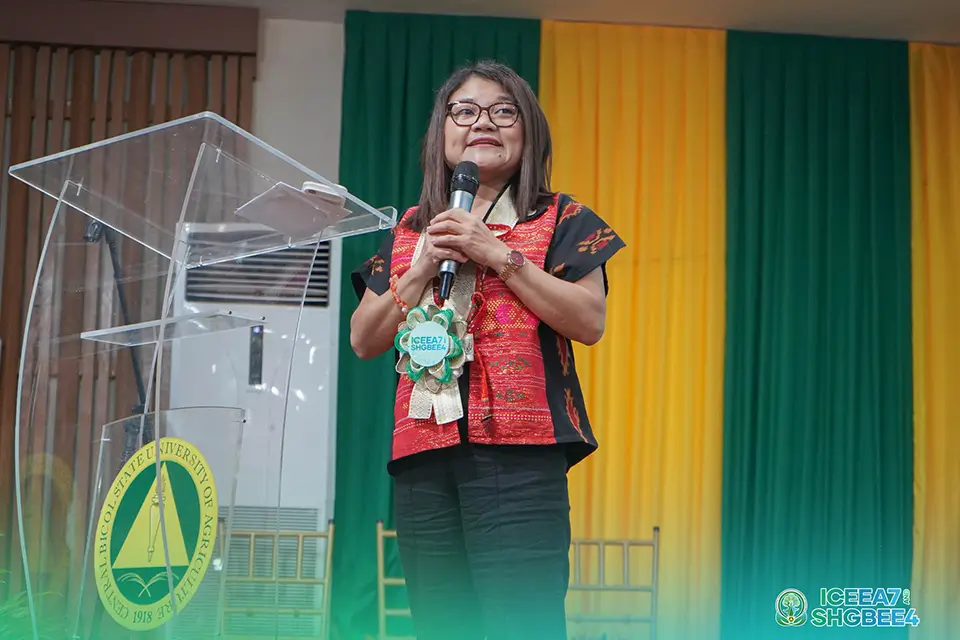 Dr. Noralene Uy, DENR Assistant Secretary for Policy, Planning, International Affairs and Climate Change, delivers the keynote message. (Photo courtesy of CBSUA.)
School gardens and biodiversity as foundations of resilient food systems
Discussions during Plenary Session 1 focused on how school and home gardens can serve as platforms for nutrition, biodiversity conservation, climate resilience, and community-based food systems development.
The session, titled "Linking Gardens, Communities, and Biodiversity for Sustainable and Resilient Food Systems," gathered experts from the Food and Agriculture Organization of the United Nations (FAO), Alliance of Bioversity International and CIAT, International Institute of Rural Reconstruction (IIRR), SEARCA, and University of the Philippines Open University (UPOU) to discuss community-based approaches to strengthening local food systems.
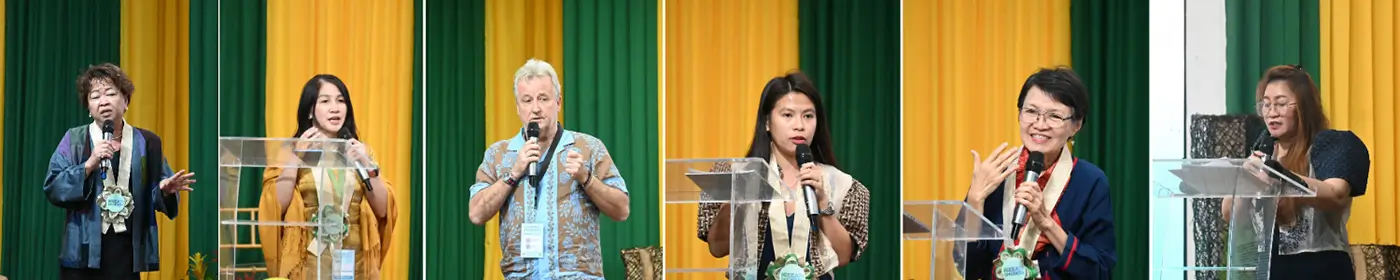 Plenary Session 1 speakers (from left) Dr. Maria Antonia Tuazon of FAO, Dr. Gerlie Tatlonghari of SEARCA, Dr. Danny Hunter of the Alliance of Bioversity International and CIAT, Ms. Susan del Rio of IIRR, and Dr. Blesilda Calub of SEARCA and UPOU share their insights on 'Linking Gardens, Communities, and Biodiversity for Sustainable and Resilient Food Systems,' with Ms. Rochella Lapitan of SEARCA serving as session moderator.
Dr. Maria Antonia Tuazon of FAO noted that Asia still accounts for 285 million undernourished people, underscoring the need to integrate biodiverse and climate-smart agriculture into school and community gardens.
Dr. Gerlie Tatlonghari of SEARCA presented the SHGBEE model, citing improved food security and healthier food preferences among students in Palawan pilot communities.
"School gardens are not supplementary activities; they are entry points for strengthening local food systems embedded within education," Tatlonghari said.
Dr. Danny Hunter of the Alliance of Bioversity International and CIAT highlighted global initiatives promoting sustainable school gardens and integrated school farms, while Ms. Susan del Rio of IIRR emphasized biodiversity as central to resilient food systems.
"Biodiversity is not an add-on—it's the foundation of resilient food systems," del Rio said.
In addition, Dr. Blesilda Calub of UPOU highlighted the potential of online continuing education and school-plus-home garden initiatives to strengthen food security and community engagement nationwide.
Across the presentations, the speakers stressed that school and home gardens should move beyond supplemental feeding initiatives and become institutionalized, community-linked platforms for long-term food security, sustainability education, and climate resilience.
Integrating sustainability into education and extension
Building on discussions on food systems and biodiversity, the second plenary session focused on embedding sustainability concepts into education, research, and extension systems to strengthen long-term community resilience.
The session titled "Curriculum for the Future: Policy Directions on Food Security and Nutrition, Biodiversity, Climate Resilience, and Regenerative Agriculture" gathered experts from Kansas State University (K-State), Royal University of Agriculture (RUA) in Cambodia, Philippine Department of Education (DepEd), University of the Philippines Los Baños (UPLB), and FAO to discuss systems-based approaches to sustainability education.
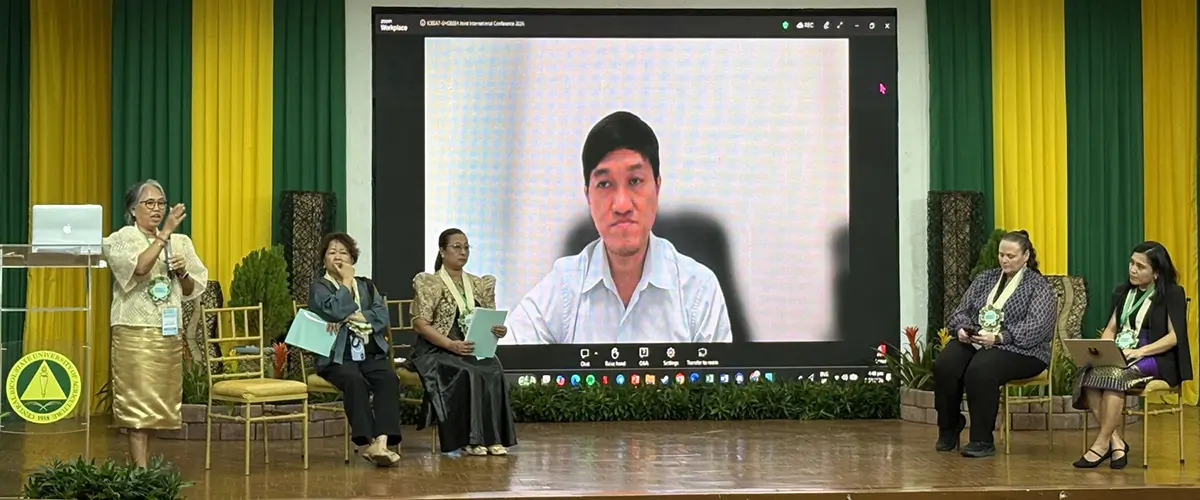 Plenary Session 2 participants (from left) Dr. Leticia Afuang of the Mindoro Biodiversity Conservation Foundation, Inc.,, Dr. Maria Antonia Tuazon of FAO, Ms. Christine Heidi Garcellano of DepEd, Dr. Lyda Hok of RUA (on screen), Dr. Sarah Maass of K-State), and Dr. Jennifer Marie Amparo of UPLB discuss “Curriculum for the Future: Policy Directions on Biodiversity, Resilience, and Regenerative Agriculture,” with Afuang serving as session chair.
"Sustainability is delivered through a full pipeline: university to extension, youth, and community," said Dr. Sarah Maass of K-State as she highlighted the land-grant university model and the importance of long-term community engagement.
Speakers emphasized that sustainable food systems require stronger integration of education, research, extension, and policy. Dr. Lyda Hok of RUA called for coordinated multi-level partnerships, while Tuazon stressed the need for "game-changing solutions" and a whole-of-society approach to sustainability education.
Meanwhile, Dr. Jennifer Marie Amparo of UPLB highlighted school- and community-based literacy, nutrition, and agriculture initiatives, while Ms. Christine Garcellano of DepEd described sustainability as a "green thread" embedded across the curriculum, school operations, and community engagement.
Collectively, the speakers stressed that sustainability education must move beyond isolated projects toward institutionalized and community-linked systems capable of supporting long-term food security and climate resilience.
Advancing regenerative tourism and climate-smart agriculture
The discussions then expanded beyond food systems and education into tourism, water management, and digital innovation as drivers of climate resilience and sustainable development.
Plenary Session 3, titled "Integrating Agritourism, Ecotourism, and Climate Resilience for Sustainable Futures," highlighted community-led tourism, climate-smart agriculture, efficient water management, and artificial intelligence tools for agriculture and biodiversity.
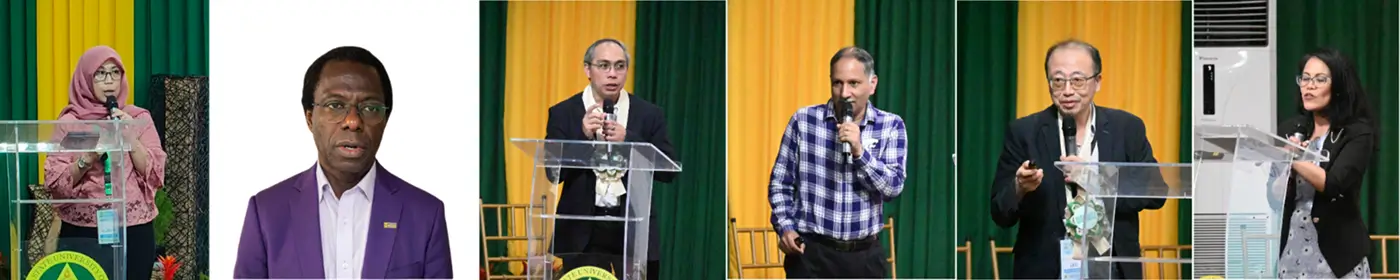 Plenary Session 3 participants (from left) Dr. Lenny Yusrini of Universitas Asa Indonesia, Dr. Vincent Amanor-Boadu of K-State), Dr. Jonathan Aguilar of K-State), Dr. P.V. Vara Prasad of K-State), and Prof. Tzong-Ru (Jiun-Shen) Lee of the National Chung Hsing University discuss 'Integrating Agritourism, Ecotourism, and Climate Resilience for Sustainable Futures,' with Ms. Presbel Presto (CBSUA) serving as session chair and moderator.
Dr. Lenny Yusrini of Universitas Asa Indonesia emphasized that tourism becomes unsustainable when communities are excluded from development efforts.
"Tourism should not be imposed externally but grown from within communities," Yusrini said while presenting Indonesia's Kampung Ekowisata Keranggan as an example of regenerative tourism integrating conservation, agriculture, education, and culture.
Experts from K-State also shared technical knowledge on sustainable agribusiness, irrigation, and digital agriculture.
"Agriculture fuels, heals, and protects the world," said Dr. Vincent Amanor-Boadu of K-State as he discussed innovation, partnerships, and adaptability in sustainable agribusiness.
Dr. Jonathan Aguilar of K-State highlighted the importance of efficient irrigation and smart water management amid increasing climate variability, while Dr. P.V. Vara Prasad, also of K-State, underscored the role of digital and artificial intelligence tools in building climate-smart and resource-efficient agrifood systems.
Adding to the discussion was Prof. Tzong-Ru Lee of National Chung Hsing University, who emphasized innovation and collaboration as key drivers of entrepreneurial ecosystems and sustainable growth.
The plenary session concluded with a shared call for stronger collaboration, innovation, and community participation to build climate-resilient and inclusive futures for agriculture, tourism, and food systems.
Strengthening climate-resilient agritourism and ecotourism
The fourth plenary session focused on policy pathways for climate-resilient agritourism and ecotourism development in the Philippines. Panelists emphasized community leadership, farmer capacity-building, climate adaptation, and authentic sustainability practices.
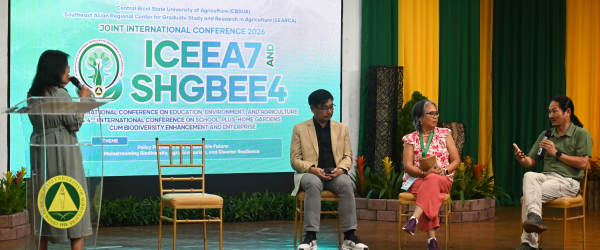 Plenary Session 4 participants (from left) Ms. Mia Bella Fresnido of CBSUA, Dr. Hermogenes Paguia of the Philippine Association of Extension Program Implementors, Inc.), Dr. Leticia Afuang ofUPLB, and Mr. Antonio Linsangan III of Coron Natural Farms discuss 'Policy Pathways for Sustainable Futures: Harnessing Agritourism and Ecotourism for Climate-Resilient Development,' with Ms. Fresnido serving as session chair.
Afuang, who is also Curriculum Development Specialist at the Mindoro Biodiversity Conservation Foundation, Inc., stressed that sustainable tourism initiatives should protect ecosystems and empower communities.
"Organic farming is a holistic way of managing farms," Afuang said, adding that agritourism should be community-led and supported by the government.
Meanwhile, Dr. Hermogenes M. Paguia of the Philippine Association of Extension Program Implementors, Inc. highlighted the role of policy support and farmer training in expanding farm tourism opportunities.
"Combining agriculture and tourism can transform farmers into entrepreneurs," Paguia said, noting the need to improve access to financing, technology, and markets for smallholder farmers.
Mr. Antonio B. Linsangan III of Coron Natural Farms shared lessons from operating a tourism and farming enterprise in Coron, emphasizing disaster preparedness and cultural authenticity.
"Make sure to have room for expansion, resiliency, and room when there is a disaster," Linsangan said, citing the importance of climate-adaptive farm designs.
The panelists also warned against "greenwashing" in the tourism industry and called for genuine sustainability practices and stronger support for smallholder farmers and community-based tourism enterprises.
Sustaining action beyond the conference
The conference also recognized outstanding papers, posters, and oral presentations on food security, biodiversity conservation, and climate resilience.
During the closing program, Dr. Manuel Reyes of SEARCA and K-State urged participants to further strengthen initiatives in agroforestry, conservation agriculture, irrigation, and crop diversity. Meanwhile, Dr. Mae Lustre of CBSUA emphasized the importance of sustained commitment and long-term collaboration, saying, "The work is not yet finished. It has simply—finally—properly begun."
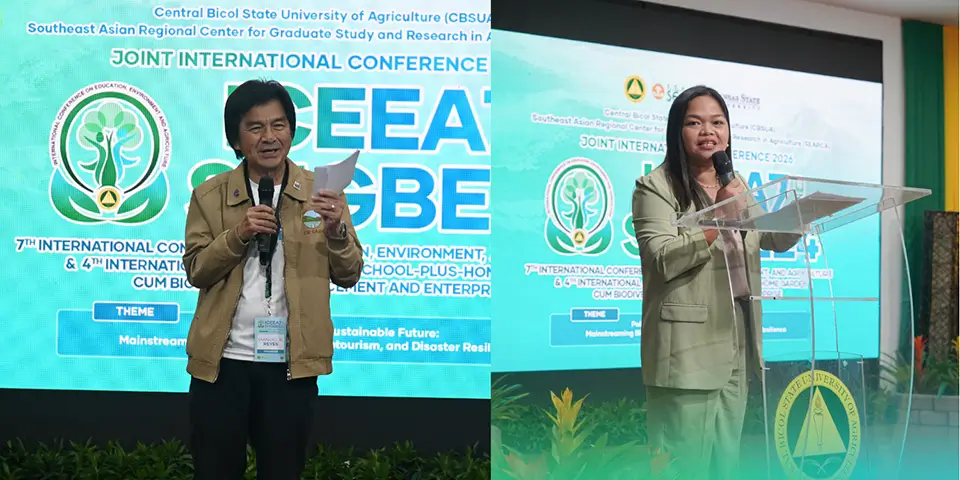 Dr. Manuel Reyes (left),SEARCA Senior Fellow and K-State Adjunct Professor , and Dr. Mae Lustre, CBSUA Research Services Division Director, deliver their closing messages.
Across all sessions, participants emphasized that solutions to food insecurity, biodiversity loss, climate risks, and unsustainable development already exist through research, community models, technologies, and policy frameworks. However, they stressed that scaling these solutions will require stronger integration across sectors and sustained institutional commitment.
Ultimately, the conference underscored that the key challenge is no longer identifying solutions but translating them into long-term community transformation through stronger policy support, institutional commitment, and coordinated action.
List of winners of Best Poster, Paper, and Oral Presentations
| Best Poster Winners | |
|---|---|
| 1st Place | Roy Resurreccion University of Santa Isabel, Philippines Impacts of Food Waste Management Practice in Casual Dining Restaurants in Naga City, Camarines Sur: Basis for a Proposed Food Waste Management Program |
| 2nd Place | Menandro Zubieto, PhD and Soledad Villanueva, EdD* Department of Education, Los Baños Senior High School, Philippines Project Ganado: In Response to Student’s Nutritional and Fitness Level |
| 3rd Place | Gene Señeris Aklan State University, Philippines Fiber Yield and Tensile Strength Assessment of Abaca (Musa textilis Nee) Cultivars from Aklan, Philippines |
| Best Paper Winners | |
| School and Home Gardens as Community and Social Enterprise Hubs for Sustainable Development | Nerisa Paladan*, Roperto Deluna Jr., Ronald Estrada, Christopher Balubayan, Christine Varques, Rain Cesar Arana, Dave Roblis, Francis Ignatius Nieva, Michael Vale, Menchi Del Castillo-Crispino, and Cynthia Osorio Partido State University, Philippines Impact Evaluation of ItikPinas Program to Mallard Duck Farms’ Profitability in the Philippines |
| Enhancing Biodiversity and Sustainable Food Systems for Schools, Homes, and Resilient Communities | Levi James Modino*, Gabrielle Penelope Singson, and Amanda De Los Santos Ateneo de Naga University, Philippines Benthic Macroinvertebrates as Bioindicators of River Health for Biodiversity Conservation and Community Resilience |
| Leveraging Disaster and Climate Resilient Initiatives for Agricultural and Ecotourism Systems | Ma. Kresna Navarro-Mansueto*, Mary Koren Witting-Acuesa, Caroline Laarni, Rubio-Sereñas, Oliver Michael C. Narreto, Jay Ann Dagalea, Melven Valmoria, and Leah Mae Cuyno University of the Philippines - Cebu, Philippines Enablers And Constraints of Localized Agri-Products Cluster Facilities for Building Climate-Resilient Agricultural: Land-Use and Governance Perspectives in Northern Mindanao, Philippines |
| Best Oral Presentation Winners | |
| School and Home Gardens as Community and Social Enterprise Hubs for Sustainable Development | Julie Amor D. Zantua Bicol State College of Applied Sciences and Technology, Philippines Valorization and Antioxidant Profiling of Lipote (Syzygium Polycephaloides ((C.B. Rob.) Merr.) Seeds as a Coffee Substitute |
| Enhancing Biodiversity and Sustainable Food Systems for Schools, Homes, and Resilient Communities | Mirasol Azcuna-Montaño* and Danilo B. Largo Cebu Normal University, Philippines Assessing the Socio-Economic Viability of Integrated Multitrophic Aquaculture (Imta): A Case Study in Taloot, Argao, South Cebu, Philippines |
| Promoting Agritourism and Ecotourism for Sustainable Development | Angelo Franics Atole Central Bicol State University of Agriculture Assessment of the Resource-Based Indicators Affecting Dairy Calf Welfare in Camarines Sur, Philippines |
| Leveraging Disaster and Climate Resilient Initiatives for Agricultural and Ecotourism Systems | Christine Heidi Garcellano, Anna Gale C. Vallez*, Kim Louisse A. Patagnan, and Gerlie T. Tatlonghari Department Education – SDO Palawan, Philippines Socio-Economic Vulnerability and Food Insecurity in Busuanga Island, Philippines: The SHGBEE Intervention |
Note: *Presenter