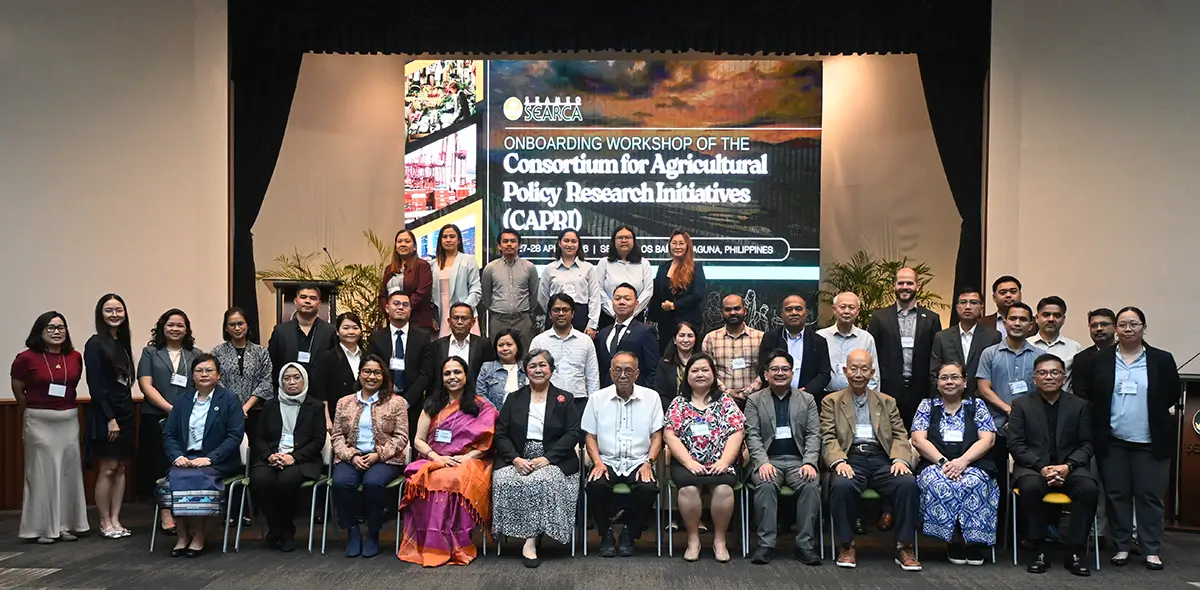
LOS BAÑOS, Philippines—The Consortium for Agricultural Policy Research Initiatives (CAPRI) held its onboarding workshop on 27-28 April 2026 at the Southeast Asian Regional Center for Graduate Study and Research in Agriculture (SEARCA), bringing together representatives from national research institutions, development partners, and regional organizations to strengthen collaboration on agricultural policy research across Southeast Asia.
SEARCA Center Director Dr. Mercedita Sombilla emphasized the need for evidence-based policymaking to address interconnected agricultural challenges, including labor outmigration, an aging farming population, climate risks, and underinvestment in technology and infrastructure. She described these issues as "systemic, complex, and mutually reinforcing," underscoring the need for integrated responses.
Dr. Sombilla also highlighted CAPRI as a regional platform that brings together policy research institutions to generate evidence, align research priorities, and support the translation of research into policy and practice.
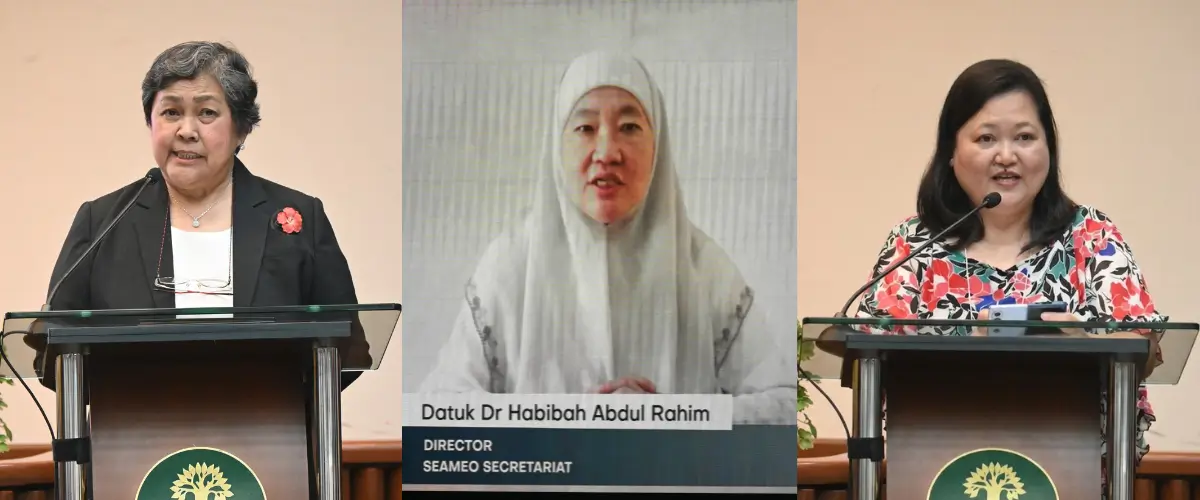 Dr. Mercedita Sombilla of SEARCA, Datuk Dr. Habibah Abdul Rahim of SEAMEO, and Ms. Ma. Ella Cecilia Obligado of DA Region IV-A emphasize the need for evidence-based, regionally coordinated solutions to Southeast Asia's agricultural challenges.
Echoing the importance of regional coordination, Datuk Dr. Habibah Abdul Rahim, Director of the Southeast Asian Ministers of Education Organization (SEAMEO) Secretariat, highlighted Southeast Asia's agricultural potential amid increasing pressures on food systems. She stressed the importance of coordinated regional action and evidence-informed policymaking.
"Evidence on its own does not create impact. It is when evidence informs policy, and when policy guides action, that real and lasting change can take place," she said.
In a message delivered on behalf of Philippine Agriculture Secretary and ASEAN Ministers of Agriculture and Forestry (AMAF) Chair Francisco Tiu Laurel Jr., Ms. Maria Ella Cecilia Obligado, Officer-in-Charge of the Department of Agriculture (DA) Region IV-A CALABARZON Research and Regulations Office, underscored CAPRI's role in strengthening research-to-policy linkages. She emphasized the importance of ensuring that decisions reflect the realities of farmers, fishers, and rural communities.
"CAPRI represents a valuable platform to bridge research and policy, and to foster stronger coordination among institutions working towards shared goals," she said.
Building on these messages, workshop discussions focused on affirming CAPRI's framework, aligning priority research areas, and establishing thematic working groups to support sustained collaboration. Participants also situated CAPRI within broader ASEAN agricultural transformation priorities, including the need to scale innovation, harmonize standards, and strengthen partnerships to address gaps in financing, technology, and policy implementation.
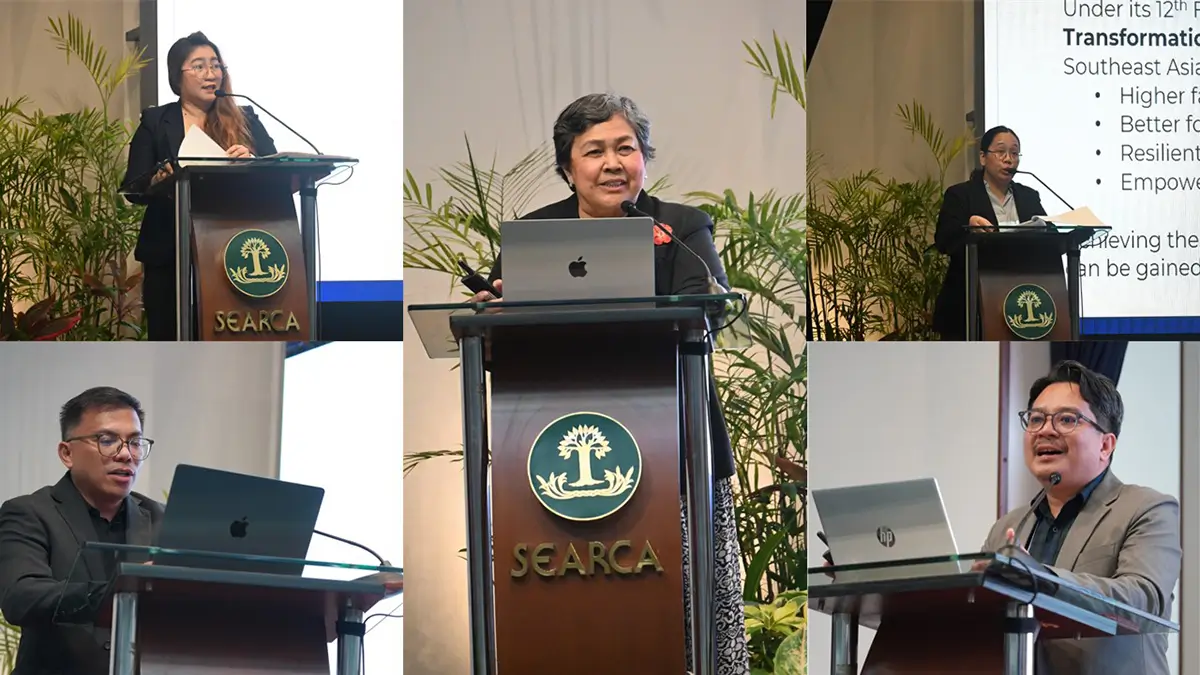
Dr. Pedcris Orencio, speaking on behalf of Dr. Pham Quang Minh of the ASEAN Secretariat, presented the strategic shift towards the 2045 Vision for the Food, Agriculture, and Forestry (FAF) sector. This initiative aims to evolve from basic sustainability to a regenerative agriculture model, addressing climate change, land degradation, and food insecurity through six strategic thrusts centered on biodiversity, decarbonization, and trade connectivity. Orencio highlighted the need for improved finance, data, and market mechanisms through digital innovation and public-private partnerships to promote transparency and sustainable practices. The overarching goal is to create a competitive and secure FAF sector through coordinated policy, technology, and investment.
Dr. Sombilla presented SEARCA's 12th Five-Year Development Plan, SUSTAIN Southeast Asia, which promotes a policy-driven transformation of agri-food systems anchored on four priorities: improving farmers' incomes, strengthening food and nutrition security, enhancing climate resilience, and empowering agricultural stakeholders and institutions. The plan positions SEARCA as a regional catalyst linking science, policy, and practice through evidence generation, translation, and uptake.
Dr. Rico Ancog, SEARCA Deputy Director for Administration, presented SEARCA's Policy Research Agenda, highlighting the urgent need for policy-driven transformation to address agri-food challenges in the region. Anchored on the "Pocket, Plate, Place, and People" framework, the agenda focuses on aligning research with regional priorities, strengthening evidence-to-policy linkages, and fostering regional collaboration. "Policy-driven transformation is no longer optional... it requires moving from piecemeal interventions to systemic, coordinated action that can withstand shocks and deliver sustainable futures for Southeast Asia," he emphasized.
CAPRI's operational structure was also outlined, covering joint research initiatives, foresight and futures work, regional data systems, policy translation mechanisms, and communities of practice. In this context, SEARCA introduced the Southeast Asian Agricultural Statistics Database (SAASD), a regional platform designed to harmonize agricultural data and strengthen evidence-based decision-making, with a planned launch in November 2026.
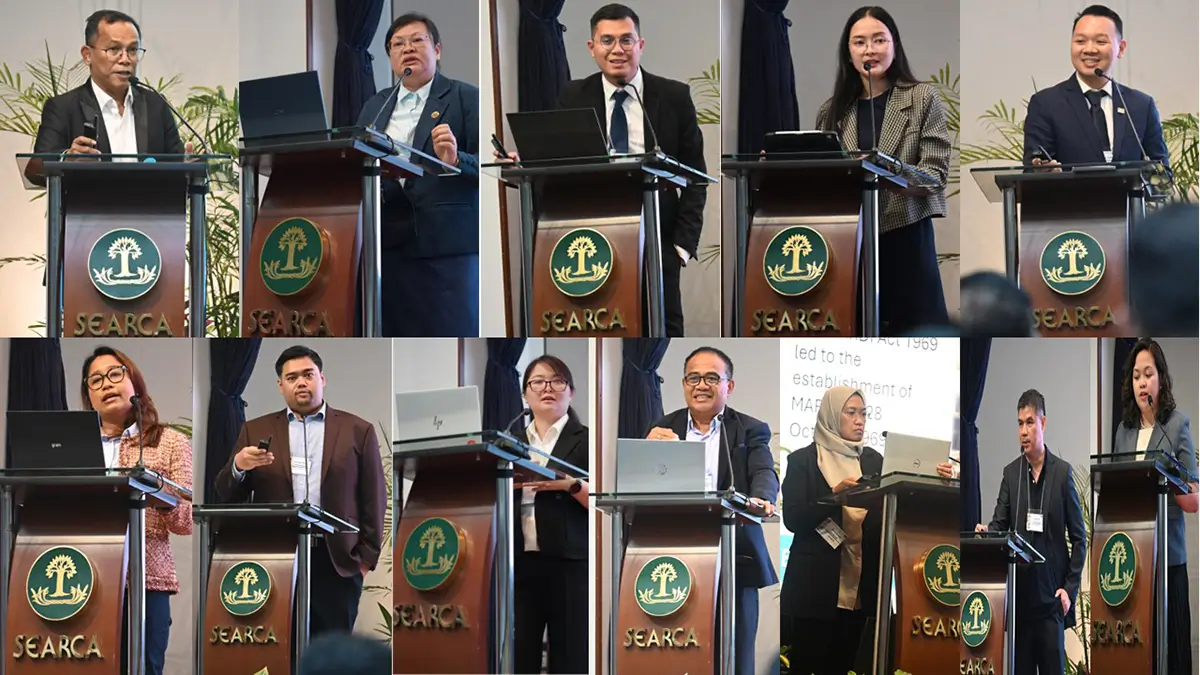 Country representatives present their national agricultural priorities, highlighting shared regional goals on food security, climate resilience, digital innovation, and collaboration.
Each member institution presented an overview of its organization and current agricultural policy research priority areas. The presentations provided a detailed summary of the strategic priorities set forth by member countries in the Southeast Asian region, specifically addressing the crucial link between agriculture and economic development. Central themes included bolstering food security, fostering climate-resilient agricultural practices, and embracing digital innovation within rural sectors. They also emphasized sustainable resource management and the need to establish inclusive value chains to enhance local livelihoods. Furthermore, the presentations underscored collaborative ambitions, including improving trade connectivity, strengthening institutional governance, and engaging youth in modernizing the workforce. Taken together, these country-level priorities offer insight into how regional cooperation and technological progress are shaping policy initiatives across Southeast Asia.
Further discussions were organized around CAPRI's four thematic areas—Pocket, Plate, Place, and People—focusing on improving farmers' incomes, strengthening food security and nutrition, enhancing climate resilience, and empowering stakeholders and institutions. Under these themes, participants explored collaborative initiatives, including a Network of Policy Advisors and Analysts (NePAA)-led project on agricultural transformation and market integration in Thailand, the Philippines, Vietnam, and other selected South Asian countries focusing on value chains, trade costs, and market access under the International Fund for Agricultural Development (IFAD)-funded project, "Ensuring Inclusiveness, Sustainability, and Efficiency of Food System Transformation in the ASEAN and BIMSTEC Countries (ATMI II)," co-implemented by the International Food Policy Research Institute (IFPRI) and SEARCA.
Priority actions identified included nutrition-sensitive agriculture, food resilience systems, digital marketing for farmers, and food zone development, alongside strengthened partnerships with organizations such as IFAD, IFPRI, the Bay of Bengal Initiative for Multi-Sectoral Technical and Economic Cooperation (BIMSTEC), French Agricultural Research Centre for International Development (CIRAD), Deutsche Gesellschaft für Internationale Zusammenarbeit (GIZ) GmbH (GIZ), International Rice Research Institute (IRRI), Australian Centre for International Agricultural Research (ACIAR), and the Alliance of Bioversity International and CIAT (ABC), ISEAS-Yusof Ishak Institute of Singapore, the Malaysian Institute of Economic Research (MIER), the National Academy of Science and Technology (NAST) of the Philippines, and the Institute of Integrated Development Studies (IIDS) and Vertex Group of Companies of Nepal. Across all themes, participants emphasized the need for integrated, data-driven research, stronger policy advisory systems, and sustained collaboration, with increased engagement from youth, the private sector, and agri-startups.
In his closing message, Dr. Ancog highlighted the progress made during the workshop and the importance of continued collaboration. He noted that the discussions helped build shared understanding, identify priority areas, and initiate pathways for cooperation in agricultural policy research.
"CAPRI is not simply a consortium—it is a collective commitment to strengthen agricultural policy research across Southeast Asia, ensuring that evidence informs decisions and drives transformation," he said.
The workshop concluded with participating countries confirming initial commitments and outlining next steps, including the refinement of research priorities, strengthening of partnerships, and preparation for CAPRI's official launch in November 2026 during SEARCA's 60th anniversary celebration.