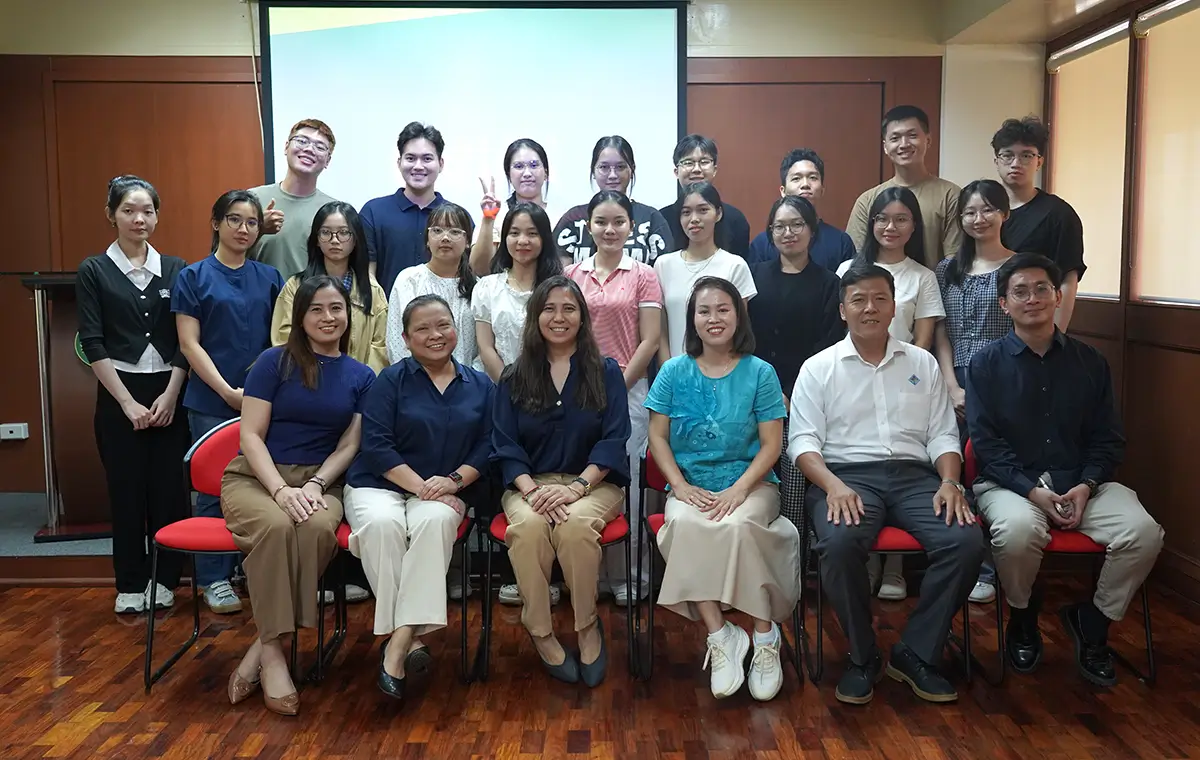
Eighteen students from Can Tho University studying agricultural economics, accounting, business, tourism, and marketing visited SEARCA to learn about its initiatives in education, research, and innovation.
They were accompanied by their professors, Dr. Ngo Thi Thanh Truc, Vice Dean of the Faculty of Environmental and Resource Economics and a SEARCA scholarship alumna, and Dr. Nguyen Ngoc Duc, Vice Dean of the Faculty of Economics.
Can Tho University's core missions are to provide training, conduct scientific research, and transfer technology in support of regional and national socio-economic development.
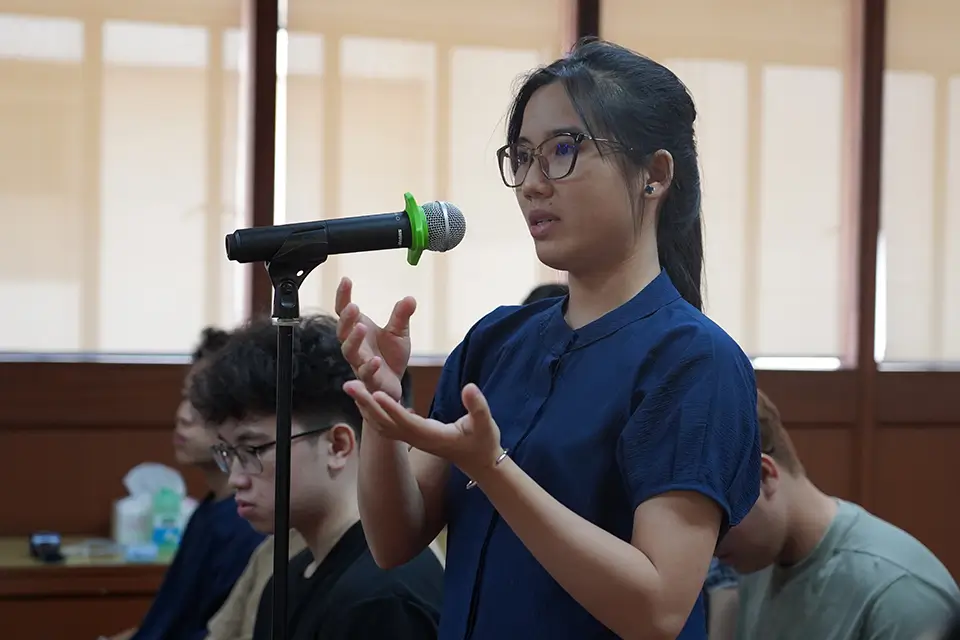
During the visit, the delegation was briefed on SEARCA's mandate and thrusts and learned about several initiatives under its core programs in education, research, and innovation.
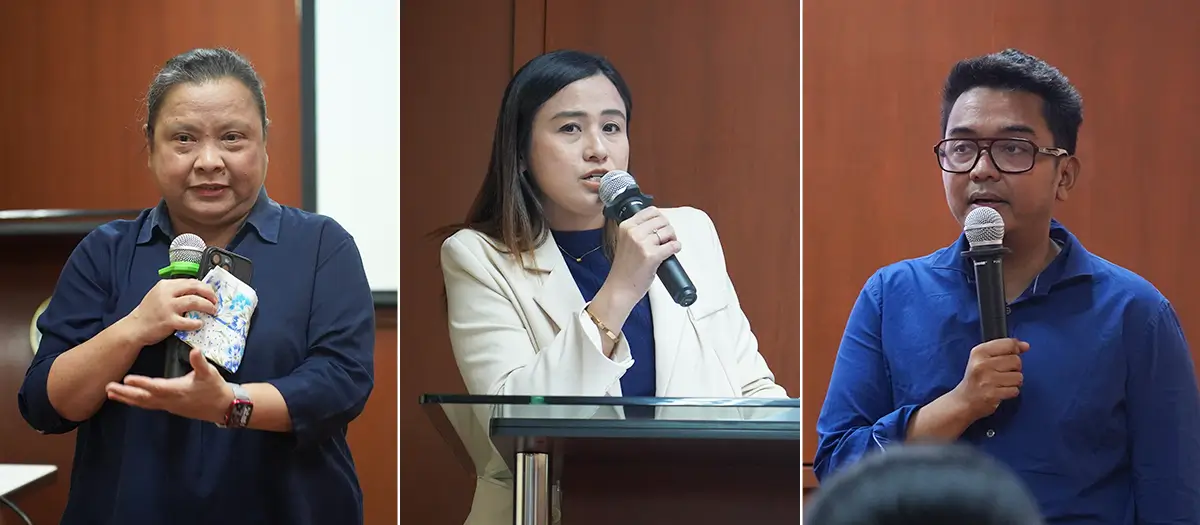
For education, Dr. Maria Cristeta Cuaresma, Senior Program Head of the SEARCA Education and Collective Learning Department (ECLD), discussed the Center's MS and PhD scholarship offerings. These scholarships enable young professionals to pursue advanced studies in agriculture and related sciences and equip them to become the next generation of agricultural leaders. She also presented SEARCA's institutional development efforts and capacity-building initiatives.
Ms. Maria Carla Dolores, Senior Program Associate at SEARCA's Research and Thought Leadership Department (RTLD), presented the Center's projects across its four research priorities: inclusive agri-food value chains and rural transformation; nutrition-sensitive food systems; climate-resilient agriculture; and modernized agricultural education, innovation, and technology adoption.
To promote inclusive agri-food value chains, she showcased efforts to empower calamansi and coconut cooperatives in Oriental Mindoro and Quezon Province, Philippines, through value chain assessments that secure better pricing and funding. For nutrition-sensitive food systems, she discussed the School-plus-Home Gardens Project (S+HGP), which integrates gardening into curricula to bolster student nutrition and community production. Addressing climate-resilient agriculture, Dolores introduced the ASEAN Partnership for Sustainable Aquaculture (AquASEAN) project, a regional partnership with the French Agricultural Research Centre for International Development (CIRAD) and the Association of Southeast Asian Nations (ASEAN) Secretariat that advances circular aquaculture through nutrient recycling and policy support. Finally, under modernized agricultural education, innovation, and technology adoption, she featured the Sustainable Agricultural Mechanization in Gender-Sensitive Food Systems Transformation in Asia (SAMGeFS) project, which champions sustainable mechanization by designing gender-sensitive machinery tailored to the specific farming roles and physical capabilities of both men and women.
Meanwhile, Dr. Emil John Cabrera, Program Head of the Emerging Innovation for Growth Department (EIGD), highlighted SEARCA's role in providing farmers and farming families with wider access to innovative products and services as well as business models for increased productivity and income. He shared that this mission is driven by two pillars: open innovation and agri-incubation and knowledge and technology transfer.
Under open innovation and agri-incubation, he underscored how SEARCA fast-tracks agricultural transformation by supporting startups and awarding seed funds through the Grants for Research towards Agricultural Innovative Solutions (GRAINS). With USD 350,000 invested across eight countries, these grants have funded diverse projects, including smart fish feeders in Malaysia, weather data systems in Thailand, and bioplastics in the Philippines. Additionally, initiatives like the Food is Life Exemplified: Mobile App Development Competition for Planetary Health Diet (FLExPHD) competition and incubator partnerships have engaged over 850 participants and advanced scalable agri-innovations across the Southeast Asian region.
Through knowledge and technology transfer, Cabrera shared that SEARCA implements and promotes smart-farm technologies and advocates for the adoption of agri-robotics and farm mechanization. Among the innovations he introduced were an open-systems tractor design featuring modular, customizable machinery that can be locally fabricated and adapted to specific farm conditions, as well as agri-robotics and AI-driven solutions that support precision, efficiency, and reduced labor requirements while remaining affordable and accessible to smallholder farmers.
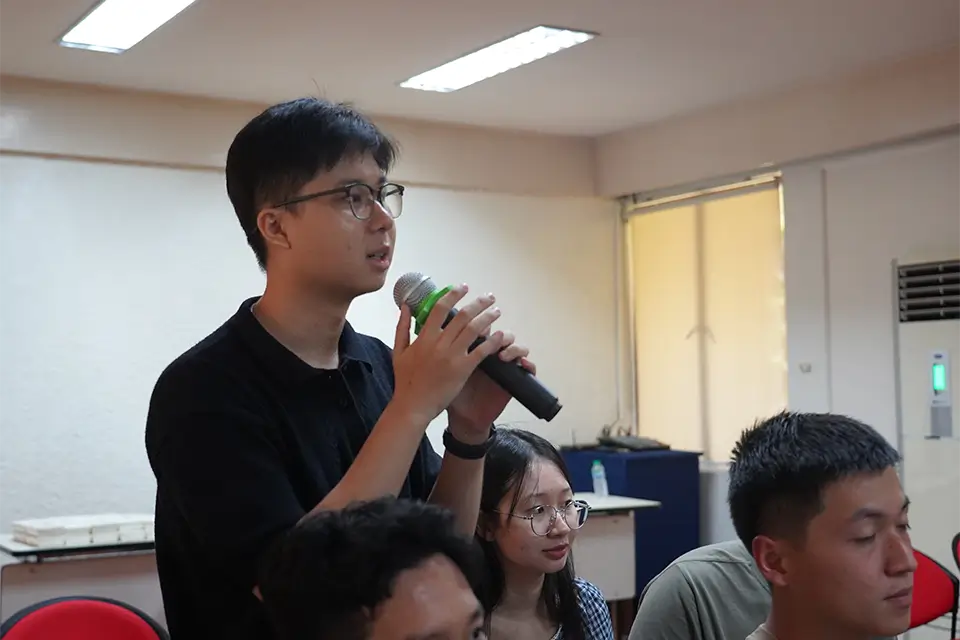
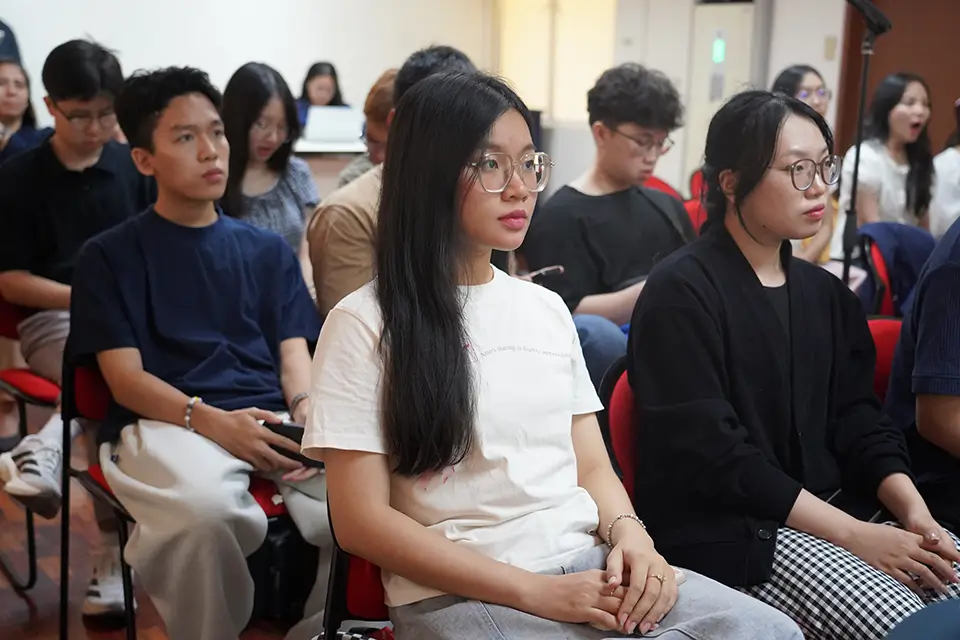
The visitors were received by officials and key staff from ECLD, RTLD, EIGD, and the Partnerships Unit.
Under its 12th Five-Year Development Plan: Sustainable Transformation of Agricultural Systems through Innovation in Southeast Asia (SUSTAIN Southeast Asia), SEARCA continues to welcome such visits as part of its commitment to inspiring the next generation of agricultural leaders. With youth engagement as one of its key priority areas, the Center encourages international students to bridge theory and practice, foster cross-cultural learning, and recognize agriculture's vital role in addressing global challenges. These visits enable knowledge exchange and the sharing of best practices in education, research, and emerging technologies.