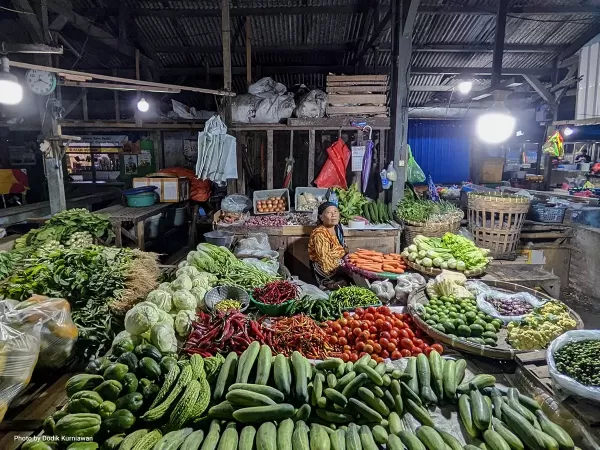
A single smallholder farmer can be highly skilled and still be structurally disadvantaged. One household may know when the soil is ready, which seed performs well in a difficult season, and which buyer pays on time. Yet that same household may not have enough volume to negotiate a better price, enough capital to buy a dryer, enough storage to wait for a favorable market, or enough influence to secure timely extension support. The problem is not ability. It is scale.
This is where farmer cooperatives matter. The 2026 International Day of Cooperatives, observed on 4 July under the theme "Cooperatives for a peaceful world," highlights cooperation as a force for social cohesion and sustainable development. For Southeast Asian agriculture, the message is practical. Cooperation can give smallholders the institutional muscle to participate in markets, manage climate risks, and make technologies work at a level that individual farms often cannot achieve alone.
In many parts of the region, farmers are asked to become climate-smart. They are encouraged to adopt better water management, improve soil health, reduce postharvest losses, diversify crops, use weather information, access digital advisory services, and comply with quality and traceability requirements. These are sensible goals. But climate-smart agriculture is rarely simple at the household level. It can require equipment, training, credit, data, collective planning, and reliable buyers. Farmers cannot be expected to shoulder the cost and risk of transformation alone, especially those already working with very little room for error.
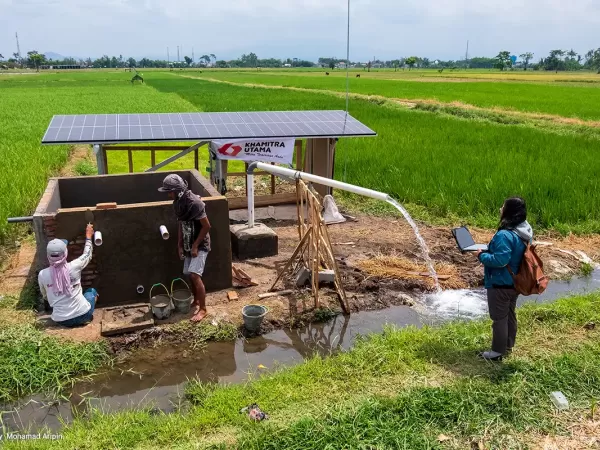
A well-managed cooperative can become a shared platform for change. It can aggregate produce so that members meet market volume and quality requirements. It can coordinate planting schedules and postharvest handling. It can invest in cold storage, dryers, milling, transport, or digital weighing systems that would be too expensive for individual households. It can host training on climate advisories, pest surveillance, regenerative practices, or business planning. It can negotiate with financial institutions, input suppliers, processors, and public agencies from a stronger position. This is especially important as climate change turns familiar production calendars into moving targets.
A cooperative can help farmers pool information on which fields are water-stressed, where pests are appearing, when harvesting should be advanced, and which members need emergency support. It can also help turn climate information into collective action. A forecast becomes more useful when it is linked to seed access, crop insurance, irrigation scheduling, postharvest facilities, and market planning.
Cooperatives also matter for trust. Many innovations fail because farmers have seen too many projects arrive with promises and disappear after a pilot. Cooperatives, when accountable to members, can provide continuity. They can become local institutions where farmers test practices, compare results, and decide together whether an innovation is worth adopting. This social function is easy to underestimate, but it is often the difference between a technology that is demonstrated and a technology that is used.
The cooperative advantage, however, is not automatic. Cooperatives can give farmers strength in numbers, but only when they are strong themselves. Some have leadership issues; others have poor records, limited management skills, or too much dependence on outside support. Others lose the trust of members when decisions are controlled by a few.
They also cannot be treated simply as project channels. If cooperatives are expected to deliver programs without building their own capacity, they may help implement activities in the short term but remain too weak to serve farmers well over time.
Without clear leadership, capable members, sound finances, good market information, and real participation from women and young people, cooperatives may not be able to support climate-smart agriculture. They will also need policies that let them grow as enterprises while staying true to their purpose as member-owned organizations. Agricultural innovation systems can help struggling cooperatives.
As SEARCA's 2026 Training Workshop on Transformational Agricultural Innovation System (TrAInS) emphasized, agricultural transformation depends not only on new technologies, but on the people, institutions, and relationships that allow those technologies to work in real farming communities. It requires institutions, policies, knowledge systems, and stakeholders that work together. Cooperatives sit directly inside this systems view. They can connect farmers with researchers, extension services, private firms, local governments, financiers, and consumers.
SEARCA's SUSTAIN Southeast Asia agenda also offers a useful lens. By focusing on innovation, technology transfer, policy, markets, and capacity building, SUSTAIN points to the enabling conditions that farmers need around them. Cooperatives can become local vehicles for that enabling environment. They can help move innovation from a training room to a village, from a prototype to a business model, and from isolated adoption to collective resilience.
For Southeast Asia, the next generation of farmer cooperatives should be seen not only as buying-and-selling groups, but as climate-resilience infrastructure. They can help farmers share machinery, finance, information, storage, processing, and risk. They can strengthen local food economies and reduce the isolation of smallholders in increasingly demanding value chains. They can also create a more peaceful rural economy by making opportunity less fragmented and bargaining power more inclusive.
On the International Day of Cooperatives, the question is not whether farmers know how to cooperate. Rural communities have long histories of mutual labor, seed sharing, savings groups, and collective problem-solving. The challenge is to modernize that spirit into strong institutions fit for climate-stressed, market-linked, technology-enabled agriculture. If Southeast Asia wants climate-smart agriculture to work for smallholders, cooperation must be treated not as a side story, but as a central strategy.