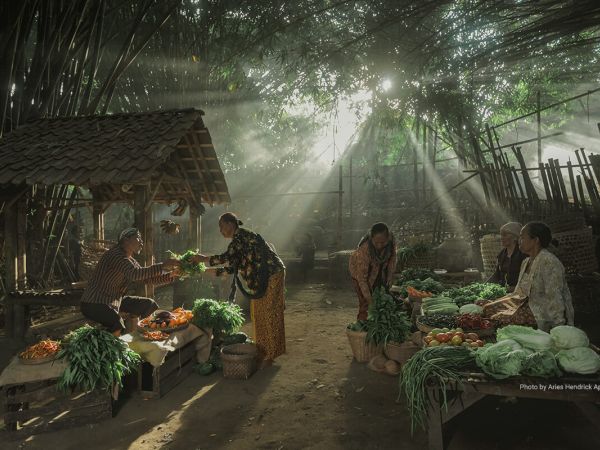
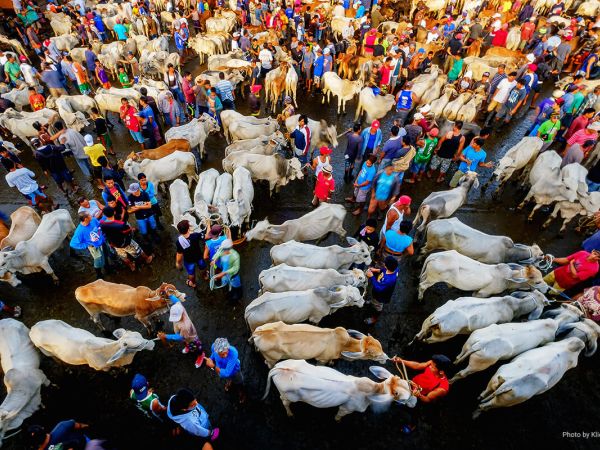
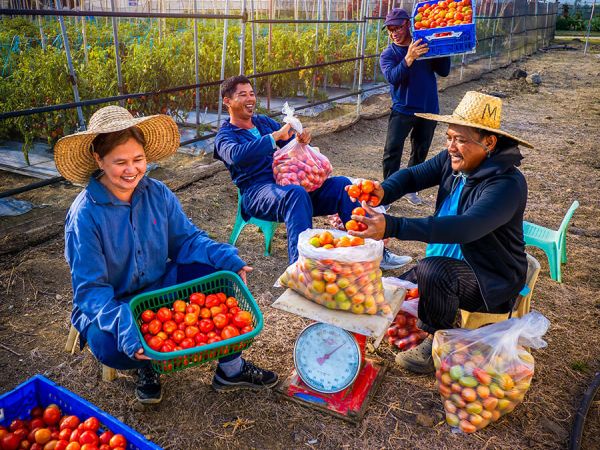
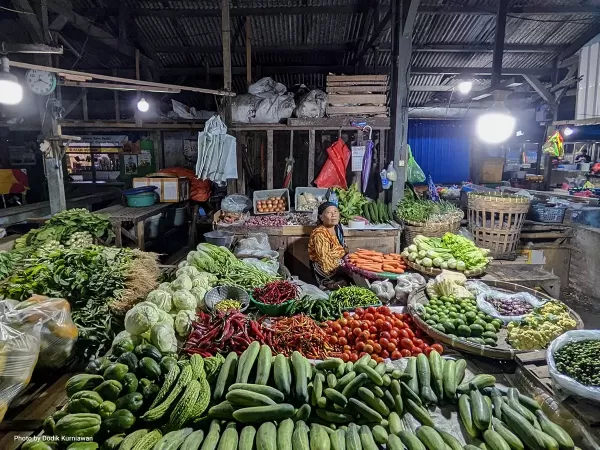
A farmer can have a good harvest and still lose.
Tomatoes can soften before they reach the market. Mangoes can bruise during transport. Fish can deteriorate when temperatures are poorly controlled. Rice can lose quality while waiting to be dried. Vegetables that arrive at a wholesale market in poor condition may never reach a household at all.
By the time food is thrown away from a kitchen or restaurant, another kind of loss has already been happening much earlier along the food chain.
Globally, an estimated 13.4 percent of food is lost after harvest and before reaching retail. Another 19 percent of the food available to consumers is wasted at the retail, food service, and household levels.
These numbers describe two related but different problems. Food loss generally happens earlier in the supply chain, during harvesting, storage, transport, processing, and distribution. Food waste occurs closer to consumption, when retailers, food services, or households discard food that could otherwise have been used.
For Southeast Asia, both matter. But reducing losses before food even reaches consumers is particularly important for agriculture because every damaged crate, spoiled catch, or rejected harvest can also represent lost farmer income.
A harvest is not food until it reaches someone
Agricultural discussions often focus on how to produce more. Better seeds, improved breeds, irrigation, mechanization, fertilizer, digital tools, and climate-smart practices are all intended to raise productivity.
But producing more food solves only part of the problem if too much of what is produced never reaches a market or table.
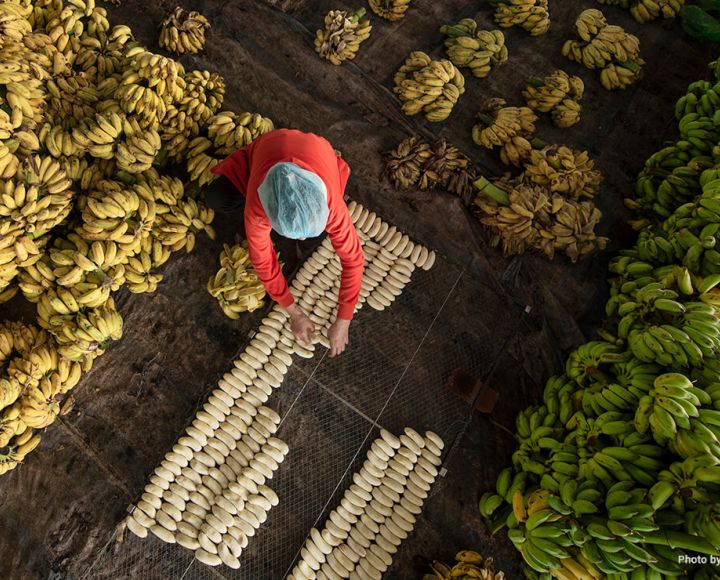
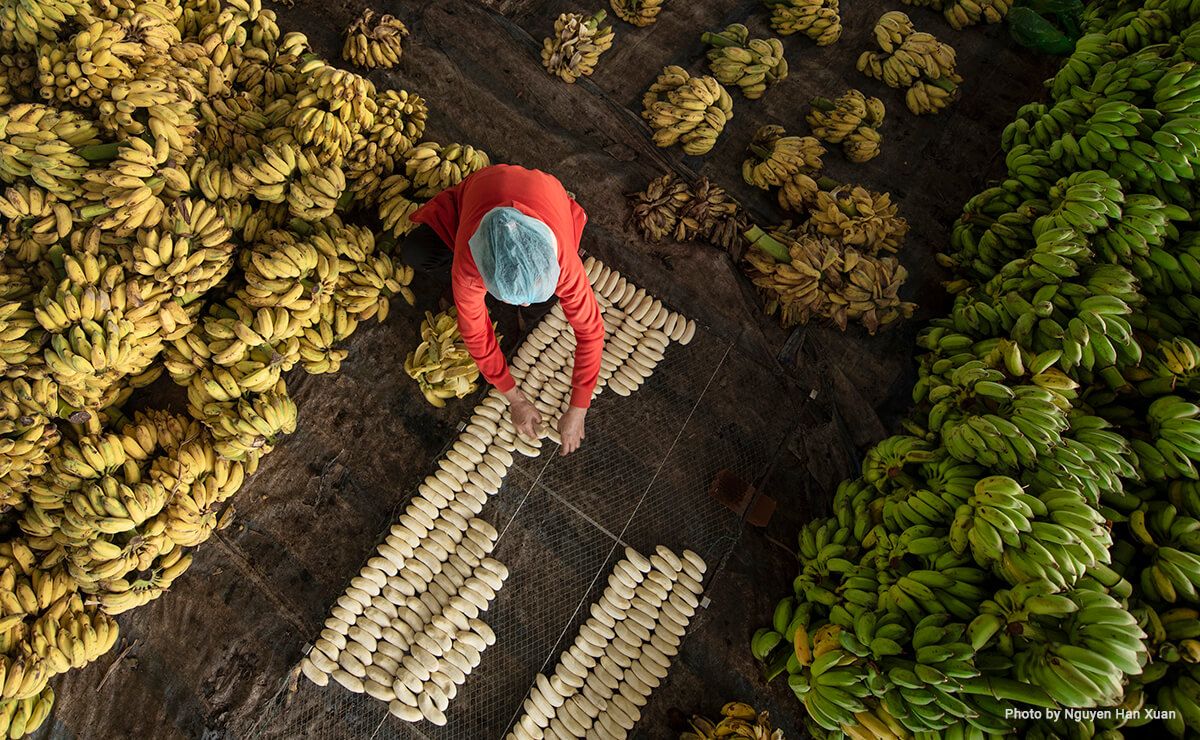
Postharvest losses can happen for very ordinary reasons. Crops may be harvested at the wrong maturity. Produce may be packed poorly or exposed to heat. Farmers may have nowhere to dry grain during prolonged rain. Fish processors may struggle to maintain the right temperature or processing conditions. Roads can be rough, transport slow, storage inadequate, and markets too far away.
Perishable foods are especially vulnerable.
A value chain study funded by the Asian Development Bank (ADB) and conducted by the Southeast Asian Regional Center for Graduate Study and Research in Agriculture (SEARCA) illustrates the scale the problem can reach. Among the Philippine supply chains examined, postharvest losses for mango ranged considerably depending on production area, practices, and destination. Freshly harvested tomatoes transported from Bukidnon in Mindanao to Manila recorded losses of 24.14 percent. For freshly harvested onions moving from Bongabon, Nueva Ecija to Manila, total postharvest loss was estimated at 45.06 percent.
The lesson is not that every value chain loses food at these rates. It is that what happens after production can determine how much of a harvest ultimately becomes food and how much income ultimately reaches those who produced it.
Losing food means losing much more than food
When food is lost, the resources used to produce it are also spent without delivering their intended value.
Land was cultivated. Water was used. Seed, feed, fertilizer, energy, labor, fuel, packaging, and transport were paid for. Farmers took production risks. Traders and processors invested time and capital.
When food is discarded, much of that investment goes with it.
Food loss and waste also have a climate cost. Together, they are estimated to account for 8–10 percent of global greenhouse gas emissions. Food that decomposes in landfills can generate methane, while unnecessary production places additional pressure on land, water, energy, and ecosystems.
This makes reducing food loss and waste unusual as a development opportunity. The same intervention can potentially make more food available, protect farmer and business income, use natural resources more efficiently, and reduce environmental pressure.
The International Day of Awareness of Food Loss and Waste, observed every 29 September, highlighted this potential in 2026 through its focus on the transformative potential of reducing food loss and waste.
Better systems can keep more food in the value chain
There is no single technology that will solve food loss.
A cold storage facility is useful only if producers can access it and afford to use it. A dryer helps only if it is located where farmers need it and is maintained after a project ends. Better packaging will not solve losses caused by poor transport. Digital monitoring cannot help a processor who lacks reliable connectivity, technical support, or financing.
This is why reducing food loss requires looking at the whole value chain.
SEARCA's ADB-commissioned study on Philippine fruit and vegetable chains pointed to investments in packing and cold storage facilities, better transport, digital marketing, improved access to credit and insurance, and stronger agricultural extension among the measures needed to reduce losses.
Technology can also help smaller enterprises control losses that are less visible.
A recent SEARCA policy brief on small-scale fish processing in Malaysia, for example, examines how inadequate process monitoring and quality control can lead to product deterioration and lost revenue. It points to affordable digital technologies, including Internet of Things (IoT)-based monitoring, automation, and data analytics, as ways to detect problems earlier and improve processing efficiency. But it also stresses the need for financing, training, digital literacy, and institutional support so that small enterprises can actually use these technologies.
The technology matters. The system around it matters just as much.
Waste can also become a resource
Not every part of harvested or processed food can remain in the human food chain. There will always be peels, trimmings, damaged produce, processing residues, and other organic materials.
The question is what happens next.
A more circular food system tries first to prevent avoidable loss, then recover edible food where possible, and find productive uses for materials that cannot be eaten. Depending on the commodity and local conditions, these may become animal feed, compost, soil amendments, bioenergy, or inputs for other products.
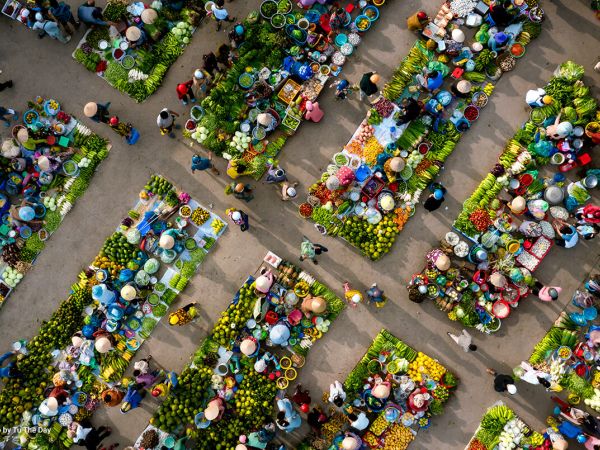
Across Asia, wholesale markets are already exploring ways to separate usable food from unavoidable organic residues, redistribute safe surplus food, and turn waste streams into useful resources rather than sending everything to landfills.
But circularity should not become an excuse for waste. The first goal remains to keep nutritious food in the food chain for as long as it is safe and useful to do so.
Saving food is also about farmers
Food waste is often communicated as a household problem: buy only what you need, store food properly, eat leftovers, and avoid throwing meals away.
Those actions matter.
But for an agricultural region such as Southeast Asia, the story has to begin earlier.
It begins with farmers who need better drying, cooling, storage, and market access. It includes fisherfolk and processors who need reliable cold chains. It involves traders, transporters, wholesale markets, retailers, food businesses, local governments, researchers, financiers, and consumers.
Reducing food loss and waste is therefore not simply about being less wasteful. It is about making the food system work better.
For Southeast Asia, that means producing food more efficiently, preserving more of its value after harvest, finding productive uses for unavoidable by-products, and making sure that more of what farmers grow, raise, or catch actually reaches the people it was meant to feed.
The measure of a productive food system should not only be how much comes out of the farm.
It should also be how much of that food and its value that we manage to keep.