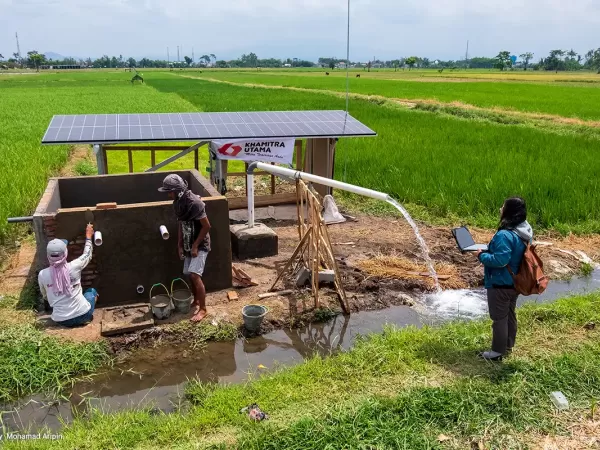
Agriculture is often described as a victim of climate change. In Southeast Asia, that is easy to understand. For many farmers, climate change is already part of the working day. They are planting through hotter weather, bracing for stronger storms, waiting out longer dry spells, and making decisions around rainfall that no longer comes when expected. Floods, pests, crop diseases, and rising production costs only add to the pressure. When a season goes badly, the damage does not stay in the field. It can mean smaller harvests, lower household income, higher food prices, and weaker local economies.
But agriculture is not only where climate impacts are felt most directly. It is also one of the places where climate solutions can begin.
On World Environment Day, this means looking at farms not only as places where food is produced, but as living systems connected to soil, water, air, biodiversity, energy, and rural livelihoods.
The environmental cost of business-as-usual farming
Across the region, many farmers are trying to produce more with fewer resources. They are managing smaller margins, unstable markets, and increasingly difficult weather. In these conditions, harmful practices can become hard to avoid. It is not usually because farmers do not care about the environment. More often, it is because the better option is too expensive, too difficult to access, or not supported well enough to make it practical.
A farmer may burn crop residues because the next planting season is coming and the field has to be cleared quickly. Water can be lost through leaking canals, failing pumps, or irrigation systems that no longer meet farmers' needs. Fertilizer is often applied by feel when soil testing and timely advice are out of reach. After harvest, by-products may pile up simply because there is no buyer, no facility, or no practical way to use them.
Over time, these everyday constraints add up to real environmental costs. They can worsen air pollution, weaken soils, increase greenhouse gas emissions, contaminate water, and place more pressure on biodiversity. But they also point to something hopeful: many environmental problems in agriculture are also design problems. With better systems, the same resources can be used differently.
Circular agriculture offers a practical pathway
Circular agriculture is one of the most promising ways to rethink waste. Instead of treating farm residues as something to dispose of, circular systems look for ways to turn them into energy, fertilizer, feed, mulch, compost, or other useful products.
Rice straw is a clear example. In many rice-growing areas, straw is treated as a disposal problem. Yet it can be turned into biogas, biochar, fertilizer, mushroom substrate, animal bedding, or other value-added materials when the right technologies and business models are in place.
SEARCA's work on the Rice Straw Biogas Hub, led by Straw Innovations, brings this idea closer to the realities of rice-farming communities. The project explores how rice straw can be collected and converted into cleaner energy and other useful outputs, while also engaging farmers and local stakeholders in more sustainable straw management. The point is not simply to introduce a technology. It is to show that a common farm waste problem can become an environmental and livelihood opportunity.
Farmers need options that make sense
Climate-smart agriculture will not work if it is only presented as a moral appeal to farmers. Practices must be practical, affordable, and supported by institutions.
A farmer will not stop burning rice straw if there is no service to collect it, no buyer for the material, and no affordable alternative for field clearing. A farmer will not adopt low-emission practices if the risk is too high or the benefits are unclear. A community will not maintain circular systems if there are no markets, financing, training, or local partners.
This is why environmental solutions in agriculture must be designed around real farm conditions. They need technology, yes—but they also need policy support, farmer organizations, financing, local government participation, private-sector links, and communication that helps people understand the value of changing practices.
The farm as a climate solution
Agriculture's environmental future in Southeast Asia will depend on whether the region can move from isolated climate-smart practices to working systems. A low-carbon rice demonstration is useful. A circular agriculture model is promising. A farmer training is important. But the deeper goal is to connect these into everyday practice.
World Environment Day is a reminder that climate action does not only happen in forests, oceans, or energy systems. It also happens in rice fields, vegetable farms, livestock areas, aquaculture ponds, postharvest facilities, and rural communities.
In Southeast Asia, agriculture will remain exposed to climate risk. But with the right investments, it can also become one of the region's strongest climate solutions.